


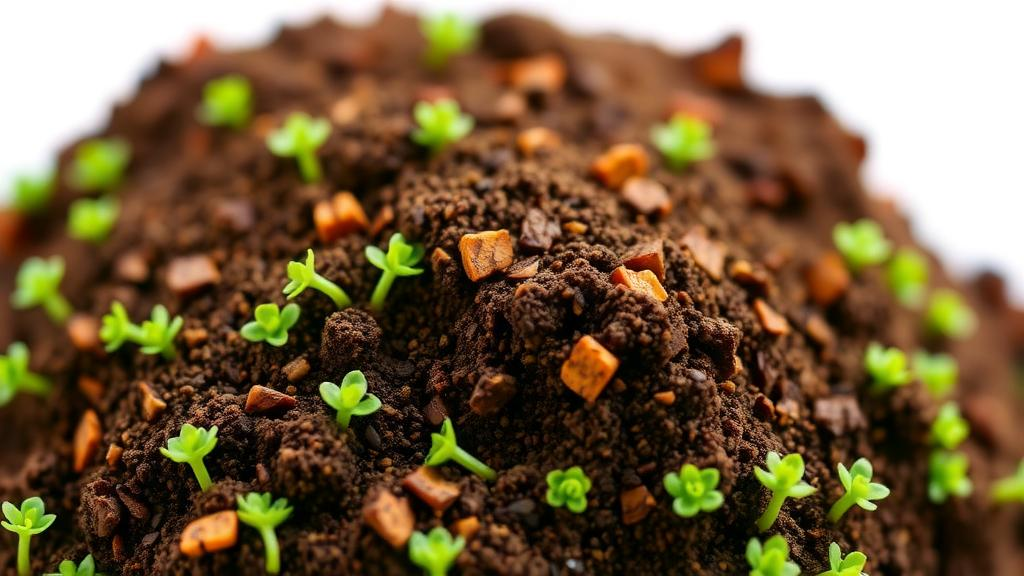
Every year, wastewater treatment plants across Europe produce mountains of residual activated sludge, a nutrient-rich by-product of cleaning domestic wastewater that is increasingly being viewed not as a waste problem but as a raw material. At the same time, soils contaminated with organic pollutants such as phenol and its derivatives pose a growing challenge to agriculture and environmental restoration. A new study published in the journal BioRisk brings these two problems together in a single solution: a biofertiliser built from lime-treated residual activated sludge and a specially selected bacterium, Brevibacillus laterosporus BT271, capable of detoxifying a wide range of xenobiotic compounds. The research, conducted by a team working with material from the wastewater treatment plant serving Sofia, Bulgaria, demonstrates that the combination remains metabolically active and even thrives in the presence of phenol concentrations as high as 1000 milligrams per litre.
The work is framed by ambitious European policy goals. The EU Green Deal, adopted in 2019, and the European Commission’s ‘Towards Zero Pollution for Air, Water and Soil’ action plan call for zero soil pollution by 2050, while simultaneously demanding that soil fertility be maintained under the principles of the circular bio-economy. Achieving both objectives requires innovative technologies that treat soil as a critical resource, one the Commission has described as essential for human health, the state of the economy, and the production of food and new medicines. Treated wastewater used for irrigation can carry toxic substances, antibiotics, steroid hormones and other xenobiotics into agricultural land, and these compounds must either be degraded by the native soil microflora or by added microbial preparations. The Bulgarian study targets precisely this gap: a fertiliser that nourishes plants while actively dismantling the pollutants that conventional fertilisers ignore.
Activated sludge itself is an attractive starting point. Formed during the biological treatment of domestic wastewater, and after stabilisation and decontamination with quicklime, it is rich in humic substances, micronutrients and macronutrients, and it hosts microbial communities beneficial to soil. It has long been used as an alternative to conventional fertilisers and for reclaiming soils damaged by human activity. The catch is that the bacteria naturally present in such sludge have low detoxification activity, adapted mainly to breaking down trivial contaminants. When soils are contaminated with more stubborn organic pollutants, the target detoxification capacity must be enhanced through bioaugmentation, the deliberate addition of highly active biodegrading microorganisms that degrade toxic contaminants quickly and with minimal inhibition.
For this role, the researchers turned to Brevibacillus laterosporus BT271, a strain isolated from contaminated soil near the Lukoil Neftochim Burgas oil refinery in Bulgaria by Professor Yana Topalova. The culture had previously been adapted to degrade aryl-containing xenobiotics, including phenol, nitrophenols and pentachlorophenol at high concentrations, and it displays biodegradation activity towards thirty different xenobiotics. Notably, the strain survives lyophilisation well and rapidly recovers its detoxification activity after rehydration, a practical advantage for a product that would need to be stored, transported and applied in the field. Bacteria of the genus Brevibacillus are of particular interest because their bioremediation properties can be combined in microbial preparations with protection against plant pathogens and the promotion of plant growth, making them candidates for a dual-purpose biofertiliser.
The experimental design was methodical. The team first characterised the growth of B. laterosporus BT271 under optimal conditions, finding that the culture reached its maximum cell density of 3.25 × 10⁷ cells per millilitre at the twentieth hour of growth, with total dehydrogenase activity peaking at the fourteenth hour during exponential growth, exceeding the starting level by sixty-nine percent. Because late exponential phase cells carry the most active enzymes, eighteen-hour cultures were used in all subsequent detoxification experiments. Phenol, chosen as a model toxicant because its derivatives are major environmental pollutants, was added once at the start of each experiment at five concentrations: 5, 100, 250, 500 and 1000 milligrams per litre. Critical control points were set at zero and six hours, and all analyses were performed in three independent repetitions.
The results were striking. The bacterial culture grew in the presence of phenol across the entire tested range, accumulating its greatest biomass, 4.44 × 10⁷ cells per millilitre, at the lowest concentration of 5 milligrams per litre, where the inhibitory effect of the toxicant was weakest. Biomass increases of sixteen percent at 5 milligrams per litre and thirteen percent at 100 milligrams per litre were recorded, and even at the harshest dose of 1000 milligrams per litre the culture still grew by 2.5 percent. This stands in contrast to the control cultivation without phenol, where cell numbers actually declined slightly between the eighteenth and twenty-fourth hours. The implication is remarkable: the bacteria were not merely tolerating the phenol but using it as a carbon source, converting a toxic pollutant into additional cellular biomass at every concentration applied.
Metabolic activity measurements reinforced the picture. Total dehydrogenase activity, an indicator of the rate of microbial metabolic transformations determined by the Lenhard method, rose from initial values between 1.06 × 10⁻⁵ and 1.06 × 10⁻⁴ micrograms of hydrogen ions per millilitre per minute to between 7.58 × 10⁻⁵ and 5.74 × 10⁻⁴ after six hours of incubation. The largest increase, a 7.3-fold rise, occurred at 5 milligrams per litre of phenol, while the smallest, 2.7-fold, occurred at 1000 milligrams per litre. When the researchers combined the bacterium with lime-treated residual activated sludge, adding fresh bacterial biomass at ten percent of the sludge weight, the response was even more dramatic. Dehydrogenase activity in the combined system increased by thirty percent at 250 milligrams per litre and by an extraordinary thirty-two times at the highest phenol concentration, suggesting a powerful synergistic activation of the entire microbial community.
To probe activity at the level of individual cells, the team employed CTC/DAPI fluorescence staining, a technique that pairs a tetrazolium salt reduced to fluorescent formazan by metabolically active cells with a DNA-binding dye that labels all biomass. Images captured with a Leica DM6 B microscope and processed with the DAIME software revealed nuances that bulk measurements could not. Individual B. laterosporus BT271 cells slightly decreased their activity under experimental conditions at most phenol concentrations, on average by fourteen percent, with fluorescence intensity dropping by thirty-five percent and cell area shrinking by eighty-six percent at 1000 milligrams per litre, clear signs of intoxication at the single-cell level. Yet at 250 milligrams per litre, fluorescence intensity rose by four percent and average cell size increased by forty-four percent, indicating that this intermediate concentration stimulates rather than suppresses the bacteria.
The fluorescence analysis of the combined sludge-bacterium system told an even more compelling story. Microscopy showed a visibly increased number of living cells after the addition of B. laterosporus BT271 to the residual activated sludge, and after six hours of incubation the fluorescence intensity was seventy-three percent higher in the presence of 250 milligrams per litre of phenol, while the highest toxicant concentration boosted microbial metabolic activity by forty-eight percent. Even the rehydrated sludge alone, without added bacteria, showed a thirty-six percent increase in metabolic activity, but when the detoxification culture was introduced at the higher phenol concentrations the increase averaged sixty-one percent above the rehydrated sludge control. The authors attribute the differences between the bulk TTC-based and single-cell CTC-based measurements to methodological factors, including the glucose substrate added in the TTC assay, which activates cell metabolism under optimal substrate conditions, whereas CTC reflects activity under the actual intoxication conditions of the experiment.
Taken together, the findings sketch the outline of a genuinely circular biotechnology: a waste product from wastewater treatment is transformed into a valuable bioproduct that simultaneously enriches soil and accelerates the biodegradation of cyclic xenobiotics such as phenol and its derivatives. The synergistic effect combines the nutritional contribution of the activated sludge with the detoxifying, and potentially plant-protective, capacities of B. laterosporus BT271, following what the researchers describe as the principle that nature knows best. The authors emphasise that these experiments represent the first stages of product development, and that further testing under conditions closer to real-world contaminated soils is planned. If those trials succeed, the humble sludge scraped from wastewater treatment tanks could become a cornerstone technology for Europe’s zero-pollution ambitions, turning one environmental liability into a tool for repairing another.
Subject of Research: Development of a detoxifying biofertiliser from residual activated sludge and the phenol-degrading bacterium Brevibacillus laterosporus BT271
Article Title: Application of residual sludges from wastewater treatment technologies for construction of biofertiliser
Article References: Belouhova, M., Yaneva, D., & Topalova, Y. (2022). Application of residual sludges from wastewater treatment technologies for construction of biofertiliser. BioRisk, 17, 157-168. https://doi.org/10.3897/biorisk.17.77463
Image Credits: AI Generated
Keywords: biofertiliser, activated sludge, Brevibacillus laterosporus, bioremediation, phenol, xenobiotics, dehydrogenase activity, CTC/DAPI staining, circular economy, soil detoxification, wastewater treatment, bioaugmentation
Cite Scienmag News
Russell Cooper. (October 19, 2026). Waste Sludge Meets Phenol-Eating Bacteria in New Biofertiliser Recipe. Scienmag. https://scienmag.com/waste-sludge-meets-phenol-eating-bacteria-in-new-biofertiliser-recipe/
Russell Cooper. "Waste Sludge Meets Phenol-Eating Bacteria in New Biofertiliser Recipe." Scienmag, 19 October 2026, https://scienmag.com/waste-sludge-meets-phenol-eating-bacteria-in-new-biofertiliser-recipe/. Accessed 19 October 2026.
Russell Cooper. "Waste Sludge Meets Phenol-Eating Bacteria in New Biofertiliser Recipe." Scienmag. October 19, 2026. https://scienmag.com/waste-sludge-meets-phenol-eating-bacteria-in-new-biofertiliser-recipe/


