


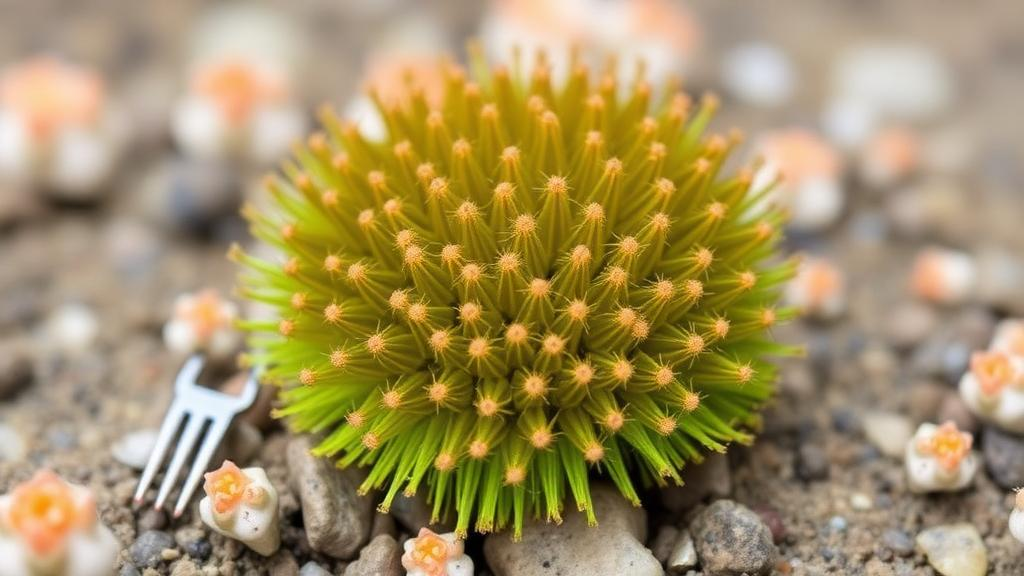
High on the Qinghai Plateau, at an altitude of 4,149 metres where the air is thin and the growing season is brutally short, botanists surveying the remote Sanjiangyuan Region have stumbled upon a moss unlike any other known to science. The plant, now formally described as Timmia sanjiangyuanensis, was collected in August 2025 during fieldwork in Gande County, Qinghai Province, China, and its discovery is reshaping what scientists thought they knew about a small but enigmatic genus of mosses. The find, published in the journal PhytoKeys, brings the number of recognised Timmia species worldwide to nine and prompts the establishment of an entirely new section within the genus.
Timmia is a tiny genus by moss standards, with only eight species accepted before this discovery. Yet its taxonomy has long been contentious, with the boundaries between species and even the internal classification of the genus repeatedly revised over decades. All known Timmia species occur in the Northern Hemisphere, mostly in arctic and montane regions, with only Timmia megapolitana extending into temperate zones. The genus belongs to Timmiaceae, a family containing just this single genus, making every species within it disproportionately important for understanding the group’s evolutionary history.
The story of the new species began when researchers conducting a survey of bryophyte diversity in southeast Qinghai encountered a moss with strikingly globose, spherical capsules. That capsule shape initially suggested a resemblance to species in the family Bartramiaceae, but other features of the plant, particularly the strongly mamillose, nipple-like bumps on the surface of cells in the upper leaf portion, pointed unmistakably to Timmia. At first glance the specimen seemed to match Timmia sphaerocarpa, a Chinese endemic described in 2006 that is the only other member of the genus with spherical capsules; all other species bear linear-cylindrical capsules.
Closer examination, however, revealed a suite of characters that set the Qinghai plant apart. In Timmia sphaerocarpa, stomata, the tiny pores that regulate gas exchange on the capsule, are distributed across the entire capsule surface, whereas in the new species they are confined strictly to the capsule base. The new moss also possesses vegetative and perichaetial leaves with a distinctly differentiated sheathing base, limb laminal cells with pronounced mamillae, antheridia that sit naked in the leaf axils rather than being enclosed by specialised leaves, exothecial cells with sinuose, wavy walls, and spores measuring 36 to 46 micrometres in diameter, roughly two to three times larger than the 13.8 to 15.9 micrometre spores of T. sphaerocarpa. Taken together, these traits convinced the team that they were dealing with something genuinely new.
To confirm this, the researchers turned to molecular phylogenetics. They sequenced three DNA loci: two chloroplast markers, the atpB-rbcL spacer and the trnL-trnF region, and a portion of the nuclear 26S region. Genomic DNA extracted from the specimen was sequenced on an Illumina platform, and organelle genomes were assembled and annotated using bioinformatic tools including GetOrganelle and CPGAVAS2, with published sequences from other Timmia species serving as references. The final aligned dataset comprised 1,590 nucleotide characters, of which 1,135 were constant, 290 were singleton sites and 165 were parsimony-informative.
Phylogenetic trees reconstructed by both Maximum Likelihood, using IQtree with 1,000 bootstrap replicates, and Bayesian Inference, using MrBayes with five million generations, produced nearly identical topologies with strong support at most nodes. All Timmia species formed a well-supported clade, resolving into three main subclades corresponding to sections Norvegica and Timmia, plus a third lineage occupied solely by the newly sequenced specimen from Sanjiangyuan. Intriguingly, the analysis also confirmed a recent taxonomic move that had synonymised the section Sphaerocarpa under the larger section Timmia, and revealed that two accessions of T. sphaerocarpa were deeply nested within T. bavarica, hinting that species boundaries in this genus remain messier than assumed.
The position of the new species proved genuinely surprising. Morphologically, the plant had been hypothesised to belong to section Timmia, but the molecular data instead placed it within or near section Norvegica, a group whose members share fragile, hyaline cells at the leaf insertion that cause leaves to break readily from the stem, a trait conspicuously absent in the Qinghai moss. Nor does the new species fit comfortably within section Norvegica morphologically: it is autoicous, bearing both male and female reproductive structures on the same plant, whereas all Norvegica species are dioicous; its leaf sheath is well differentiated and smooth-celled; its capsules are pyriform to spherical rather than linear-cylindrical; and its endostome cilia lack the blunt appendages characteristic of that section.
Given this unique combination of phylogenetic position and morphology, the authors established a new section, Pseudosphaerocarpa, to accommodate the species. The name nods to the superficial resemblance with T. sphaerocarpa while signalling that the similarity is deceptive. The species epithet sanjiangyuanensis honours the Sanjiangyuan Region, the source of three of Asia’s great rivers and one of the least botanically explored corners of the Qinghai-Tibet Plateau. The plant was found growing on soil alongside Distichium hagenii, Encalypta ciliata and Pohlia elongata, and is currently known only from its type locality in Gande County.
The discovery carries broader significance for the biogeography of the Qinghai-Tibet Plateau, one of the world’s recognised biodiversity hotspots, home to more than 12,000 species of seed plants. Bryophytes, by contrast, have been badly neglected in Qinghai Province: despite covering roughly 722,300 square kilometres, the province has the lowest recorded moss and liverwort diversity of any Chinese province, with only about 150 species reported. That figure is almost certainly a dramatic underestimate, as recent years have yielded several new national records for China from the region, including Bryum austriacum, Dicranum dispersum, D. spadiceum and Meesia minor. Because past surveys concentrated on the north-western and southern parts of the plateau, vast areas remain essentially unexplored.
With the addition of Timmia sanjiangyuanensis, China now hosts eight of the nine known Timmia species, missing only T. sibirica. Yet the standard Chinese moss floras list just five species for the country, underscoring how much taxonomic updating remains to be done. The researchers have provided an updated identification key to all Chinese Timmia species, along with detailed illustrations and scanning electron micrographs of the new species’ peristome teeth and oversized spores. For a genus once thought to be thoroughly catalogued, the message from the plateau is clear: even the most familiar-looking mosses can hide evolutionary surprises, and the world’s highest ecosystems are still yielding species new to science.
Subject of Research: Discovery and taxonomic description of a new moss species, Timmia sanjiangyuanensis, from the Qinghai Plateau, China
Article Title: Timmia sanjiangyuanensis ( Timmiaceae , Bryophyta ), a new species from the Qinghai Plateau, China
Article References: Ma, X.-Y., Zheng, J.-Y., Xia, X.-R., Song, X.-T., Shi, Y.-K., Wu, Y.-H., & Huang, W.-Z. (2026). Timmia sanjiangyuanensis (Timmiaceae, Bryophyta), a new species from the Qinghai Plateau, China. PhytoKeys, 276, 35-49. https://doi.org/10.3897/phytokeys.276.176402
Image Credits: AI Generated
DOI: 10.3897/phytokeys.276.176402
Keywords: Timmia sanjiangyuanensis, bryophytes, mosses, Qinghai-Tibet Plateau, Sanjiangyuan, new species, phylogenetics, Timmiaceae, taxonomy, biodiversity, China, spores
Cite Scienmag News
Gavin Prescott. (October 19, 2026). New Moss Species With Giant Spores Discovered on the Remote Qinghai Plateau. Scienmag. https://scienmag.com/new-moss-species-with-giant-spores-discovered-on-the-remote-qinghai-plateau/
Gavin Prescott. "New Moss Species With Giant Spores Discovered on the Remote Qinghai Plateau." Scienmag, 19 October 2026, https://scienmag.com/new-moss-species-with-giant-spores-discovered-on-the-remote-qinghai-plateau/. Accessed 19 October 2026.
Gavin Prescott. "New Moss Species With Giant Spores Discovered on the Remote Qinghai Plateau." Scienmag. October 19, 2026. https://scienmag.com/new-moss-species-with-giant-spores-discovered-on-the-remote-qinghai-plateau/


