


Deep in the entomological collections of Mexico’s largest insect repository, three large, stick-like praying mantises sat pinned beneath labels reading Angela miranda, quietly misleading researchers for years. When two researchers finally sorted through all 1,238 mantis specimens held in the Colección Nacional de Insectos at the Universidad Nacional Autónoma de México in June 2023, those three impostors turned out to belong to an entirely different genus, Phasmomantis, in the family Mantidae. Meanwhile, a single genuine Angela miranda male, collected at Agua Azul in the state of Chiapas as far back as 1978, emerged as the first verified record of the species for that Mexican state. The discovery, published in the Journal of Orthoptera Research, also extends the species’ known range into Guatemala and delivers a taxonomic bombshell: two long-recognized Central American mantis species are, in fact, the same animal.
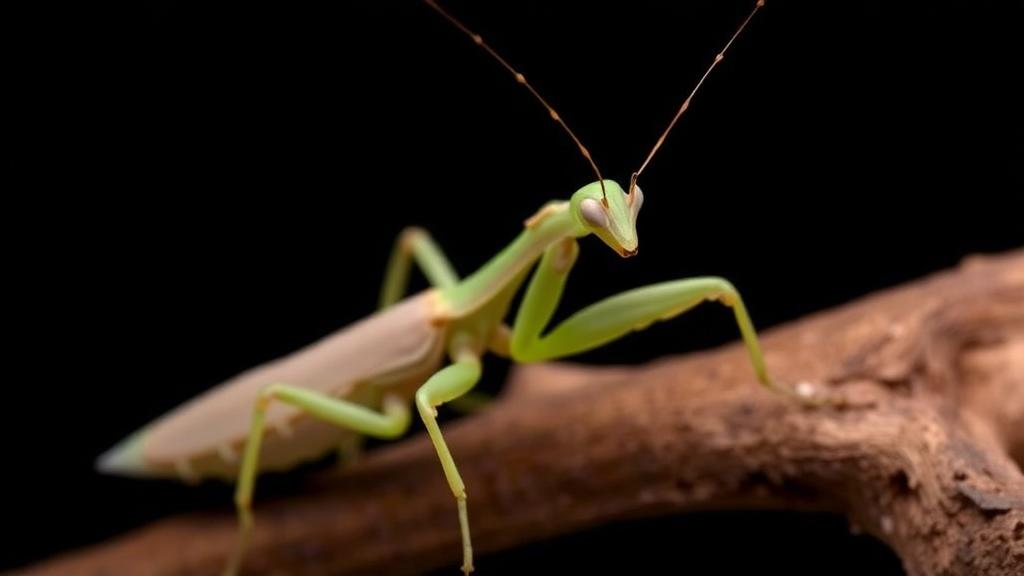
The family Angelidae is one of the strangest lineages of praying mantises in the Americas. These are medium to large insects, ranging from 60 to 141 millimeters in length, with extraordinarily elongated, stick-like bodies that make them look more like walkingsticks than predators. Both males and females are brachypterous, meaning they have abbreviated wings, and they possess laterally flattened cerci, the paired appendages at the tip of the abdomen. The family contains just a single genus, Angela, established by Audinet-Serville in 1839, with 16 species that are entirely endemic to the New World, distributed from Mexico through Central America, into northern South America, and on the island of Trinidad. After the new synonymies, that count drops to 14 species.
One of the persistent problems in studying Angela is that females show a bewildering range of variation within species, making them notoriously difficult to tell apart. Males, by contrast, offer a reliable identification shortcut: the color and pattern of their hindwings are distinctive and consistent, allowing taxonomists to delimit species with confidence. This sexual dimorphism in wing biology runs deep. Female angelids have shorter wings and cannot fly at all, while males carry larger wings and are capable of sustained flight. That asymmetry shapes how the insects disperse, how populations connect across landscapes, and ultimately how species boundaries are drawn.
Distinguishing Angela from other stick-like mantises in North America requires a careful eye for anatomy. The laterally flattened cerci are the giveaway, and crucially, this character is already visible at the nymphal stage, so even immature angelids can be separated from look-alikes. Angela also lacks the evident juxtaocular bulges, the rounded protrusions beside the eyes, that characterize all Thespidae of the region, and its foretibiae carry no dorsal spines, which are present in most thespids. Female thespids go further, being entirely wingless. Against the Coptopterygidae, the other stick-mimicking family in the region, Angela separates cleanly on antennae, which are filiform or thread-like in Angelidae but thickened in Coptopterygidae, whose lone North American representative exists as parthenogenetic, flightless female populations.
Angela miranda itself was described by Henri de Saussure in 1871 from Mexico, frustratingly without any specific locality attached. For decades, the species floated in taxonomic limbo, and a recent checklist of North American mantises erroneously listed it for the state of Tabasco, a claim traced to online database records from the CNIN-UNAM collection. It was precisely that error that the 2023 visit dismantled. The three Tabasco specimens, originating from the Pantanos de Centla wetlands, were re-identified as Phasmomantis using published identification keys, correcting the record and simultaneously highlighting how museum label data, once digitized, can propagate mistakes across the literature.
The genuine Chiapas male allowed the researchers to apply the hindwing diagnostic method with precision. One hindwing was dissected, extended, and mounted on a card for comparison. The male hindwing of Angela miranda is unmistakable: the inner and dorsal margins and the center are typically opaque light yellow, an irregular black spot sits in the distal third connected to the posterior margin, and the posterior margin itself runs black all the way to the apex. Both the spot and the dark margins vary considerably in width. Some individuals, including the holotype itself, break the norm with reddish-pink instead of yellow membrane, while others replace the yellow with white, variation that the researchers document as part of the species’ chromatic repertoire.
Females add their own twists to this pattern. The female hindwing resembles the male’s but is much shorter relative to body size, and it carries two dark spots in the central field rather than one, positioned mid-wing and in the distal third, along with a darker inner margin and a reddish tinge at the apex. The authors examined a pinned female from Heredia, Costa Rica, held at the Muséum national d’Histoire naturelle in Paris, and propose it as the previously unknown female of Angela miranda. That specimen, they found, aligns closely with the original description of Angela championi, a species Saussure and Zehntner had described in 1894 from a Guatemalan female, with the sole discrepancy being a reversed pattern of dark and orange bands on the hindwing.
On the male side, the comparison was equally decisive. The researchers matched the hindwing illustration of Angela perpulchra published by Saussure and Zehntner in their monumental 1893 to 1899 work against photographs of the Angela miranda holotype, also at the Paris museum, and against a specimen illustrated in a 2020 monograph by Rivera and Svenson. The patterns proved virtually identical, differing only in the holotype’s reddish rather than yellow membrane. Geography reinforced the case: Angela perpulchra was described from Nicaraguan material and had been recorded in Costa Rica and Panama, regions squarely within or adjacent to the known range of Angela miranda. Accordingly, both Angela perpulchra Westwood, 1889, and Angela championi Saussure and Zehntner, 1894, are formally relegated to junior synonyms of Angela miranda Saussure, 1871.
The overhaul reshapes the map of the genus. With the synonyms in place, Angela now comprises 14 species, and Angela miranda is documented from Costa Rica, Guatemala, Mexico, Nicaragua, and Panama, with the Mexican record confined to Chiapas rather than Tabasco. The new Guatemalan record comes from Semuc in the Sierra de Santa Cruz, in the department of Izabal, from a male specimen collected in January 1991 by J. Monzón and deposited at the Universidad del Valle de Guatemala, which the authors confirmed from photographs. The remaining Central American congener, Angela guianensis, remains clearly distinct, with males bearing hyaline forewings and hindwings that darken distally, and females whose mostly dark hindwings are ornamented with yellow blotches forming irregular tiger-like stripes.
The authors are candid that morphology alone may not close the book on Angela. They call for comprehensive DNA analysis and barcoding of specimens collected across Mexico and Central America, paired with comparative examination of genital structures and captive rearing of oothecae, the foam egg cases that mantises deposit in the wild, to confirm the conspecificity hypothesis at the heart of the new synonymies. For a genus in which a single species can wear yellow, white, or reddish hindwings and whose females defy straightforward delimitation, molecular evidence may be the only way to resolve how many truly distinct evolutionary lineages hide within those slender, stick-like bodies. Until then, Angela miranda stands as a broader, more widespread, and better-understood species, thanks to a patient re-sorting of century-old pinned specimens.
Subject of Research: Taxonomic revision of the stick-like mantis genus Angela (Angelidae, Mantodea) in Mexico and Central America, including new records and two new synonymies
Article Title: The family Angelidae ( Insecta , Mantodea ) in Mexico and Central America, new records and two new synonyms
Article References: de Luna, M., Hernández-Baltazar, E., & Cubillos Macías, I. (2024). The family Angelidae (Insecta, Mantodea) in Mexico and Central America, new records and two new synonyms. Journal of Orthoptera Research, 33(2), 229-232. https://doi.org/10.3897/jor.33.114799
Image Credits: AI Generated
Keywords: Angelidae, Mantodea, Angela miranda, taxonomy, new records, junior synonyms, Mexico, Central America, Guatemala, Chiapas, hindwing patterning, museum collections
Cite Scienmag News
Gavin Prescott. (October 19, 2026). Ghost Mantis Unmasked: Stick-Like Praying Mantis Revealed Across Mexico and Central America as Two Species Collapse Into One. Scienmag. https://scienmag.com/ghost-mantis-unmasked-stick-like-praying-mantis-revealed-across-mexico-and-central-america-as-two-species-collapse-into-one/
Gavin Prescott. "Ghost Mantis Unmasked: Stick-Like Praying Mantis Revealed Across Mexico and Central America as Two Species Collapse Into One." Scienmag, 19 October 2026, https://scienmag.com/ghost-mantis-unmasked-stick-like-praying-mantis-revealed-across-mexico-and-central-america-as-two-species-collapse-into-one/. Accessed 19 October 2026.
Gavin Prescott. "Ghost Mantis Unmasked: Stick-Like Praying Mantis Revealed Across Mexico and Central America as Two Species Collapse Into One." Scienmag. October 19, 2026. https://scienmag.com/ghost-mantis-unmasked-stick-like-praying-mantis-revealed-across-mexico-and-central-america-as-two-species-collapse-into-one/


