


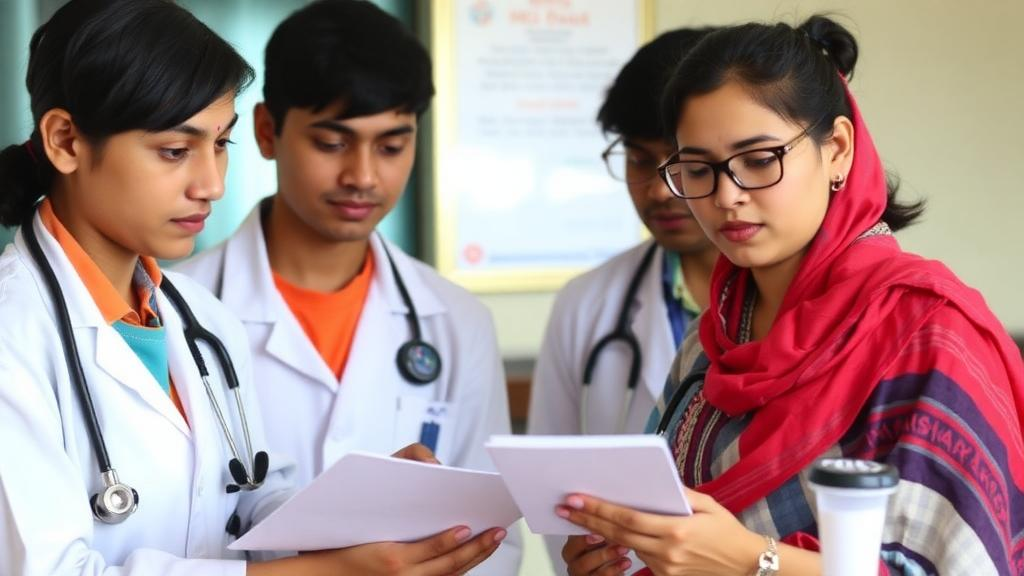
Medical students in Nepal overwhelmingly say they value research, but very few actually take part in it, according to a new cross-sectional survey published in BMC Medical Education. The study, led by Anjan Khadka of the Nepalese Army Institute of Health Sciences and colleagues, surveyed 319 undergraduate medical students across government and private medical colleges in Nepal between December 2025 and April 2026. The findings reveal a striking paradox familiar to many lower-middle-income countries: broad enthusiasm for research paired with low formal training and even lower hands-on participation, in a setting where research is not yet a formal curricular competency in undergraduate medical education.
The numbers tell the story clearly. Only 21.3 percent of the surveyed students had received formal research methodology training, and just 36.9 percent had ever participated in research of any kind. Yet attitudes toward research were broadly positive across the cohort, which was predominantly male at 79.9 percent and had a mean age of 22.5 years with a standard deviation of 2.82. The authors describe a persistent gap of high interest in research with low actual participation, a gap they argue is particularly pronounced in countries like Nepal, where research engagement and competency are increasingly emphasized globally in undergraduate medical education but have not been translated into curricular requirements.
To understand what drives students toward research and what holds them back, the researchers used a validated, self-administered online questionnaire assessing research attitudes, participation, motivators, and perceived barriers. Participants were recruited through convenience sampling via institutional email lists, social media groups, and student representatives, spanning both public and private institutions. The study received institutional review committee approval from the Nepalese Army Institute of Health Sciences under registration number 1452, and was conducted in accordance with the Declaration of Helsinki. Participation was voluntary and uncompensated, with duplicate submissions prevented through email verification and responses anonymized at collection on a password-protected platform.
The statistical analysis went beyond simple percentages. The team used Pearson Chi-square tests with Cramer’s V to measure the strength of associations between categorical variables, and the Friedman test with Bonferroni-adjusted post-hoc comparisons to rank barriers against one another, with statistical significance set at p less than 0.05. This approach allowed them not only to identify which barriers students rated highest but also to determine whether those ratings differed from each other in statistically meaningful ways, a level of rigor that strengthens the survey’s conclusions about where intervention efforts might be best directed.
On the motivational side, financial incentives topped the list, cited by 87.1 percent of respondents. The desire to learn research skills followed closely at 84.7 percent, and having a supportive mentor ranked third at 80.3 percent. These three motivators, money, skills, and mentorship, form a coherent picture of what would pull students into research: tangible rewards, capability building, and human guidance. The prominence of financial incentives is notable in a lower-middle-income context, where students often face significant economic pressures and research is typically an unpaid extracurricular activity rather than a funded component of training.
The barrier rankings were more nuanced. Lack of funding was rated the most significant moderate barrier, and the Friedman test with Bonferroni-adjusted post-hoc comparisons showed it was rated significantly higher than both time constraints and mentorship deficits. However, lack of funding was not significantly different from inadequate training, suggesting that funding and training deficits sit together at the top of the barrier hierarchy. The authors identify lack of funding, inadequate training, mentorship deficits, and workload as the key barriers standing between student enthusiasm and actual research engagement. The statistical distinction matters for policy: while time and mentorship are real concerns, the data suggest that money and training are the barriers students perceive as most consequential.
Perhaps the most actionable finding concerns formal research methodology training. The study found a strong positive association between formal training and research participation, with a Chi-square statistic of 57.794, p less than 0.001, and a Cramer’s V of 0.426. In practical terms, a Cramer’s V of 0.426 indicates a moderate-to-strong effect size, meaning the relationship between receiving formal research methodology training and actually participating in research is substantial, not a statistical artifact. Students who had formal training were markedly more likely to have engaged in research, which points directly to curriculum design as a lever for change.
The survey also uncovered an institutional divide. Students at private medical colleges demonstrated greater research involvement than their counterparts at government or public institutions. This disparity adds a layer of equity concern to the findings, since students at public colleges, who may already face fewer resources, appear to have even less access to research opportunities. The authors recruited participants from both government and private colleges specifically to capture this variation, and the result suggests that any intervention to boost research engagement in Nepal must account for institutional differences rather than treating the student population as homogeneous.
Based on the barriers identified, the authors propose that research training, mentorship programs, and small grants may help improve engagement among Nepali medical students. The logic follows from the data: if inadequate training shows a strong association with participation, embedding research methodology into the curriculum could raise involvement; if lack of funding is the top-rated barrier, small grants could lower the threshold for student-led projects; and if mentorship ranks among the key barriers, structured mentoring schemes could connect enthusiastic students with experienced researchers. The authors are careful to note, however, that interventional studies are needed to confirm the effectiveness of these measures among medical students, since this survey establishes associations rather than causal effects.
The study’s implications extend beyond Nepal. The gap between research interest and research participation is a recognized challenge in medical education worldwide, but it is especially acute in lower-middle-income countries where research is not yet a formal curricular competency. Global bodies increasingly emphasize research engagement and competency in undergraduate medical education, and countries like Nepal face the question of how to build research capacity within constrained health systems and crowded curricula. This survey offers a data-driven starting point: with positive attitudes already in place, the task is not to convince students that research matters, but to give them the training, funding, mentorship, and time to act on what they already believe. As the first comprehensive picture of these dynamics among Nepali medical students, the study provides both a baseline for future interventional research and a template that other lower-middle-income countries may follow in diagnosing their own research engagement gaps.
Subject of Research: Medical Education
Article Title: Attitudes, motivators, and barriers to research participation among medical students in Nepal: a cross-sectional survey
Article References: Khadka, A., Sainthwar, S. S., Khadka, S., Shahi, G. J., Aryal, A., Kalakheti, D., & Kaundinnyayana, S. (2026). Attitudes, motivators, and barriers to research participation among medical students in Nepal: a cross-sectional survey. BMC Medical Education. https://doi.org/10.1186/s12909-026-10448-8
Image Credits: AI Generated
DOI: 10.1186/s12909-026-10448-8
Keywords: medical education, Nepal, medical students, research participation, research barriers, research motivation, mentorship, lower-middle-income countries, cross-sectional survey, BMC Medical Education, Attitudes, motivators
Cite Scienmag News
Courtney Benton. (October 18, 2026). Nepali Medical Students Love Research but Rarely Do It, Survey Finds. Scienmag. https://scienmag.com/nepali-medical-students-love-research-but-rarely-do-it-survey-finds/
Courtney Benton. "Nepali Medical Students Love Research but Rarely Do It, Survey Finds." Scienmag, 18 October 2026, https://scienmag.com/nepali-medical-students-love-research-but-rarely-do-it-survey-finds/. Accessed 18 October 2026.
Courtney Benton. "Nepali Medical Students Love Research but Rarely Do It, Survey Finds." Scienmag. October 18, 2026. https://scienmag.com/nepali-medical-students-love-research-but-rarely-do-it-survey-finds/


