


Ecological connectivity is increasingly recognized as a critical component of biodiversity conservation, yet the practical implementation of this concept remains hindered by a significant lack of data on species movements. As human development continues to fragment habitats, the ability to identify and protect the pathways that wildlife use to access resources and maintain gene flow has become a cornerstone of modern conservation strategy. Global initiatives, such as the Kunming–Montreal Global Biodiversity Framework, emphasize the need to operationalize these connectivity principles within policy and planning. However, effective implementation is often constrained by the difficulty of obtaining direct dispersal information, which creates uncertainty in identifying ecological corridors and barriers. To address this gap, researchers have turned to indirect indicators, such as habitat suitability and roadkill risk, to estimate connectivity without relying on direct movement tracking data.
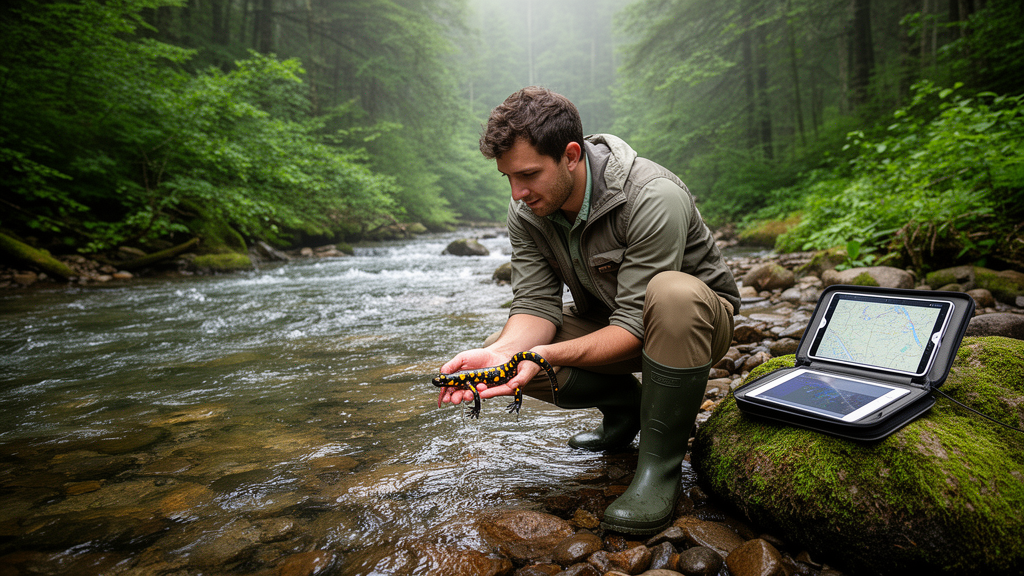
A recent study published in Nature Conservation offers a novel approach to this challenge by assessing stream network connectivity for two stream-breeding amphibians in northern Taiwan. The research focuses on Rana sauteri and Odorrana swinhoana, species that exemplify the vulnerability of amphibians to habitat loss due to their limited mobility and dependence on both aquatic and terrestrial environments. By utilizing the MaxEnt modeling framework, the study integrates citizen-science occurrence records and roadkill data to construct models that capture the spatial hierarchy of stream networks. This method allows for the evaluation of connectivity patterns across an entire river catchment, providing insights into how landscape structure influences amphibian distribution and movement risk in the absence of direct tracking data.
The study area, the Danshui River catchment, covers 2,712 square kilometers and features a steep elevational gradient from sea level to over 3,400 meters. This region is characterized by a mix of forested areas and urban development, with 86% of the land cover consisting of trees. The catchment hosts a significant portion of Taiwan’s population, concentrated in the lower-elevation areas, which creates a gradient of urbanization and forest cover. This heterogeneous landscape provides an ideal setting for evaluating amphibian connectivity, as it presents both the natural stream networks that support wildlife and the anthropogenic pressures that disrupt them. The streams within the catchment are generally short and steep, reflecting the mountainous geomorphology of the region.
The researchers employed a multiscale moving-window approach to quantify the influence of stream networks on amphibian distributions. Stream order, derived from digital elevation models, was used to represent the spatial structure of the drainage network, while tree cover was included as a structural predictor of habitat quality. By applying buffers of varying radii, ranging from 50 to 2,000 meters, the study captured the influence of streams across different spatial scales. This multiscale analysis is essential for identifying the specific scales at which environmental features influence species distribution, thereby reducing the risk of overestimating a predictor’s influence due to arbitrary scale selection. The inclusion of both aquatic and adjacent terrestrial habitats in the analysis allows for a more ecologically realistic assessment of connectivity.
Model performance was consistently strong, with Area Under the Curve (AUC) values ranging from 0.79 to 0.93 and Continuous Boyce Index (CBI) values from 0.74 to 0.97. Tree cover emerged as the most influential predictor overall, with permutation importance values between 41% and 70%. However, stream order contributed substantially to the models, particularly in roadkill predictions, where it accounted for 17% to 23% of the predictive power. This higher relative importance in roadkill models suggests that stream networks play a stronger role in shaping movement patterns associated with road mortality than in determining general habitat suitability. The results indicate that while forest cover is crucial for shelter and moisture retention, the stream hierarchy is a key driver of the spatial organization of amphibian movements.
The two focal species responded to different spatial scales, reflecting their distinct ecological strategies. Rana sauteri, which is classified as Vulnerable on the IUCN Red List, responded at broader spatial scales, with stream order influencing predictions at radii of 50 to 750 meters. This species exhibits seasonal migratory behavior, moving from forested areas to breeding streams, which creates complex connectivity needs. In contrast, Odorrana swinhoana, which exhibits sedentary behavior and homing ability, responded at intermediate scales of 150 to 500 meters. The differences in scale response highlight the importance of considering species-specific traits when designing conservation interventions. The study found that occurrence models effectively predicted roadkill distributions, with AUC values between 0.88 and 0.92, confirming that habitat suitability patterns align with movement-related mortality risks.
Cross-dataset validation revealed complementary ecological signals from occurrence and roadkill data. While occurrence models successfully transferred to roadkill data, roadkill models showed lower predictive power when evaluated against occurrence records, with AUC values between 0.68 and 0.81. This asymmetry suggests that broader occurrence patterns can more reliably identify narrower, localized movement-risk patterns. The concentration of roadkill suitability at mid-elevations, where persistent amphibian populations overlap with sufficient traffic intensity, highlights the specific zones of conflict between wildlife and human infrastructure. These findings underscore the need for targeted mitigation measures in areas where stream networks intersect with roads, particularly in valley-bottom zones where habitat suitability and roadkill risk overlap.
The implications of these findings for conservation planning are significant. The study demonstrates that stream order can serve as a robust spatial framework for identifying movement pathways and mortality-risk zones, even when direct movement data are unavailable. By integrating these connectivity assessments into Environmental Impact Assessments, planners can proactively identify areas where development may disrupt ecological corridors. The results support the use of variable-width riparian buffers aligned with the stream network, supplemented by structural measures such as drift-fenced underpasses and temporary road closures during peak movement periods. These interventions can reduce amphibian mortality while maintaining landscape permeability for multiple taxa, contributing to broader biodiversity conservation goals.
As climate change continues to alter stream flow regimes and forest cover, the urgency of incorporating connectivity into planning processes increases. Shifts in precipitation and temperature may intensify seasonal breeding bottlenecks and expand the elevational ranges of amphibian species. The framework developed in this study provides a transferable approach for embedding connectivity analysis into sustainable development, allowing for the design of multifunctional riparian corridors that benefit a wide range of species. By aligning local planning with international biodiversity targets, this approach helps to operationalize the principles of ecological connectivity, ensuring that conservation efforts are both data-driven and effective in protecting the movement and persistence of vulnerable species.
Subject of Research: Prioritizing stream network connectivity for species conservation and sustainable planning
Article Title: Prioritizing stream network connectivity for species conservation and sustainable planning
Article References: Karanasios, P. I., Schmeller, D. S., & Lin, Y.-P. (2026). Prioritizing stream network connectivity for species conservation and sustainable planning. Nature Conservation, 61, 207-236. https://doi.org/10.3897/natureconservation.61.174618
Image Credits: AI Generated
DOI: 10.3897/natureconservation.61.174618
Keywords: Prioritizing, stream, network, connectivity, species, conservation, sustainable, planning, scientific research
Cite Scienmag News
Margaret Porter. (October 18, 2026). Stream Networks Guide Amphibian Conservation Planning. Scienmag. https://scienmag.com/stream-networks-guide-amphibian-conservation-planning/
Margaret Porter. "Stream Networks Guide Amphibian Conservation Planning." Scienmag, 18 October 2026, https://scienmag.com/stream-networks-guide-amphibian-conservation-planning/. Accessed 18 October 2026.
Margaret Porter. "Stream Networks Guide Amphibian Conservation Planning." Scienmag. October 18, 2026. https://scienmag.com/stream-networks-guide-amphibian-conservation-planning/


