


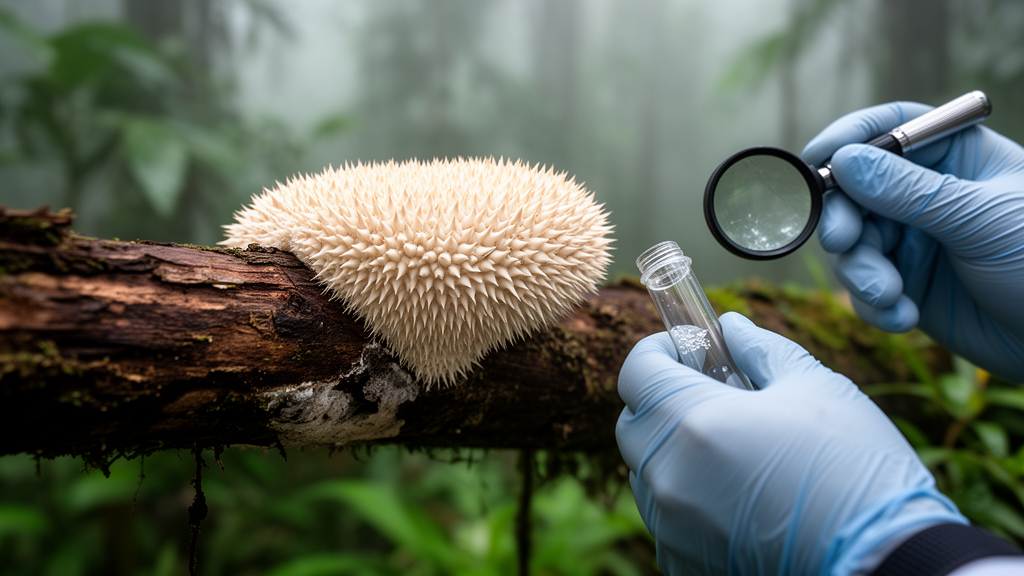
Researchers have uncovered a significant layer of hidden biological diversity within the fungal genus Steccherinum and its allied genera in the Neotropics. Published in IMA Fungus, the study utilizes a combination of morphological examination, multigene phylogenetic analysis, and mycelial culture studies to investigate odontioid and hydnoid fungi collected primarily in Brazil. The findings reveal that what was previously considered a single species or a small group of distinct taxa actually comprises multiple cryptic lineages that are morphologically nearly identical but genetically distinct. This discovery highlights the limitations of traditional taxonomic methods that rely solely on visible characteristics, suggesting that molecular tools are essential for accurately cataloging fungal biodiversity in tropical regions.
The genus Steccherinum is characterized by resupinate to effused-reflexed basidiomes with a hymenophore composed of pores, spines, or a smooth surface. A key distinguishing feature is its dimitic hyphal structure and the presence of thick-walled clavate skeletocystidia in the trama, which are often heavily encrusted. Despite these diagnostic features, the micromorphology of species within the genus is remarkably similar, contributing to long-standing taxonomic complexity. In the Neotropics, the diversity of this group has remained poorly explored, with many specimens in Brazilian herbaria previously misidentified as S. ochraceum, a species originally described from northern Europe. This study aims to address this gap by providing a comprehensive analysis of the odontioid and hydnoid taxa found in the region.
Through molecular data analysis, the researchers identified eight well-defined neotropical lineages within Steccherinum. This includes the confirmation of three known species, S. larssonii, S. perparvulum, and S. subochraceum, as well as the description of five new species: S. bononiae, S. elegantissimum, S. molle, S. resinaceum, and S. undulatum. These newly described taxa are morphologically very similar, differing only in subtle diagnostic traits such as the size and shape of basidiospores, the consistency of the basidiomes when dried, and the specific incrustation patterns of the cystidia. The study also identified two new species in the allied genus Cabalodontia, C. albofulva and C. brunnea, and proposed new combinations for C. lincangense and C. tenuissima based on phylogenetic evidence that places them within this genus rather than Steccherinum.
A particularly intriguing finding is the revelation that S. perparvulum is not a single species but a species complex comprising at least three distinct lineages. Mating tests conducted using monosporic cultures demonstrated a lack of sexual compatibility between two of these lineages, confirming that they represent separate biological species despite their identical morphological appearance. This phenomenon of cryptic speciation, where genetically distinct populations look identical, underscores the importance of reproductive isolation tests in fungal taxonomy. The researchers noted that while the lineages are genetically distinct, no clear morphological or biogeographical differences were found to support their immediate segregation into separate named species, leading to their retention under the name S. perparvulum as a complex for the time being.
To contextualize the evolutionary history of these fungi, the study generated divergence-time estimates for the Steccherinaceae family using a concatenated five-gene dataset. The analysis indicates a crown age of approximately 86.4 million years for the family, placing its origin in the late Cretaceous period. The genus Steccherinum itself is estimated to have originated in the Eocene, with a mean stem age of 49.37 million years. The diversification of the family has been predominantly Cenozoic, with many genera emerging between the Paleocene and Oligocene epochs. This evolutionary timeline suggests that the speciation events in these fungi may be linked to the radiation and expansion of angiosperms, which provided new substrates for wood-decomposing fungi.
Culture studies further revealed that while the mycelial morphology of the studied species is generally similar, there are variable growth rates among the taxa. Some species, such as S. perparvulum and S. resinaceum, exhibited faster growth rates compared to others like S. bononiae and S. elegantissimum. Notable intraspecific variation was observed in S. subochraceum and S. undulatum, where different specimens of the same species showed significant differences in mycelial macromorphology and growth speed. These culture characteristics, while not always definitive on their own, provide additional data points that can aid in the identification of closely related species when combined with molecular and morphological evidence.
The ecological distribution of the newly described species offers insights into their habitat preferences. Most of the Steccherinum species were found growing on fallen branches of angiosperms, indicating that they occupy similar ecological niches. The two new Cabalodontia species, C. albofulva and C. brunnea, were collected in high-altitude areas above 800 meters in Araucaria forests, suggesting a preference for subtropical conditions. Both species appear to be rare, as they were found only at their type localities despite extensive sampling in nearby regions. In contrast, some Steccherinum species, such as S. bononiae and S. molle, are likely widespread throughout the Brazilian Atlantic Rainforest biome, with records from southern, southeastern, and northeastern Brazil.
The phylogenetic analyses also clarified the relationships between Steccherinum and allied genera. The study confirmed that S. xanthum is a synonym of C. albofibrillosa, as their ITS sequences are nearly identical. Similarly, S. subcollabens was found to be a synonym of S. formosanum. These taxonomic revisions highlight the fluid nature of fungal classification and the need for continuous reassessment as more molecular data becomes available. The transfer of C. lincangense and C. tenuissima to Cabalodontia is supported by their nesting within the Cabalodontia clade in the phylogenetic trees, despite some morphological ambiguities regarding their hyphal systems. The researchers noted that the hyphal system in Cabalodontia is best interpreted as ranging from monomitic to pseudo-dimitic, which helps distinguish it from the truly dimitic taxa in Steccherinum.
This study represents a significant advancement in the understanding of fungal diversity in the Neotropics. By integrating morphological, molecular, and culture data, the researchers have provided precise diagnostic features for the new species and clarified the phylogenetic relationships within the Steccherinaceae. The findings emphasize the prevalence of cryptic diversity in fungi and the necessity of using multiple lines of evidence for accurate taxonomy. Future studies should focus on expanding molecular sampling across different forest types and elevations to better understand the biogeographic history and ecological preferences of these fungi. The continued exploration of the Steccherinaceae will be essential for accurately assessing the true diversity of this group in the region and for understanding the evolutionary processes that have shaped its current distribution.
Subject of Research: Unveiling the hidden diversity of neotropical Steccherinum and allied genera (Steccherinaceae, Basidiomycota)
Article Title: Unveiling the hidden diversity of neotropical Steccherinum and allied genera ( Steccherinaceae , Basidiomycota )
Article References: Westphalen, M. C., Minosso, N. M. M., Regio, N. D. C., Gugliotta, A. D. M., Rajchenberg, M., & Silveira, R. M. B. D. (2026). Unveiling the hidden diversity of neotropical Steccherinum and allied genera (Steccherinaceae, Basidiomycota). IMA Fungus, 17, Article e182915. https://doi.org/10.3897/imafungus.17.182915
Image Credits: AI Generated
DOI: 10.3897/imafungus.17.182915
Keywords: Unveiling, hidden, diversity, neotropical, Steccherinum, allied, genera, Steccherinaceae, Basidiomycota, scientific research
Cite Scienmag News
Roger Howard. (October 18, 2026). Molecular Analysis Reveals Hidden Fungal Diversity in Neotropical Steccherinum. Scienmag. https://scienmag.com/molecular-analysis-reveals-hidden-fungal-diversity-in-neotropical-steccherinum/
Roger Howard. "Molecular Analysis Reveals Hidden Fungal Diversity in Neotropical Steccherinum." Scienmag, 18 October 2026, https://scienmag.com/molecular-analysis-reveals-hidden-fungal-diversity-in-neotropical-steccherinum/. Accessed 18 October 2026.
Roger Howard. "Molecular Analysis Reveals Hidden Fungal Diversity in Neotropical Steccherinum." Scienmag. October 18, 2026. https://scienmag.com/molecular-analysis-reveals-hidden-fungal-diversity-in-neotropical-steccherinum/


