


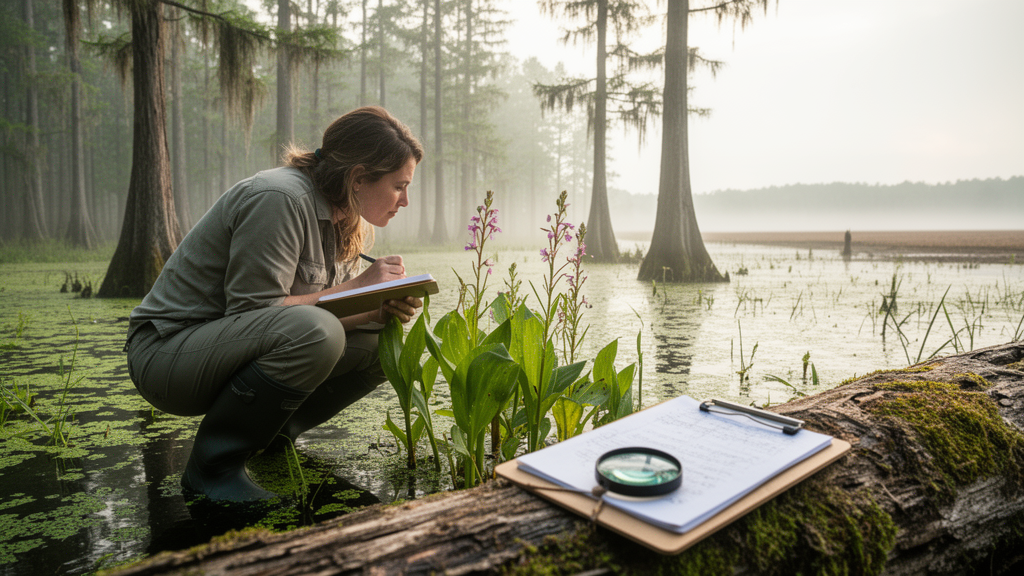
Wetland ecosystems serve as critical natural resources of global importance, providing essential services such as flood protection, water quality improvement, and carbon dioxide sequestration. These habitats support thousands of plant and animal species, including many that are endemic, relict, or rare. However, the preservation of these ecosystems is increasingly urgent due to threats from eutrophication, habitat fragmentation, and degradation. To address these challenges, a comprehensive new study has been published in the journal Caucasiana, presenting the first annotated checklist of plant species occurring in the wetland habitats of Georgia. This work represents a significant step forward in understanding the botanical composition of the region’s waterlogged environments and provides a foundational tool for future conservation efforts.
The research team conducted extensive fieldwork campaigns during the vegetation seasons of 2015 through 2017, sampling 218 plots across seven distinct regions of Georgia. These regions included the Kolkheti Lowland, the Javakheti Plateau, mountainous Adjara, the Kazbegi region, the Iori River Gorge, Upper Imereti, and the Shida Kartli Lowland and Alazani Valley. The study areas were selected using topographic maps from the Soviet period, which detailed mires and swamps, and were verified using RapidEye satellite multispectral imagery to determine location and morphology with five-meter accuracy. This rigorous selection process ensured that the sampled sites represented a diverse range of climatic conditions, from the maritime climate of the Black Sea coastal zone to the dry continental climate of inland lowlands and high plateaus.
The resulting checklist includes 270 plant species belonging to 80 families and 183 genera, offering a detailed snapshot of the region’s wetland flora. Angiosperms form the core of this floristic composition, accounting for 252 species, or 93.3% of the total. Bryophytes are represented by 10 species, Pteridophytes by 8, and Gymnosperms by just one. The most species-rich families are Cyperaceae with 39 species, followed by Poaceae with 29, Rosaceae with 19, Asteraceae with 17, and both Fabaceae and Juncaceae with 11 species each. Each species in the checklist is annotated with specific data, including life form, wetland indicator status, phytogeographical distribution, and the specific study regions where they were recorded. This level of detail allows researchers to assess the ecological roles and geographical ranges of these plants with greater precision.
Phytogeographically, the flora of Georgian wetlands is dominated by Palaearctic species, which make up 20.4% of the checklist. This is followed by Holarctic species at 17.1%, Euro-Mediterranean species at 11.5%, Cosmopolitan species at 11.5%, and Euro-Siberian species at 10.03%. The endemism rate in these wetlands is relatively low at 4.8%, with 13 endemic species identified, four of which are unique to Georgia and nine to the Caucasus region. In contrast, the proportion of invasive and naturalized plants is higher, at 8.5%, with 23 non-native species recorded. This disparity suggests that while wetland vegetation is often considered azonal with wide distributions, the presence of non-native species indicates significant ecological pressure and potential disruption to native communities.
The study also assessed the wetland indicator status of each species, a critical metric for monitoring habitat health. Obligate wetland plants, which almost always occur in wetlands, and facultative wetland plants, which usually occur in wetlands, together comprise 52.1% of the total species. Specifically, 92 species are classified as Obligate Wetland (OBL) and 48 as Facultative Wetland (FACW). Facultative plants, which are equally likely to occur in wetlands or non-wetlands, account for 25.3% of the species, while Facultative Upland plants, which usually occur in non-wetlands, make up 23.1%. The high proportion of OBL and FACW species, particularly from the families Cyperaceae and Juncaceae, confirms the strong wetland affinity of the flora, although the presence of upland species among the most frequent finds signals ongoing habitat fragmentation.
Frequency analysis revealed that half of the 270 species were found in only one or two sites, highlighting the localized nature of many wetland plants. The most frequent species included Alnus glutinosa subsp. barbata, found in 69 sites, and Molinia caerulea, found in 56 sites. Other common species were Juncus effusus, Carex vesicaria, and Phragmites australis. Notably, the presence of facultative upland species among the ten most frequent plants indicates that many wetlands are currently fragmented and invaded by species not characteristic of healthy wetland environments. This finding underscores the need for targeted conservation strategies to restore and protect these habitats from further degradation and biological invasion.
Statistical analysis using Canonical Correspondence Analysis (CCA) was performed to understand how species composition varies along geographical gradients. The first axis of the analysis explained 63% of the variation in species distribution and was statistically significant, representing variation in altitude and longitude. Since altitude in Georgia is tightly correlated with mean annual temperature, and longitude serves as a proxy for precipitation, the results suggest that temperature is the primary climatic driver of wetland species composition. Precipitation appears to play a secondary role, as the defining feature of wetlands is waterlogging, which may depend less on total precipitation and more on local hydrology. This insight is crucial for predicting how wetland flora might respond to future climate change scenarios.
The study also documented a significant new finding: the first record of Drosera rotundifolia in the Samegrelo region. This species was found in a unique plant community in the village of Namikolaevo, alongside Rhynchospora alba. This location is not mentioned in the Flora of Georgia or other reviewed literature, making it a novel discovery for the region. However, the habitat is in a poor state due to grazing by domestic animals and fragmentation, posing a serious risk to the survival of this unique community. The discovery highlights both the potential for new scientific findings in well-studied regions and the immediate threats facing fragile wetland ecosystems that require urgent protective measures.
Human impact was assessed for all sampled plots, with 89 sites classified as having high anthropogenic impact, 82 as intermediate, and 46 as low. This high level of human influence is a major concern for the long-term viability of Georgia’s wetlands. The combination of high non-native species rates, the presence of upland species in frequent wetland flora, and significant human pressure indicates that the current status of these ecosystems is challenging. Nevertheless, the remaining undamaged wetlands possess highly diverse vegetation, distinctive relics, and picturesque landscapes that could support organized recreational and touristic activities, provided they are managed sustainably. This checklist serves as a vital baseline for monitoring these changes and guiding conservation policies in the South Caucasus.
Subject of Research: The annotated checklist of plant species that occur in the wetland habitats of Georgia (the Caucasus)
Article Title: The annotated checklist of plant species that occur in the wetland habitats of Georgia (the Caucasus)
Article References: Tedoradze, G., Akobia, I., Janiashvili, Z., Jugeli, T., Lachashvili, N., Megvinetukhutsesi, N., Metreveli, V., Mikeladze, G., & Kikvidze, Z. (2023). The annotated checklist of plant species that occur in the wetland habitats of Georgia (the Caucasus). Caucasiana, 2, 97-107. https://doi.org/10.3897/caucasiana.2.e101677
Image Credits: AI Generated
DOI: 10.3897/caucasiana.2.e101677
Keywords: annotated, checklist, plant, species, occur, wetland, habitats, Georgia, Caucasus, scientific research
Cite Scienmag News
Margaret Porter. (October 18, 2026). New Checklist Maps Georgia’s Wetland Flora and Threats. Scienmag. https://scienmag.com/new-checklist-maps-georgias-wetland-flora-and-threats/
Margaret Porter. "New Checklist Maps Georgia’s Wetland Flora and Threats." Scienmag, 18 October 2026, https://scienmag.com/new-checklist-maps-georgias-wetland-flora-and-threats/. Accessed 18 October 2026.
Margaret Porter. "New Checklist Maps Georgia’s Wetland Flora and Threats." Scienmag. October 18, 2026. https://scienmag.com/new-checklist-maps-georgias-wetland-flora-and-threats/


