


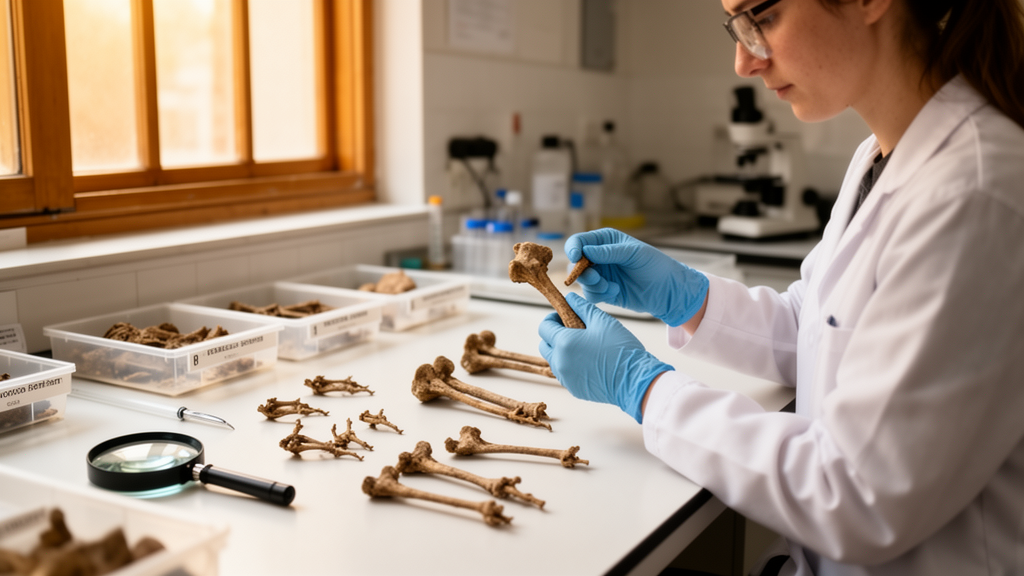
For decades, the ornithological collections housed in Rome have been viewed primarily as static archives of taxonomic data, yet a new study published in Natural History Collections and Museomics reveals that these specimens hold a far richer narrative. The research highlights the pivotal role of Antonio Carruccio, who served as Head of the Institute of Zoology at Rome University from 1883 to 1914, in establishing the first systematic, specimen-based biodiversity research programme in the Italian capital. This historical investigation demonstrates that modern biodiversity science in Italy has deep roots, predating the very term by several decades, and underscores the critical importance of natural history collections in understanding ecological changes over time.
Carruccio’s tenure at the Regia Università in Rome marked a turning point for Italian zoology. Before his arrival, biological research in Rome was often conducted in isolation from major European centers, hindered by political instability and the lack of institutional support. Upon taking the Chair of Zoology in 1883, Carruccio immediately launched a two-track programme aimed at establishing a nationally relevant Zoological Museum. Central to this vision was the creation of the Collezione Romana, a dedicated regional collection focused on the animal diversity of the Roman Province. This initiative was not merely an academic exercise but a strategic effort to train surgeons and naturalists on local faunas, including parasites and agricultural pests, thereby integrating scientific inquiry with practical medical and agricultural needs.
The technical foundation of Carruccio’s work lay in the rigorous curation and documentation of specimens. He systematised the limited spaces available in the Sapienza Palace by creating separate halls for provincial collections, ensuring that each specimen’s geographic origin was unambiguously ascertained. This meticulous approach allowed for the recovery of data from previously poorly labelled collections, such as the Marquis Massimiliano Lazzani bird collection, which comprised 310 specimens of 221 species. By 1888, the Rome Provincial bird collection listed roughly 600 specimens belonging to 152 species, a number that grew to approximately 1,500 specimens of 307 species by 1898. This exponential growth was driven not only by academic efforts but also by the active participation of amateur naturalists and wealthy members of society who contributed their private collections to the museum.
A key innovation of Carruccio’s programme was the establishment of the Roman Society of Zoological Studies in 1892, which later evolved into the Italian Zoological Society. This institution served as a crucial forum for collaboration between professional scientists and amateur enthusiasts, fostering a community that extended beyond the university walls. Notable collaborators included Guido Orazio Falconieri di Carpegna, a nobleman and politician who provided valuable specimens from his private collection, and Giovanni Angelini, a naturalist who made significant contributions to bird systematics. Angelini’s work included the description of two Neotropical bird species, Paroaria humberti and Aphrastura fulva, demonstrating the global reach of the Roman collection’s influence. These collaborations ensured that the museum’s collections were not only expanded but also scientifically validated and published in the Bollettino della Società Romana di Studi Zoologici.
The historical significance of these collections is further illuminated by their role in documenting environmental changes in the region. During Carruccio’s era, the reclamation of marshlands around Rome, such as the Ostia and Maccarese Marshes, was undertaken to eradicate malaria. These drastic landscape alterations had profound effects on bird abundance and diversity, which were meticulously recorded by Roman hunters and ornithologists. The specimens collected during this period now serve as historical data points that are crucial for understanding how bird communities respond to anthropogenic factors. For instance, records of the black woodpecker Dryocopus martius from the Pontine Marshes prior to 1875 provide valuable insights into the species’ historical range and the impact of deforestation in the Lepini Mountains.
Beyond local and regional studies, the Roman collection played a role in national and international ornithological research. Carruccio’s efforts to acquire exotic specimens, including those from the Italian Royal Navy’s circumnavigation of the world, expanded the museum’s global scope. The collection included rare birds from South America, Africa, and Asia, some of which were previously unknown to science. A recent discovery of a specimen of the rare and threatened New Caledonian Owlet-nightjar Aegotheles savesi in the collections of the Museo civico di Zoologia, previously known only from its holotype, further underscores the enduring value of Carruccio’s work. This finding highlights how historical collections can continue to yield new scientific insights long after their initial acquisition.
The legacy of Carruccio’s programme also includes the early stirrings of conservation awareness in Italy. The Roman Zoological Society was an important platform for discussing the establishment of national laws regulating hunting, which had previously been governed by local territories. Figures such as Francesco Chigi della Rovere, a member of one of Rome’s most prominent families, transitioned from being a hunter-collector to a preservationist, advocating for the protection of bird species and their habitats. Chigi’s contributions to the taxonomy of the Passer domesticus complex and his later work on bird ecology and conservation reflect a broader shift in the scientific community’s attitude towards biodiversity. This shift was influenced by the extinction of species such as the great auk and the migratory dove, which served as stark reminders of the consequences of human activity on wildlife.
The study concludes that Carruccio’s establishment of the Collezione Romana represents an often overlooked but valuable achievement in the history of Italian science. The collections he built not only provided a foundation for subsequent ornithological research but also contributed to the development of conservation biology in Italy. Today, as natural history collections are increasingly recognized for their potential to provide geo- and time-referenced genetic data, the work of Carruccio and his collaborators takes on new relevance. The preservation of these specimens allows researchers to address contemporary questions about biodiversity loss and climate change, demonstrating that the past holds essential keys to understanding the future of our planet’s ecosystems.
Ultimately, this research calls for a greater appreciation of the historical dimensions of biodiversity science. By revisiting the archives of the past, scientists can gain a deeper understanding of the long-term trends in species distribution and abundance. The story of Antonio Carruccio and the Roman ornithological collections serves as a testament to the power of sustained, collaborative scientific effort in building a comprehensive picture of the natural world. As Italy continues to assert its position as one of Europe’s most species-rich countries, the lessons from Carruccio’s era remain vital for guiding future conservation strategies and research priorities.
Subject of Research: ‘Ante litteram’ biodiversity research in central Italy: Antonio Carruccio and the first ornithological specimen-based research programme in Rome (1883–1914)
Article Title: ‘Ante litteram’ biodiversity research in central Italy: Antonio Carruccio and the first ornithological specimen-based research programme in Rome (1883–1914)
Article References: Gippoliti, S., & Battisti, C. (2025). ‘Ante litteram’ biodiversity research in central Italy: Antonio Carruccio and the first ornithological specimen-based research programme in Rome (1883–1914). Natural History Collections and Museomics, 2, 1-27. https://doi.org/10.3897/nhcm.2.147504
Image Credits: AI Generated
Keywords: Ante, litteram, biodiversity, research, central, Italy, Antonio, Carruccio, first, ornithological, specimen-based, programme
Cite Scienmag News
Margaret Porter. (October 18, 2026). Hidden Roman Bird Collections Reveal Italy’s Biodiversity History. Scienmag. https://scienmag.com/hidden-roman-bird-collections-reveal-italys-biodiversity-history/
Margaret Porter. "Hidden Roman Bird Collections Reveal Italy’s Biodiversity History." Scienmag, 18 October 2026, https://scienmag.com/hidden-roman-bird-collections-reveal-italys-biodiversity-history/. Accessed 18 October 2026.
Margaret Porter. "Hidden Roman Bird Collections Reveal Italy’s Biodiversity History." Scienmag. October 18, 2026. https://scienmag.com/hidden-roman-bird-collections-reveal-italys-biodiversity-history/


