


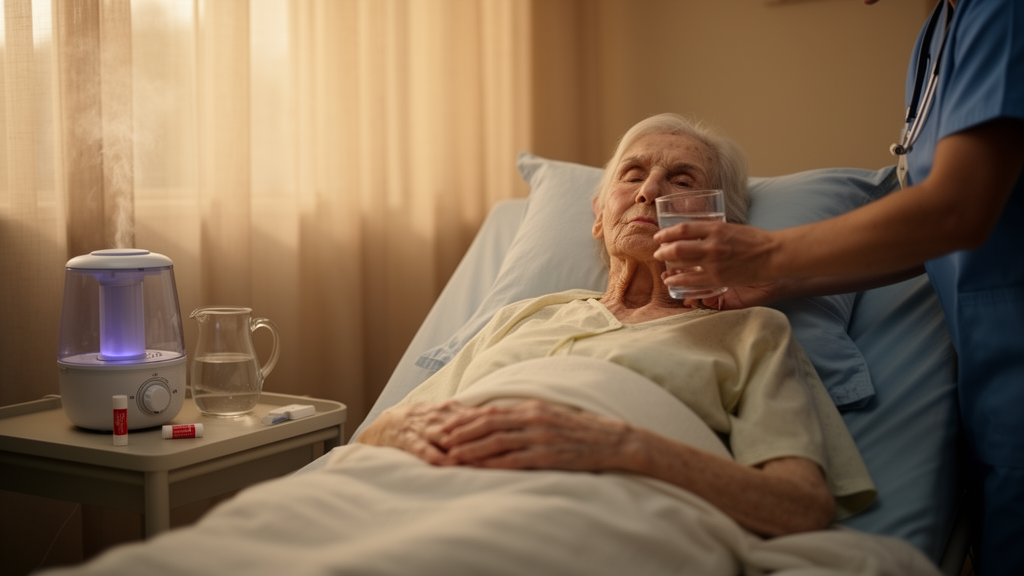
For patients receiving palliative care for cancer, the mouth can become an unexpected battleground. Mucosal lesions, ill-fitting dentures, and a persistent, parching dryness known as xerostomia are strikingly common in this population, yet they are rarely the focus of clinical attention. A new cross-sectional study conducted in southern Chile now provides some of the clearest evidence to date that these oral problems are not merely incidental discomforts. They appear to be woven into the broader fabric of suffering, correlating with how patients function cognitively, socially, and physically in the final chapters of their illness.
The research, published in Supportive Care in Cancer, was carried out by a team led by Felipe Rodríguez-Oria and Constanza Marín-Márquez, with collaborators spanning dentistry and palliative medicine at institutions including Universidad de los Andes, Universidad del Desarrollo, and Universidad San Sebastián, together with the palliative care unit of Hospital Puerto Montt Dr. Eduardo Schütz Schroeder. The investigators recruited 82 adult cancer patients consecutively from a single palliative care unit in southern Chile. The median age of participants was 65 years, and roughly two-thirds were women. The study was approved by the Ethics Committee of the Servicio de Salud del Reloncaví and conducted in accordance with the Declaration of Helsinki, with all participants providing written informed consent.
The clinical picture that emerged from the oral examinations was sobering. Nearly two-thirds of the patients, 64 percent, presented with lesions of the oral mucosa, the delicate lining of the mouth that is particularly vulnerable in people weakened by advanced disease and heavy medication loads. Denture use was almost as common, affecting 62 percent of the cohort, a figure that carries its own risks since poorly maintained or ill-fitting dentures are a well-documented source of mucosal injury, fungal infections, and difficulty eating. Most striking of all was the prevalence of xerostomia, the subjective sensation of a dry mouth, which affected 73 percent of the patients studied.
Xerostomia is far more than an annoyance. Saliva performs a remarkable array of functions: it lubricates food for swallowing, begins the chemical digestion of starches, buffers acids produced by oral bacteria, bathes the teeth in minerals that repair early decay, and maintains the comfort of the soft tissues. When salivary output falls, or when the subjective sensation of dryness rises even without measurable hypofunction, patients may struggle to chew and swallow, lose interest in food, develop rampant caries, and experience burning sensations and altered taste. In palliative care, the problem is compounded by the very drugs used to relieve suffering. Opioids, antidepressants, anticholinergics, and many other medications listed in systematic reviews of salivary gland dysfunction can all reduce salivation, and polypharmacy has been shown in dose-dependent studies to increase the risk of xerostomia among older adults.
To capture how these oral conditions shaped daily life, the researchers deployed a battery of validated instruments. Overall health-related quality of life was measured with the EORTC QLQ-C30, the standard core questionnaire developed by the European Organisation for Research and Treatment of Cancer, which yields functional scales, symptom scales, and a global health status score and has been validated in palliative radiotherapy populations. Oral health-related quality of life was assessed with the EORTC QLQ-OH15, a 15-item module specifically designed and internationally field-tested to capture oral symptoms and their functional and social consequences in cancer patients. Xerostomia severity was quantified with the Xerostomia Inventory, using a Spanish-language version previously validated for Chilean populations. Cognitive screening was performed with the Short Portable Mental Status Questionnaire, and the number of medications, opioid use, and the presence of metastatic disease were recorded as covariates.
The statistical strategy was deliberately cautious. The team first examined bivariate associations using Spearman correlation coefficients and Mann-Whitney U tests, then built multivariable linear regression models adjusted for age, sex, the number of medications, opioid use, and metastatic disease. This adjustment matters because any of these factors could plausibly confound the relationship between a dry mouth and a diminished life: patients on more drugs might be sicker, and sicker patients might report worse quality of life for reasons that have nothing to do with saliva. By holding these variables constant, the analysis asked whether xerostomia carried an independent signal.
It did. Oral health-related quality of life correlated positively with multiple domains of overall health-related quality of life, confirming that the mouth and the person cannot be statistically separated. Patients with xerostomia had significantly lower functional scores and worse oral quality of life than those without it. In the fully adjusted models, each increment in xerostomia severity was associated with poorer cognitive functioning, with a standardized coefficient of minus 0.69 and a 95 percent confidence interval of minus 1.36 to minus 0.01, and poorer social functioning, with a coefficient of minus 0.88 and a confidence interval of minus 1.71 to minus 0.05. The association with oral quality of life itself was stronger still, at minus 0.87 with a confidence interval of minus 1.29 to minus 0.45. In plain terms, the drier the mouth felt, the worse patients rated their ability to think, to connect with others, and to live with their oral condition.
The cognitive finding is the most intriguing and the most speculative. A cross-sectional design cannot establish direction, and the authors are careful to frame their work as exploratory. Several mechanisms could plausibly link the two. Severe dryness disrupts sleep, and fragmented sleep degrades concentration and memory. It makes eating unpleasant, and poor nutrition is a known enemy of cognitive clarity. It may also simply be that patients overwhelmed by unrelieved physical symptoms have less attentional capacity left for anything else, so that a burning mouth and a foggy mind are two faces of the same uncontrolled symptom burden. Conversely, cognitive impairment might make patients less able to describe or manage their oral problems. Disentangling these possibilities will require longitudinal designs.
The social functioning result, by contrast, fits neatly into what qualitative research has long suggested. Recent interview studies with palliative patients describe xerostomia as a silent burden: difficulty speaking forces withdrawal from conversation, embarrassment about dentures or a coated tongue discourages social visits, and the inability to enjoy a meal with family erodes some of the last reliable sources of pleasure and connection. In a phase of illness when the goals of care shift from cure to comfort and meaning, these losses are not trivial. They strike at precisely the domains that palliative medicine exists to protect.
The Chilean study also fills a geographic and evidentiary gap. Most of what is known about oral problems in advanced cancer comes from Europe, North America, and parts of Asia, and a 2024 systematic review and meta-analysis confirmed that oral diseases are highly prevalent in palliative populations worldwide. Yet evidence from Latin America has been thin, and prior work by some of the same Chilean investigators on xerostomia in long-term care facilities suggested the problem extends well beyond cancer care. Studies of nurses in palliative and home-care settings, from Sweden to India to Australia, consistently find that oral health plays second fiddle: it is perceived as important in principle but crowded out by more visible priorities, and formal oral assessment is rarely routine. The new findings give that neglect a measurable cost.
The practical implications are straightforward even if the causal chains remain partly unresolved. The authors argue that their results support routine oral health assessment and active xerostomia management as standard components of palliative care, and international expert consensus from the Multinational Association of Supportive Care in Cancer and the International Society of Oral Oncology already provides clinical practice guidance for managing salivary gland hypofunction in cancer patients. Interventions can be as simple as systematic oral hygiene, saliva substitutes, sialagogue medications where appropriate, regular denture review, and dietary counseling that accounts for how dryness changes food choices. Some evidence even suggests that integrating bedside dental care into multidisciplinary palliative teams can improve quality of life and reduce symptom burden.
There are, of course, limits to what a single-center study of 82 patients can prove. The cross-sectional design captures a snapshot rather than a trajectory, the sample size is modest, and the confidence intervals for the cognitive and social functioning associations brush close to the null, indicating estimates that are real but imprecise. The authors themselves call for confirmation in larger multicenter studies, and the data are available from the corresponding author upon reasonable request. Still, the study was funded by the Institute of Public Policies of Universidad San Sebastián, reported according to the STROBE guidelines for observational research, and grounded in instruments with established psychometric credentials.
What lingers after reading the paper is a quiet reframing of what comfort means at the end of life. Palliative medicine has achieved remarkable things in controlling pain and nausea, but the mouth, the organ through which patients speak, eat, kiss, and take in the world, has often escaped the checklist. This Chilean study suggests that a dry mouth is not a footnote to suffering but a chapter of it, entangled with cognition, sociability, and the overall sense of a life still worth living. Asking a simple question, how is your mouth today, may turn out to be one of the most humane interventions a palliative team can offer.
Subject of Research: The association between oral health-related quality of life and overall health-related quality of life in patients receiving oncological palliative care
Article Title: Associations between oral health–related and overall quality of life in patients receiving oncological palliative care: a single-center cross-sectional study in Southern Chile
Article References: Rodríguez-Oria, F., Vera-Díaz, V., Mengin-Trefny, D., Salazar-Arcos, S., & Marín-Márquez, C. (2026). Associations between oral health–related and overall quality of life in patients receiving oncological palliative care: a single-center cross-sectional study in Southern Chile. Supportive Care in Cancer, 34(10), Article 946. https://doi.org/10.1007/s00520-026-11197-6
Image Credits: AI Generated
DOI: 10.1007/s00520-026-11197-6
Keywords: palliative care, xerostomia, oral health, quality of life, cancer, EORTC QLQ-C30, EORTC QLQ-OH15, dry mouth, polypharmacy, supportive care, Chile, cross-sectional study
Cite Scienmag News
Nathaniel Bowman. (October 18, 2026). Dry Mouth May Quietly Erode Quality of Life in Palliative Cancer Patients. Scienmag. https://scienmag.com/dry-mouth-may-quietly-erode-quality-of-life-in-palliative-cancer-patients/
Nathaniel Bowman. "Dry Mouth May Quietly Erode Quality of Life in Palliative Cancer Patients." Scienmag, 18 October 2026, https://scienmag.com/dry-mouth-may-quietly-erode-quality-of-life-in-palliative-cancer-patients/. Accessed 18 October 2026.
Nathaniel Bowman. "Dry Mouth May Quietly Erode Quality of Life in Palliative Cancer Patients." Scienmag. October 18, 2026. https://scienmag.com/dry-mouth-may-quietly-erode-quality-of-life-in-palliative-cancer-patients/


