


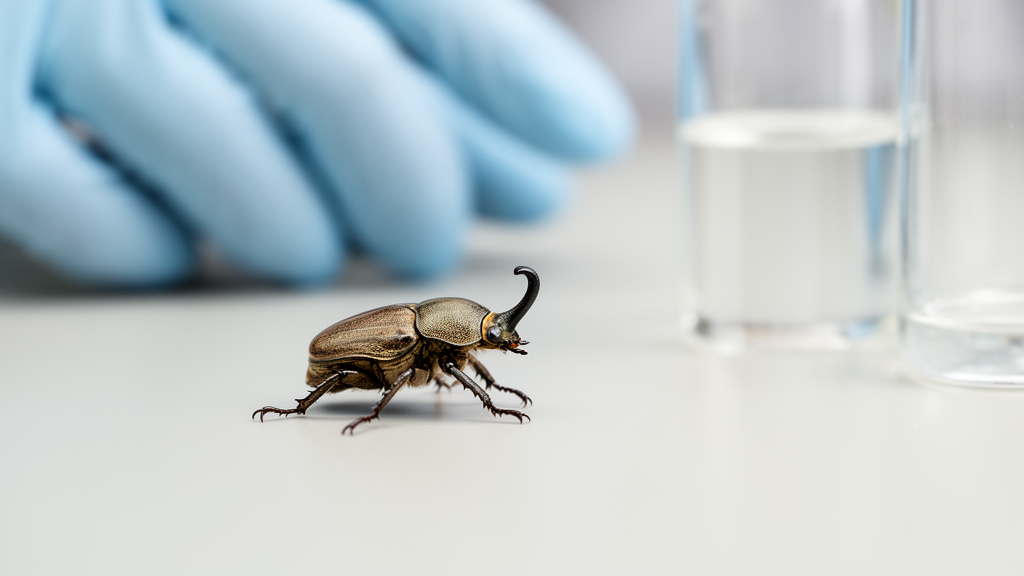
In the intricate world of insect morphology, the evolution of exaggerated traits has long been dominated by the study of male weaponry. For decades, researchers have focused on the dramatic horns of male scarab beetles, which serve as critical tools in sexual selection and mate competition. However, a significant gap remained in our understanding of female horn plasticity, a phenomenon where female beetles also develop prominent, nutrition-sensitive horns. A new study published in Frontiers in Zoology addresses this oversight by investigating the transcriptomic basis underlying the evolution of female horn plasticity in three species of Onthophagus beetles. The analysis links differences in gene activity to these morphological variations and identifies candidate regulatory networks; it does not directly test each gene’s causal function.
The study focuses on three specific Onthophagus species that exhibit contrasting horn morphologies and nutritional responsiveness: O. bivertex, O. sagittarius, and O. rectecornutus. In O. bivertex, females possess only minute, mildly nutrition-sensitive posterior head horns, a morphology common across the genus. In contrast, O. sagittarius females develop a single posteromedial head horn with moderate nutritional responsiveness, while O. rectecornutus females produce a pair of bilateral posterior head horns with pronounced responsiveness to nutrition. By comparing these species, the researchers were able to map the phylogenetic history of female horn expression and determine how enhanced nutritional sensitivity evolved in derived lineages. The findings indicate that rudimentary female horns represent the ancestral condition, with exaggerated, nutrition-sensitive horns evolving subsequently in specific lineages.
To understand the molecular mechanisms behind these morphological changes, the researchers performed RNA sequencing on head horn primordia from females at the prepupal stage, reared under both low-nutrient and high-nutrient conditions. This approach allowed them to identify differentially expressed genes, specifically those classified as nutrition-responsive genes (NRGs). The analysis revealed a striking difference in the number of NRGs across the three species. O. rectecornutus exhibited 843 NRGs, O. sagittarius had 1,294, and O. bivertex had only 327. Interestingly, the number of NRGs did not strictly correlate with the magnitude of horn plasticity. O. sagittarius, which displays moderate horn plasticity, had more NRGs than O. rectecornutus, which shows strong nutritional responsiveness. This discrepancy suggests that the elaboration of horn plasticity is not simply a matter of gene abundance but involves complex regulatory mechanisms that modulate the activity of existing genetic networks.
A key finding of the study is that enhanced female horn plasticity arises primarily through the recruitment and modulation of conserved regulatory networks, rather than through the emergence of new, lineage-specific genes. Comparative transcriptomics showed that only three genes responded consistently across all three species, highlighting the lineage-specific nature of the transcriptional responses. However, 338 NRGs were shared between O. sagittarius and O. rectecornutus, the two species with enhanced nutritional sensitivity, but not with O. bivertex. This pattern suggests that the evolution of heightened nutritional plasticity in female horn morphology was driven by the recruitment of previously nutrition-insensitive gene expression programs into a plastic regulatory framework. The researchers also identified species-specific NRGs, with 713 in O. sagittarius and 334 in O. rectecornutus, indicating that while conserved networks are central, lineage-specific modifications also play a role in shaping the final morphological outcome.
The study further investigated the contribution of taxon-restricted genes (TRGs), which are genes with no recognizable homologs outside a specific clade and are often considered drivers of evolutionary innovation. In O. rectecornutus, only 1.05% of TRGs were differentially expressed, compared to 4.74% of conserved genes. A similar trend was observed in O. sagittarius, where 1.98% of TRGs were differentially expressed versus 7.88% of conserved genes. These results strongly suggest that the evolutionary enhancement of female head horn plasticity is largely mediated by the redeployment of pre-existing molecular circuits rather than the emergence of novel genetic elements. This finding aligns with broader principles in evolutionary developmental biology, where morphological innovations often arise via modifications of conserved developmental modules, providing a flexible and low-cost route for generating novel traits.
Another critical aspect of the research involves the comparison of transcriptional responses between males and females in O. rectecornutus, a species where both sexes possess exaggerated head horns. The differential expression analysis revealed pronounced sex bias, with 815 NRGs in males and 843 in females, but only 214 genes shared between the sexes. The expression correlation across sexes was low, underscoring largely independent nutritional responses. Among the shared NRGs, a significant number exhibited opposing shifts in expression between males and females, with some genes being upregulated in one sex and downregulated in the other. This transcriptional divergence suggests that males and females achieve horn exaggeration through distinct genetic architectures, despite the shared developmental origin of the horns. The findings highlight the importance of sex-specific regulatory mechanisms in the evolution of exaggerated traits.
Gene Ontology enrichment analysis further illuminated the functional specialization of sex-specific NRGs. Male-specific NRGs were enriched in metabolic process regulation and gene expression control, whereas female-specific NRGs were enriched in pathways related to developmental and physiological adaptation. Notably, several GO terms, including anatomical structure morphogenesis and cell morphogenesis, were significantly enriched in both male- and female-specific NRGs, but the underlying gene sets were entirely non-overlapping. This indicates that while both sexes converge on broad developmental processes, the transcriptional implementation of these processes is sex-specific. The shared NRGs between sexes were enriched in highly conserved biological pathways, including amino acid metabolism, steroid and insect hormone biosynthesis, and Hedgehog signaling, identifying these core pathways as candidates for shared roles in horn development in both sexes.
The evolutionary implications of these findings are profound. The study demonstrates that exaggerated female horns arise through a mosaic of conserved and lineage-specific regulatory mechanisms, with strong sex bias in transcriptional control. The repeated co-option of conserved developmental networks, coupled with lineage-specific transcriptional divergence, highlights the flexibility of genetic toolkits in driving morphological evolution. This pattern mirrors broader principles in evolutionary biology, where parallel redeployment of conserved networks coupled with lineage-specific divergence often underlies the repeated origins of complex traits. The research also underscores the importance of considering both sexes in studies of trait evolution, as the distinct selective contexts in which horns evolve—sexual selection in males and ecological selection in females—likely drive the observed transcriptional divergence.
While the study provides a robust transcriptomic framework for understanding female horn plasticity, the researchers note that their conclusions are based on transcriptomic analyses rather than direct functional assays. Experimental validation will be necessary to confirm the roles of the identified genes and pathways in horn plastic development. Nonetheless, the analysis provides a set of candidate genes and regulatory networks to guide future functional studies of lineage- and sex-specific horn plasticity. The findings contribute to a growing body of evidence that conserved genetic toolkits can be differentially mobilized by sex- and lineage-specific selection to drive the evolution of novel, plastic, and exaggerated traits. This work not only advances our understanding of scarab beetle evolution but also offers broader insights into the mechanisms of morphological diversification in other animal groups.
In conclusion, this study sheds new light on the transcriptomic basis of female horn plasticity in scarab beetles, revealing that enhanced plasticity evolves through the recruitment of conserved regulatory networks and lineage-specific modifications. The distinct transcriptional architectures underlying male and female horn development highlight the complexity of sexual dimorphism and the role of sex-specific selection in trait evolution. By focusing on the often-overlooked female traits, this research provides a more comprehensive picture of the evolutionary dynamics that shape insect morphology. As scientists continue to explore the genetic and developmental mechanisms behind exaggerated traits, the identified networks offer candidates for functional tests of how conserved developmental modules contribute to morphological differences.
Subject of Research: Transcriptomic mechanisms of female horn plasticity evolution in Onthophagus scarab beetles
Article Title: Transcriptomic basis underlying the evolution of female horn plasticity in scarab beetles
Article References: Qi, C., Zhang, W., & Hu, Y. (2026). Transcriptomic basis underlying the evolution of female horn plasticity in scarab beetles. Frontiers in Zoology, 23(1), Article 6. https://doi.org/10.1186/s12983-026-00597-3
Image Credits: AI Generated
DOI: 10.1186/s12983-026-00597-3
Keywords: scarab beetles, transcriptomics, female horn plasticity, evolutionary biology, sexual dimorphism, Onthophagus, gene expression, morphological evolution, nutrition-sensitive growth, regulatory networks
The cited source study is licensed under CC BY 4.0. This article is an edited news summary; the original authors and DOI are credited above.
Cite Scienmag News
Juliet Wilcox. (October 18, 2026). Study Maps Gene Activity Behind Female Beetle Horns. Scienmag. https://scienmag.com/study-maps-gene-activity-behind-female-beetle-horns/
Juliet Wilcox. "Study Maps Gene Activity Behind Female Beetle Horns." Scienmag, 18 October 2026, https://scienmag.com/study-maps-gene-activity-behind-female-beetle-horns/. Accessed 18 October 2026.
Juliet Wilcox. "Study Maps Gene Activity Behind Female Beetle Horns." Scienmag. October 18, 2026. https://scienmag.com/study-maps-gene-activity-behind-female-beetle-horns/


