


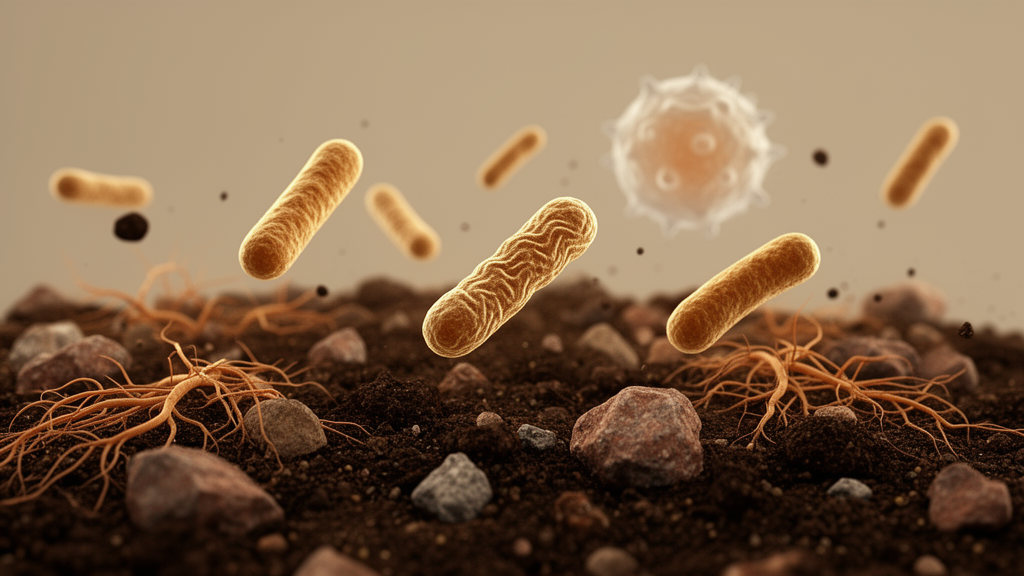
Deep in the world’s soils lives a bacterium that has quietly become one of the most intriguing characters in modern health science. Mycobacterium vaccae, a non-pathogenic, saprophytic soil microbe, is the subject of a new narrative review published in Frontiers in Soil Science that attempts something ambitious: to trace a single thread from terrestrial ecosystem health through human immune regulation to mental well-being. The review, led by researchers at the Universidad de Concepción in Chile together with collaborators in Honduras and Santiago, synthesizes evidence spanning soil microbiology, immunology, neuroscience and clinical medicine, and arrives at a conclusion that is as cautious as it is compelling. Mycobacterium vaccae may indeed be a keystone link between soil and human health, but the evidence, the authors stress, remains largely preclinical and hypothesis-generating rather than clinically proven.
The organism itself is a study in contrasts. Like all mycobacteria, it is Gram-positive, aerobic and non-spore-forming, with a lipid-rich cell wall containing mycolic acids, the waxy molecules that give the family its name and its characteristic resilience. Unlike its notorious relatives Mycobacterium tuberculosis and Mycobacterium leprae, however, M. vaccae is non-pathogenic and appears to exert predominantly immunoregulatory rather than pro-inflammatory effects. A 2018 phylogeny-based taxonomic revision formally reassigned the species to the genus Mycolicibacterium, making Mycolicibacterium vaccae its current designation, though the older name remains standard throughout the immunological and clinical literature and is retained in the review. The bacterium is a resident member of soil microbial communities, particularly in organic matter-rich soils of vegetated ecosystems, and it was there that scientists first began to wonder whether contact with it might matter for people.
That curiosity grew out of one of the most influential ideas in late twentieth-century medicine. The hygiene hypothesis, formulated by David Strachan in 1989, originally emphasized reduced childhood infections as an explanation for rising allergic disease in industrialized societies. It was later refined into the old friends hypothesis, which proposes something subtly different: that diminished contact with co-evolved environmental microorganisms, organisms that shaped human immune regulation throughout evolutionary history, contributes to immune dysregulation in modern populations. The review is careful to keep these two concepts distinct. Epidemiological observations linking reduced environmental microbial exposure with increased allergic and immune disorders provided the initial impetus, and subsequent experimental work by researchers including Dorothy Matthews, Susan Jenks and Christopher Lowry supplied evidence, primarily from rodent models, that M. vaccae can foster regulatory immune responses and, in early studies, favorable behavioral outcomes.
Ecologically, the bacterium’s best-documented talent is catabolic. The most extensively studied isolate, strain JOB-5, expresses an inducible propane monooxygenase that allows it to co-metabolize a broad range of recalcitrant pollutants, including trichloroethylene, other chlorinated aliphatic solvents, the explosive 2,4,6-trinitrotoluene and the gasoline additive methyl tert-butyl ether. This catabolic versatility has made M. vaccae one of the more thoroughly characterized soil bacteria for potential bioremediation of groundwater and soils contaminated with chlorinated solvents and related industrial chemicals, and it represents the organism’s most robustly demonstrated contribution to soil biogeochemistry. In other words, the same microbe proposed to calm human immune systems is also documented as a natural cleanup agent for some of humanity’s most persistent chemical messes, a duality that underscores how little we still know about the functional repertoire of soil communities.
How humans encounter this bacterium is a story of geography and lifestyle. Exposure occurs primarily through inhalation, dermal contact and ingestion of soil-associated materials. During soil-disturbing activities such as gardening, agriculture or simply walking through natural environments, microscopic soil particles containing M. vaccae can be aerosolized and inhaled, bringing the bacteria into contact with respiratory mucosa and its associated immune cells. Direct skin contact during gardening or outdoor play provides another route, while inadvertent soil ingestion, particularly relevant in children, and consumption of vegetables grown in soils harboring the bacterium constitute a third. The review notes that reported exposure differs between rural and urban environments, with urban settings showing reduced abundance and diversity of the organism in available soils, attributable to extensive paving, chemical contamination and altered soil management. But the authors add an important caveat: most comparative studies characterize overall soil microbial diversity rather than M. vaccae abundance specifically, so the rural-urban gradient for this species is best regarded as inferred from broader microbiome data rather than directly demonstrated.
The immunological mechanisms are where the review’s technical depth becomes most apparent. In experimental models, M. vaccae acts as an immune regulator that promotes balanced responses and can reduce pathological inflammation. Dendritic cell priming by the bacterium has been shown to inhibit Th2-skewed responses, in contrast to priming by specific Toll-like receptor 2 agonists, through selective activation of the CREB signaling pathway. Separately, strain NCTC 11659 has been shown to modulate the proinflammatory effects of lipopolysaccharide in macrophages, consistent with an anti-inflammatory, regulatory action on innate immune cells. Across applications, the documented mechanisms include induction of tolerogenic dendritic cells, expansion of regulatory T cells and modulation of macrophage activity toward M2 anti-inflammatory phenotypes. These findings provide mechanistic support for the old friends hypothesis and align with epidemiological evidence showing lower rates of atopy and inflammatory disorders in populations with greater exposure to microbially diverse environments, particularly traditional farming communities.
The neurobiological evidence is where the story becomes both most viral and most tentative. In murine models, immunization with M. vaccae selectively increases expression of tryptophan hydroxylase 2, the rate-limiting enzyme in serotonin biosynthesis, in specific subregions of the dorsal raphe nucleus, a brainstem structure central to serotonergic signaling. Foundational work identified activation of a specific population of serotonergic neurons in the dorsal raphe following exposure, with follow-up studies reporting increased serotonergic rather than dopaminergic activity in the medial prefrontal cortex and antidepressant-like behavioral effects. Heat-inactivated preparations induce antidepressant-like behavior through this serotonergic activation, while oral administration of live bacteria reduces anxiety-like behavior and improves learning performance in mice. Immunization with heat-killed M. vaccae also enhances resilience to chronic psychosocial stress, reducing anxiety-related behaviors, colitis severity, microglial activation, neuroinflammation and pro-inflammatory cytokine production. Notably, antidepressant-like responses in rodent assays appear with a shorter onset than conventional antidepressants in similar tests, suggesting distinct and potentially complementary mechanisms of action.
Human evidence, however, remains thin. The review reports that direct human data for neuropsychiatric outcomes are limited and do not by themselves establish an antidepressant or anxiolytic effect in people. A phase III clinical trial did report that heat-killed M. vaccae, the clinical-grade formulation SRL172, used as an adjunct to chemotherapy improved quality of life, including emotional and cognitive well-being, in patients with advanced non-small-cell lung cancer, though without improving survival. The authors caution that those quality-of-life improvements were a secondary endpoint measured with general instruments not specifically designed to assess anxiety or depression, and should not be equated with a validated psychiatric treatment effect. For allergic and inflammatory conditions the picture is somewhat stronger but still modest: a clinical study in children with atopic dermatitis reported improvements in the SCORAD index and cytokine changes consistent with a shift away from a pro-allergic profile, while animal models of allergic asthma show reduced bronchial hyperresponsiveness, pulmonary eosinophilic infiltration and allergen-specific IgE levels. In oncology and tuberculosis, M. vaccae-based preparations have been evaluated as vaccine and therapy adjuvants, with a phase III tuberculosis vaccine trial showing enhanced protective immunity when combined with BCG compared with BCG alone.
Safety and methodological uncertainties temper the enthusiasm. Although M. vaccae is considered non-pathogenic and has shown a favorable safety profile in tuberculosis and cancer immunotherapy trials, with adverse events generally limited to mild, transient injection-site reactions and low-grade fever, important gaps remain. Data in immunocompromised populations, including people living with HIV, transplant recipients and those receiving immunosuppressive or biologic therapy, are essentially absent from the reviewed literature, a significant omission given that the proposed mechanism is immunomodulatory and could plausibly behave differently in a dysregulated immune system. Because M. vaccae shares antigenic determinants with other mycobacteria, prior exposure could in principle interfere with tuberculin skin testing or interferon-gamma release assays used for tuberculosis diagnosis, a possibility with biological plausibility that has not been systematically evaluated. Differences between live and heat-killed preparations, which vary in bacterial viability, antigen presentation and dosing, plausibly contribute to the heterogeneity of reported outcomes, and findings obtained with one strain should not be generalized to another without direct comparative evidence. Clinical research also faces a fundamental mismatch: natural exposure is chronic, low-dose and multimodal, whereas trials use discrete, higher-dose interventions with heterogeneous formulations.
The broader implications reach into planetary health, the framework associated with the Rockefeller Foundation-Lancet Commission proposing that human health depends critically on the integrity and biodiversity of natural systems. The review situates M. vaccae as an illustrative case of this interdependence, noting that conventional agriculture with intensive agrochemical use reduces soil microbial diversity, that sustainable practices such as crop rotation, organic fertilization, minimum tillage and cover cropping are associated with increased populations of beneficial soil microorganisms, and that the Food and Agriculture Organization estimates approximately one-third of the planet’s soils are degraded, with fertility loss occurring faster than natural recovery. Yet the authors are explicit that the evidence linking soil biodiversity loss specifically to human disease burden remains largely correlational, indirect and susceptible to confounding, and that no study identified establishes a direct, quantitative, causal relationship between M. vaccae exposure and disease outcomes at the population level. The keystone link framing, they conclude, should be understood as a heuristic and a hypothesis warranting dedicated investigation rather than an established causal pathway. Future directions include microbial epigenetics, environmental neuroimmunology, the emerging concept of microbial ecotherapy through controlled exposure to M. vaccae-rich soils, and advances in CRISPR-Cas9 gene editing, organ-on-chip platforms, high-resolution metabolomics and computational multi-omics. For now, the bacterium stands as a tangible reminder that the ground beneath our feet may be more intimately connected to our immune systems and minds than urbanized life has assumed, and that proving it will require the kind of rigorous, transdisciplinary research this review both summarizes and calls for.
Subject of Research: Bridging soil health and human health: Mycobacterium vaccae as a keystone link
Article Title: Bridging soil health and human health: Mycobacterium vaccae as a keystone link
Article References: Espinoza-Mendoza, C., Espejo, W., Celis, J. E., Banegas-Medina, A., Montes, I.-Y., Espejo-Contreras, W., Schoebitz, M., & Sandoval, M. (2026). Bridging soil health and human health: Mycobacterium vaccae as a keystone link. Frontiers in Soil Science, 6, Article 1957461. https://doi.org/10.3389/fsoil.2026.1957461
Image Credits: AI Generated
DOI: 10.3389/fsoil.2026.1957461
Keywords: Bridging, soil, health, human, Mycobacterium, vaccae, keystone, link, scientific research
Cite Scienmag News
Morgan Morrow. (October 18, 2026). Soil bacterium Mycobacterium vaccae may link soil health to human immunity. Scienmag. https://scienmag.com/soil-bacterium-mycobacterium-vaccae-may-link-soil-health-to-human-immunity/
Morgan Morrow. "Soil bacterium Mycobacterium vaccae may link soil health to human immunity." Scienmag, 18 October 2026, https://scienmag.com/soil-bacterium-mycobacterium-vaccae-may-link-soil-health-to-human-immunity/. Accessed 18 October 2026.
Morgan Morrow. "Soil bacterium Mycobacterium vaccae may link soil health to human immunity." Scienmag. October 18, 2026. https://scienmag.com/soil-bacterium-mycobacterium-vaccae-may-link-soil-health-to-human-immunity/


