


In one of the first studies of its kind conducted in Iraq’s Kurdistan Region, researchers have found that adverse childhood experiences (ACEs) are strongly linked to post-traumatic stress disorder and generalized anxiety in young adulthood, while strong social support appears to dramatically reduce the odds of screening positive for either condition. The findings, drawn from a probability-based sample of university students in Koya, offer rare empirical evidence about how early adversity shapes mental health in fragile and conflict-affected settings, where such research has long been scarce.
The study, published in Current Psychology, surveyed 368 students at Koya University in the Hawler (Erbil) Governorate between April and May 2023. Participants were selected through a two-stage cluster sampling strategy designed to give every student an equal chance of inclusion. The researchers first divided the student population into five clusters based on dormitory blocks, then randomly selected rooms from the university’s Directory of Residential Halls using SPSS. All members of each chosen room were invited to participate, with the process continuing until an adequate sample was reached. Because the university had a higher proportion of female students at the time, the data collection aimed to include more female participants, who ultimately made up 59.2 percent of the final sample.
The results paint a sobering picture of childhood adversity in the region. More than half of participants, 56.8 percent, reported at least one ACE, while 12.8 percent reported four or more, indicating high cumulative exposure. Physical abuse was the most prevalent individual ACE at 31 percent, followed by emotional abuse at 27.7 percent, emotional neglect at 19 percent, household incarceration at 13.3 percent, and parental mental illness at 12.2 percent. One in ten participants reported experiencing childhood sexual abuse. Notably, the mean score for the abuse and neglect subtype was roughly double that of the household dysfunction subtype, suggesting that direct maltreatment was more common than family-level dysfunction in this sample.
The mental health burden among these young adults was equally striking. Nearly two in five students screened positive for PTSD, using the conservative 33-point cutoff on the PTSD Checklist for DSM-5, and 38.6 percent screened positive for generalized anxiety disorder on the GAD-7 scale. Mean perceived stress, measured on the Perceived Stress Scale, fell in the moderate range, with 72.3 percent of participants reporting moderate stress. Perhaps most alarming was the gap between symptom burden and formal care: only 4.62 percent of participants reported ever having been diagnosed with a mental disorder by a professional, pointing to widespread underdiagnosis and unmet need.
When the researchers fit multivariate logistic regressions adjusting for age, sex, year of study, and social support, each additional ACE was associated with a 26 percent increase in the odds of screening positive for generalized anxiety and a 36 percent increase in the odds of screening positive for PTSD. The subtype analysis revealed a novel pattern: each additional abuse and neglect ACE raised the odds of anxiety by 44 percent and PTSD by 55 percent, while each additional household dysfunction ACE was associated with a 49 percent increase in PTSD odds but showed no significant association with generalized anxiety. The researchers suggest that the relatively low prevalence of household dysfunction in the sample may have limited statistical power to detect an anxiety association, and that cultural norms, including strong taboos surrounding divorce, may contribute to underreporting of family difficulties.
Social support emerged as a powerful promotive factor across all models. Students with strong perceived social support, measured on the Oslo Social Support Scale, had 61 percent lower odds of screening positive for anxiety and 70 percent lower odds of screening positive for PTSD compared with those reporting poor support, all else equal. When adjusting for ACE subtypes, the protective associations remained robust, with strong support linked to 62 percent lower anxiety odds and 71 percent lower PTSD odds. The finding aligns with the main effects model of social support, which posits that direct promotive effects on well-being occur regardless of stress exposure, and resonates with the Health Outcomes from Positive Experiences framework, which emphasizes supportive relationships as key positive childhood experiences that foster resilience.
The prevalence of physical abuse in this sample exceeded the recent global pooled estimate of 18.2 percent but was consistent with the Middle East-specific estimate of 30.7 percent. Household incarceration also surpassed both global and regional pooled estimates. The researchers note that the broader pattern of findings generally aligned with the international literature, though a prior Iraqi study found physical neglect to be the most common ACE, a discrepancy the current team attributes partly to differences in sampling and translation methods. The Kurdistan Region’s long history of violence, including torture, displacement, genocide, the war against the Islamic State, and attacks by neighboring countries, likely compounds the mental health burden associated with early adversity.
The study employed culturally adapted instruments to ensure validity in the Kurdish context. The ACE questionnaire and Perceived Stress Scale were translated into the Sorani dialect of Kurdish using a forward-backward translation process, while the team used recently adapted Kurdish-Sorani versions of the Oslo Social Support Scale, GAD-7, and PCL-5 that had been piloted with Anfal Genocide survivors. Internal consistency was strong across measures, with Cronbach’s alpha reaching 0.93 for the PCL-5 and 0.89 for the GAD-7. Sensitivity analyses adjusting standard errors for clustering at the dormitory block level did not materially alter the primary results.
The findings carry significant implications for campus mental health planning and humanitarian practice. The high proportion of students screening positive for probable PTSD and anxiety suggests that university services in the Kurdistan Region may need substantially greater capacity for assessment, referral, and follow-up, capabilities the researchers note are currently lacking. Considering a history of adversity in routine assessment, provided it is done ethically and confidentially, may help contextualize students’ needs. Because social support was consistently associated with better outcomes, efforts to map and strengthen existing peer networks and student support structures may be reasonable components of broader well-being initiatives. In humanitarian settings, the results highlight the need to screen for ACEs and to protect and rebuild social connections for individuals and communities who have lost them.
The researchers acknowledge several limitations. The cross-sectional design precludes causal inference, the sample consisted exclusively of university students, and retrospective ACE reporting can introduce recall and reporting bias. The standard 10-item ACE measure may not fully capture adversity profiles salient in conflict-affected settings; the World Health Organization’s ACE International Questionnaire, for example, includes items on exposure to war and collective violence that could have been highly relevant to many participants. Future work would benefit from more contextually adapted measurement approaches that account for sociocultural factors and conflict-related exposures. Nevertheless, as the first study to explore the association between ACEs and mental health problems in the Kurdistan Region, the research provides a foundation for strategic planning among universities, humanitarian organizations, and other actors serving young adults in the region, underscoring the urgent need for greater mental health surveillance, expanded clinical screening, and investment in accessible psychosocial support.
Subject of Research: Mental Health
Article Title: Adverse childhood experiences, social support, and young adult mental health in the conflict-affected Kurdistan Region of Iraq
Article References: Hama-Amin, D. S., Bennouna, C., Vukovich, M. M., Mohammad, P. J., Muhammad Hussein, Y. W., Karim, B. M., Mohammed, V. A., Hussein, P. F., Hassan, S. N., & Hama Sharif, S. A. (2026). Adverse childhood experiences, social support, and young adult mental health in the conflict-affected Kurdistan Region of Iraq. Current Psychology, 45(20), Article 1621. https://doi.org/10.1007/s12144-026-10191-9
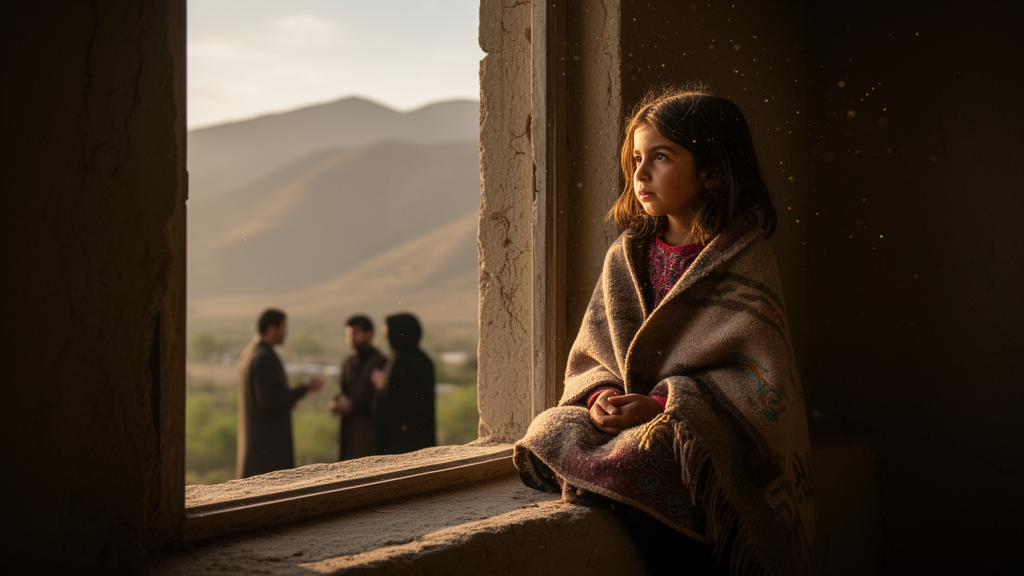
Image Credits: AI Generated
DOI: 10.1007/s12144-026-10191-9
Keywords: adverse childhood experiences, PTSD, generalized anxiety, social support, Kurdistan Region of Iraq, conflict-affected settings, university students, mental health, Adverse, childhood, experiences, social
Cite Scienmag News
Glenn Wilkins. (October 18, 2026). Childhood adversity leaves lasting mental health scars in conflict-hit Kurdistan, study finds. Scienmag. https://scienmag.com/childhood-adversity-leaves-lasting-mental-health-scars-in-conflict-hit-kurdistan-study-finds/
Glenn Wilkins. "Childhood adversity leaves lasting mental health scars in conflict-hit Kurdistan, study finds." Scienmag, 18 October 2026, https://scienmag.com/childhood-adversity-leaves-lasting-mental-health-scars-in-conflict-hit-kurdistan-study-finds/. Accessed 18 October 2026.
Glenn Wilkins. "Childhood adversity leaves lasting mental health scars in conflict-hit Kurdistan, study finds." Scienmag. October 18, 2026. https://scienmag.com/childhood-adversity-leaves-lasting-mental-health-scars-in-conflict-hit-kurdistan-study-finds/


