


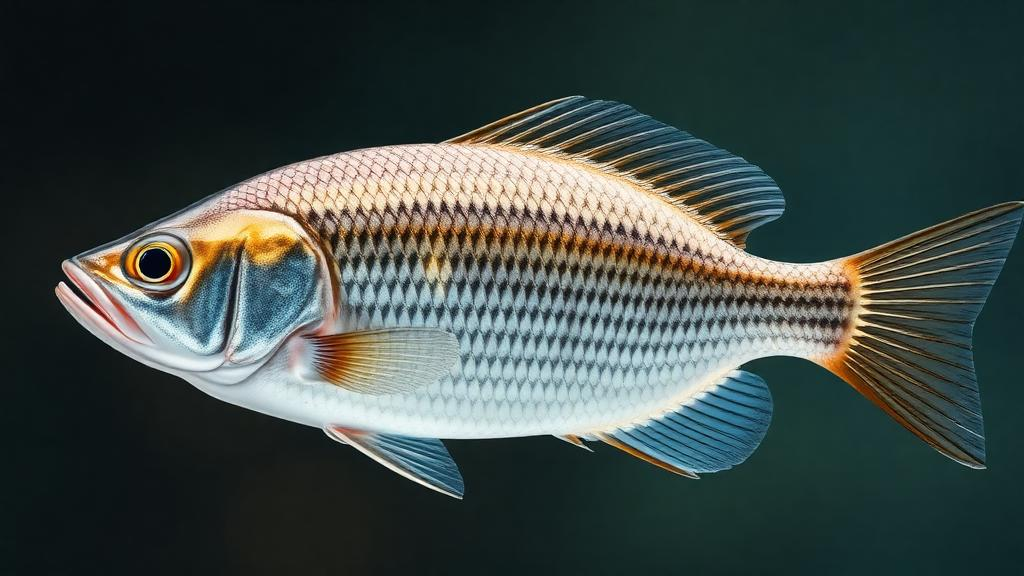
Tilapia is one of the most widely farmed fish on Earth, with global production climbing from just over three million tonnes in 2010 to more than five million tonnes in 2022. Yet behind that success story lies a pair of stubborn problems that have haunted the industry for decades: early, uncontrolled spawning that wrecks grow-out efficiency, and growing consumer resistance to the synthetic hormones traditionally used to solve it. Now, a team working in the Philippines has reported a genetic solution tailored to a fish built for a changing climate — a saline-tolerant tilapia hybrid engineered to produce all-male offspring without ever treating a single fry with steroids. The study, published in Acta Ichthyologica et Piscatoria, describes the development of YY supermales in the UPV SpiN tilapia hybrid, a cross between the brackish-water-hardy Sabaki tilapia (Oreochromis spilurus) and the fast-growing Nile tilapia (Oreochromis niloticus), using molecular marker-assisted selection.
The logic of all-male tilapia culture is straightforward. When farmed tilapia reach sexual maturity too early, they spawn inside production ponds, flooding systems with unwanted fry that compete for food and space and produce a chaotic spread of sizes at harvest. All-male populations grow faster and more uniformly, which is why the industry has long relied on dosing fry with 17α-methyltestosterone to masculinize them. But that practice has drawn intensifying scrutiny from consumers and regulators, even though studies repeatedly show hormone residues in treated fish are often below detection limits. In the Philippines, where tilapia is the second most cultured finfish and the most commonly eaten fish in the country, national production has been slipping — squeezed by limited freshwater farming area, declining water quality, and, increasingly, saline intrusion driven by sea-level rise and coastal groundwater salinization. Roughly 93% of Philippine tilapia farming still happens in freshwater, making the sector acutely vulnerable to salt creeping into traditional ponds.
The UPV SpiN hybrid was developed as a candidate for exactly this kind of environment, combining the salinity tolerance of O. spilurus with the rapid growth of O. niloticus. But salinity tolerance alone does not solve the monosex problem. The new study builds on previous work in which researchers produced neofemales — fish with XY chromosomes that were sex-reversed into functional females using 17β-estradiol, a naturally occurring estrogen — and confirmed their genotype with PCR markers targeting the amhy gene, a key determinant of male sex differentiation located on linkage group 23. The potential of those neofemales to generate YY progeny had never been tested. The present work set out to cross confirmed neofemales with genotypically verified natural XY males, harvest the YY supermales that result, and then pair those supermales with ordinary XX females to see whether they could sire genetically all-male offspring.
The molecular toolkit at the heart of the study is a newly designed primer set, UPV-SpiN-M5, adapted from an established Marker-5 primer targeting the same amhy gene. The primer amplifies fragments of approximately 963 base pairs from the X chromosome and 523 base pairs from the Y chromosome, producing distinct banding patterns on an agarose gel that allow researchers to read a fish’s sex genotype directly from its DNA. Both the new and original primers produced consistent sex-specific amplification patterns when tested on the same DNA samples, confirming the diagnostic accuracy of the new marker for this hybrid. That molecular shortcut is what separates this approach from conventional YY breeding, which in earlier Philippine efforts on freshwater Nile tilapia required hundreds of breeding pairs and laborious progeny testing to confirm YY genotypes — a process so inefficient it was difficult to scale.
The breeding trial itself was a carefully staged genetic cross. Twenty-four confirmed neofemales, weighing 200 to 250 grams, and six natural XY males, weighing 250 to 300 grams, were stocked in one-metric-ton spawning tanks, each holding one male and four neofemales, all genotypically verified with the UPV-SpiN-M5 primer. The breeders, normally maintained at salinities of 15 to 20 parts per thousand, were conditioned in freshwater for 14 days before pairing. Fry collections began 14 days post-pairing, and a total of 879 swim-up fry were collected across the six families. The fry were reared under standard hatchery conditions — water temperature of 28.20 ± 0.50°C, dissolved oxygen of 6.10 ± 0.10 mg per liter, and ammonia of 0.05 ± 0.02 mg per liter — with salinity gradually raised by about two parts per thousand per day until it reached the target range of 15 to 20 parts per thousand, monitored daily with a handheld refractometer.
When 471 randomly selected adults from that F2 generation were phenotypically sex-sorted and genotyped, the results matched genetic theory almost perfectly. A Punnett square for an XY × XY cross predicts a 1:2:1 ratio of XX, XY, and YY genotypes, and the observed population came in at 25.05% XX, 50.11% XY, and 24.84% YY — 117 confirmed YY supermales out of 471 fish. Representative gel electrophoresis confirmed the diagnostic band patterns for each genotype, with the 963-base-pair X-specific and 523-base-pair Y-specific bands allowing clear differentiation. The YY supermales, in other words, could be identified molecularly at early stages, without the extensive test-crossing and phenotypic validation that conventional approaches demand, dramatically shortening the breeding cycle needed to establish YY broodstock lines.
The decisive test came next. Nine confirmed YY supermales, each paired with three genotypically verified natural XX females, were established across nine families in three independent breeding batches conducted in December 2024, March 2025, and May 2025. Here the study hit a bottleneck: in every batch, only one of the three families successfully spawned and produced swim-up fry, a pattern repeated consistently across all three time points. The researchers suggest the low spawning success may reflect suboptimal broodstock compatibility, environmental stressors, or unexpected variation in reproductive readiness and pairing dynamics. Still, the successful families delivered a total of 721 viable fry, and 302 randomly selected individuals were genotyped. Every single one carried the Y-specific amhy band — a 100% detection rate of Y chromosomes, exactly what Punnett square principles predict for a YY × XX cross, which should yield only XY progeny. The researchers note that a subset of samples displayed only the Y-specific band rather than both X- and Y-specific bands, which does not imply YY individuals — genetically impossible from this cross — but more likely reflects differences in amplification efficiency, suboptimal DNA template quality, or preferential amplification of smaller fragments in multiplex PCR reactions.
That 100% genotypic efficiency is the headline number, and it surpasses what hormone treatment typically achieves. MT-induced sex reversal generally produces 68% to 99% male offspring, while recent YY male studies in Nile tilapia have documented 83% to 100% male progeny in successful families. The authors are careful, however, to flag the limits of their evidence. The findings rest solely on genotypic identification of fry, and it is well established that not all XY individuals necessarily develop as phenotypic males, since sex differentiation in tilapia can be shaped by complex interactions among genetic, environmental, and epigenetic factors. Validation across a larger number of families, along with concurrent phenotypic sex confirmation at maturity, will be needed to establish the robustness of the UPV SpiN YY male technology. The study also adhered to ARRIVE 2.0 guidelines for reporting animal research, and the authors note that language refinement of portions of the manuscript was supported by ChatGPT, with all intellectual content remaining the responsibility of the authors.
The broader significance reaches beyond the laboratory. The feminization phase during YY broodstock development used 17β-estradiol, a naturally occurring estrogen considered safer and more acceptable than synthetic hormones because of its endogenous nature and evidence of rapid degradation in fish tissues within hours to a few days. Hormonal intervention is thus restricted to the broodstock development phase, with no steroids applied directly to the fry destined for grow-out — a hormone-reduced system that answers consumer concerns while delivering more uniform, genetically all-male seed. Previous studies have shown genetically all-male populations often exhibit superior growth and uniformity, but the authors recommend comparative trials evaluating growth performance, survival, and feed conversion efficiency of YY-derived all-male UPV SpiN offspring against hormone-treated or mixed-sex cultures, along with a comprehensive economic analysis of the strategy’s cost-effectiveness at hatchery and farm levels. Future work should also refine broodstock management to improve spawning success, explore the use of pseudofemales — sex-reversed YY females — to enable mass production of YY supermales, and quantify hormone residues in market-size fish to support food safety claims.
For an archipelagic nation watching salt creep into its freshwater ponds, the implications are concrete. Integrating YY male technology into brackish water hatchery systems could provide a sustainable solution to the growing demand for tilapia seedstock in coastal and estuarine areas, where saline intrusion increasingly threatens traditional freshwater farms. By combining genetic approaches with adaptive hatchery protocols, the UPV SpiN tilapia hybrid has the potential to serve as a model breed for resilient, hormone-reduced aquaculture — an innovation that addresses environmental and consumer concerns alike while contributing to long-term food security and industry competitiveness in the Philippines and other regions facing similar challenges. The successful production of viable all-male fry from YY supermale × XX female crosses, despite the limited number of successful spawns, demonstrates the effectiveness of the molecular-assisted approach and provides a foundation for scalable, sustainable seed production systems suitable for both freshwater and brackish water aquaculture.
Subject of Research: Genetics and Aquaculture
Article Title: Development of a saline-tolerant YY supermale UPV SpiN tilapia hybrid ( Oreochromis spilurus × O. niloticus ) ( Actinopterygii , Cichliformes , Cichlidae ) using molecular marker-assisted selection
Article References: Lumayno, S. D. P., Genciana, A. B. N., Alcantara, J. D., Failaman, A. N., Ferriols, V. M. E. N., & Traifalgar, R. F. M. (2025). Development of a saline-tolerant YY supermale UPV SpiN tilapia hybrid (Oreochromis spilurus × O. niloticus) (Actinopterygii, Cichliformes, Cichlidae) using molecular marker-assisted selection. Acta Ichthyologica et Piscatoria, 55, 393-401. https://doi.org/10.3897/aiep.55.171978
Image Credits: AI Generated
Keywords: tilapia, aquaculture, YY supermale, molecular marker-assisted selection, saline tolerance, genetics, amhy gene, Philippines, Development, saline-tolerant, supermale, SpiN
Cite Scienmag News
Juliet Wilcox. (October 18, 2026). Saline-Tolerant YY Supermale Tilapia Hybrid Offers Hormone-Free All-Male Production. Scienmag. https://scienmag.com/saline-tolerant-yy-supermale-tilapia-hybrid-offers-hormone-free-all-male-production/
Juliet Wilcox. "Saline-Tolerant YY Supermale Tilapia Hybrid Offers Hormone-Free All-Male Production." Scienmag, 18 October 2026, https://scienmag.com/saline-tolerant-yy-supermale-tilapia-hybrid-offers-hormone-free-all-male-production/. Accessed 18 October 2026.
Juliet Wilcox. "Saline-Tolerant YY Supermale Tilapia Hybrid Offers Hormone-Free All-Male Production." Scienmag. October 18, 2026. https://scienmag.com/saline-tolerant-yy-supermale-tilapia-hybrid-offers-hormone-free-all-male-production/


