


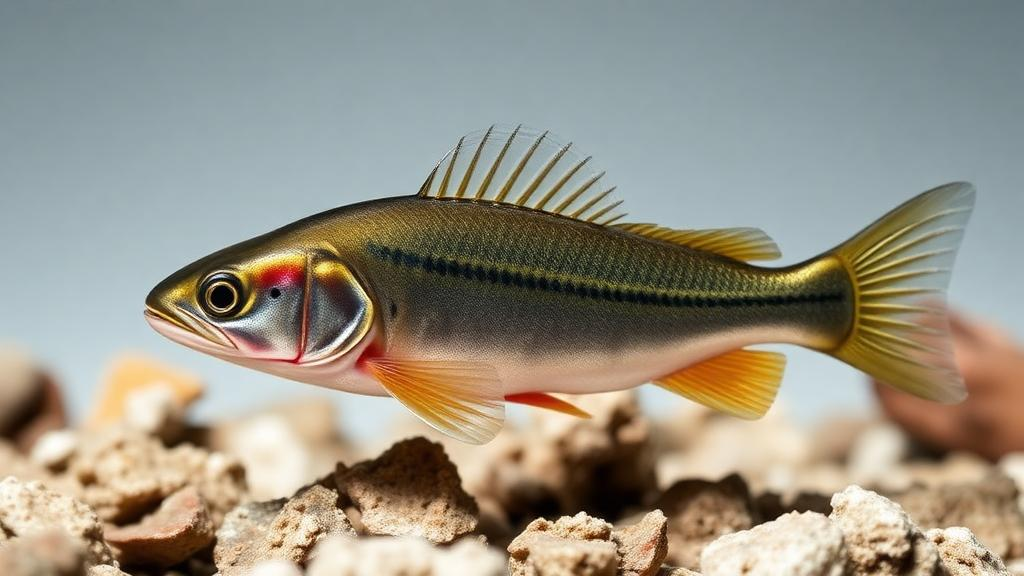
Deep beneath the icy waters of the Qinghai-Tibetan Plateau, a spotted scaleless carp called Diptychus maculatus has been quietly guarding evolutionary secrets in its mitochondrial DNA. Now, a team of researchers has decoded the complete mitochondrial genome of this high-altitude specialist and compared it with dozens of related species, shedding new light on how Asia’s plateau fishes diversified as the world’s highest mountains rose. The findings, published in Acta Ichthyologica et Piscatoria, resolve long-standing taxonomic puzzles while revealing the conserved genomic architecture that underpins life at extreme elevations.
The Qinghai-Tibetan Plateau and its adjacent mountain systems host one of the most remarkable freshwater fish radiations on Earth. The subfamily Schizopygopsinae, part of the vast carp family Cyprinidae, comprises fishes that endure frigid temperatures, chronic hypoxia, intense ultraviolet radiation, and chronic food scarcity. Over millions of years, these fishes evolved specialized traits: many lost most of their scales, and all developed enhanced tolerance to low oxygen. These adaptations make them a premier natural laboratory for studying how organisms respond to environmental upheaval, particularly the dramatic uplift of the plateau during the late Cenozoic era.
Despite their scientific importance, the evolutionary relationships within Schizopygopsinae and its sister group Schizothoracinae have remained contentious. Morphological classifications often conflict with molecular data, and different genes sometimes yield contradictory trees. Earlier phylogenetic studies relied on partial mitochondrial markers such as cytochrome b and cox1, which provided initial insights but lacked the resolution needed to settle disputes about genera like Ptychobarbus, Gymnocypris, and Schizothorax. Complete mitochondrial genomes, with their maternal inheritance, compact size, and relatively rapid evolution, offer a more powerful lens for reconstructing the family tree.
To address these gaps, researchers collected specimens of Diptychus maculatus from the Taxkorgan River, a tributary of the Yarkand River in Xinjiang, China, in June 2020. They extracted genomic DNA using a modified CTAB protocol and sequenced the samples on an Illumina NovaSeq platform with paired-end reads. After assembling the mitochondrial genome with SPAdes and annotating it through the MITOS web server, they deposited the sequence in GenBank under accession ON872378. The resulting circular mitogenome spans 16,764 base pairs, falling squarely within the range observed across related cyprinids.
The annotated genome exhibits the canonical teleost mitochondrial architecture: 13 protein-coding genes, 22 transfer RNA genes, two ribosomal RNA genes, and a non-coding control region. Gene order and strand distribution align precisely with those of related taxa. Twelve of the 13 protein-coding genes initiate with the standard ATG start codon, while cox1 uniquely begins with GTG, a pattern shared across Schizopygopsinae and Schizothoracinae. Stop codons vary among TAA, TAG, and incomplete T– signals, the latter completed post-transcriptionally through polyadenylation, a hallmark of vertebrate mitochondrial translation.
Structural details reveal evolutionary constraints that minimize genome size while preserving function. Overlapping regions occur between atp8 and atp6 (7 base pairs), nad4 and nad4L (7 base pairs), nad5 and nad6 (4 base pairs), and atp6 and cox3 (1 base pair). All 22 tRNA genes fold into canonical clover-leaf secondary structures except trnS1, which lacks the DHU arm, a deviation widely documented in Cyprinidae and tolerated through compensatory mechanisms during translation. Noncanonical base pairs, particularly G-T mismatches, pepper the tRNA stems, likely reflecting relaxed selection or accumulated mutations whose functional consequences remain to be explored.
Nucleotide composition analysis uncovered pronounced AT bias across the sampled species. The mitogenome of Diptychus maculatus contains 54.3% A+T content, consistent with other Schizopygopsinae and Schizothoracinae members whose whole-mitogenome A+T averages 55.4%. Protein-coding genes show even stronger AT-richness at 55.2%, aligning with mutation pressure favoring thymine accumulation. Negative GC skew in both the whole mitogenome (-0.163) and protein-coding genes (-0.184) indicates strand-asymmetric mutation rates tied to replication and transcription. Intriguingly, AT skew is positive in rRNAs (0.212) but negative in protein-coding genes (-0.066), suggesting differential selection: rRNA regions may favor adenine to stabilize secondary structures, while coding regions accumulate thymine to optimize codon usage.
Codon usage analysis revealed preferences for A/T-ending codons, with leucine, alanine, glycine, threonine, phenylalanine, and valine appearing frequently, while cysteine and serine were rare. Hierarchical clustering of relative synonymous codon usage (RSCU) values resolved all 56 species into two clades that mirror the phylogenetic groups: one containing Percocypris, Schizothorax, Oreinus, Schizopyge, and Aspiorhynchus (Schizothoracinae), and another comprising Diptychus, Gymnodiptychus, Ptychobarbus, Oxygymnocypris, Gymnocypris, Platypharodon, Schizopygopsis, Herzensteinia, and Chuanchia (Schizopygopsinae). Notably, Diptychus exhibited lower RSCU values than other genera, hinting at weaker translational selection or a distinct mutational environment in this lineage, possibly linked to its ecological specialization.
Phylogenetic reconstructions using both Bayesian inference and maximum likelihood methods, based on the concatenated sequences of all 13 protein-coding genes from 56 species, produced identical topologies with strong branch support. The analyses confirmed that Schizopygopsinae and Schizothoracinae are each monophyletic, resolving them into two primary clades. Within Schizopygopsinae, Diptychus maculatus emerged as sister to Gymnodiptychus, a relationship that underscores shared adaptations to plateau environments. However, the study also revealed paraphyly in several genera: species of Schizopygopsis were nested within Gymnocypris, and species of Schizopyge were nested within Schizothorax, indicating that these groups are deeply paraphyletic rather than natural evolutionary units.
The paraphyletic patterns likely stem from rapid radiation in high-altitude habitats, where bursts of diversification outpaced the sorting of ancestral genetic variation, a phenomenon known as incomplete lineage sorting. Hybridization events may also contribute to the discordance between molecular trees and morphology-based classifications. The researchers caution that relying solely on mitochondrial data may miss nuclear gene flow, and they advocate for integrative taxonomic approaches that combine mitochondrial genomes with nuclear markers and ecological information. Such integration will be essential for revising the classification of Schizopygopsinae and Schizothoracinae and for understanding the mechanisms driving their extraordinary diversification.
Beyond taxonomy, the study illuminates the interplay among mutation pressure, natural selection, and ecological adaptation in shaping mitochondrial evolution. Prior research had identified positive selection in mitochondrial protein-coding genes of morphologically specialized schizothoracine fishes, suggesting a genetic foundation for high-altitude adaptation, particularly in genes involved in energy metabolism such as ND4 and CO subunits. The conserved gene order, AT bias, and strand asymmetry observed across the 56 species align with broader Cyprinidae trends, yet lineage-specific variations hint at adaptations to oxidative phosphorylation efficiency under hypoxic conditions.
This work provides foundational mitogenomic data for future research on Cyprinidae biogeography and speciation. With only a fraction of the roughly 100 schizopygopsine and schizothoracine species possessing complete mitochondrial genomes, expanding genomic sampling remains a priority. Integrating mitochondrial evidence with nuclear genomic data and ecological modeling will help unravel the complex evolutionary history of these remarkable fishes and clarify how life persists at the roof of the world.
Subject of Research: Comparative mitochondrial genomics and phylogenetics of the high-altitude cyprinid subfamily Schizopygopsinae
Article Title: Comparative mitochondrial genome analyses of Diptychus maculatus ( Actinopterygii , Cypriniformes , Cyprinidae ) uncover conserved genome features and phylogenetic relationships of Schizopygopsinae
Article References: Hao, C.-L., Ma, Y.-L., Yue, C., Yang, Y.-Y., Xia, S.-Z., Li, Z.-H., Yang, Y.-M., & Liu, F. (2026). Comparative mitochondrial genome analyses of Diptychus maculatus (Actinopterygii, Cypriniformes, Cyprinidae) uncover conserved genome features and phylogenetic relationships of Schizopygopsinae. Acta Ichthyologica et Piscatoria, 56, 1-16. https://doi.org/10.3897/aiep.56.166770
Image Credits: AI Generated
Keywords: Diptychus maculatus, Schizopygopsinae, Cyprinidae, mitochondrial genome, phylogenetics, Qinghai-Tibetan Plateau, high-altitude adaptation, codon usage, AT bias, monophyly, rapid radiation, taxonomy
Cite Scienmag News
Juliet Wilcox. (October 17, 2026). Mitochondrial Genome of Tibetan Plateau Fish Reveals Evolutionary Secrets of High-Altitude Cyprinids. Scienmag. https://scienmag.com/mitochondrial-genome-of-tibetan-plateau-fish-reveals-evolutionary-secrets-of-high-altitude-cyprinids/
Juliet Wilcox. "Mitochondrial Genome of Tibetan Plateau Fish Reveals Evolutionary Secrets of High-Altitude Cyprinids." Scienmag, 17 October 2026, https://scienmag.com/mitochondrial-genome-of-tibetan-plateau-fish-reveals-evolutionary-secrets-of-high-altitude-cyprinids/. Accessed 17 October 2026.
Juliet Wilcox. "Mitochondrial Genome of Tibetan Plateau Fish Reveals Evolutionary Secrets of High-Altitude Cyprinids." Scienmag. October 17, 2026. https://scienmag.com/mitochondrial-genome-of-tibetan-plateau-fish-reveals-evolutionary-secrets-of-high-altitude-cyprinids/


