


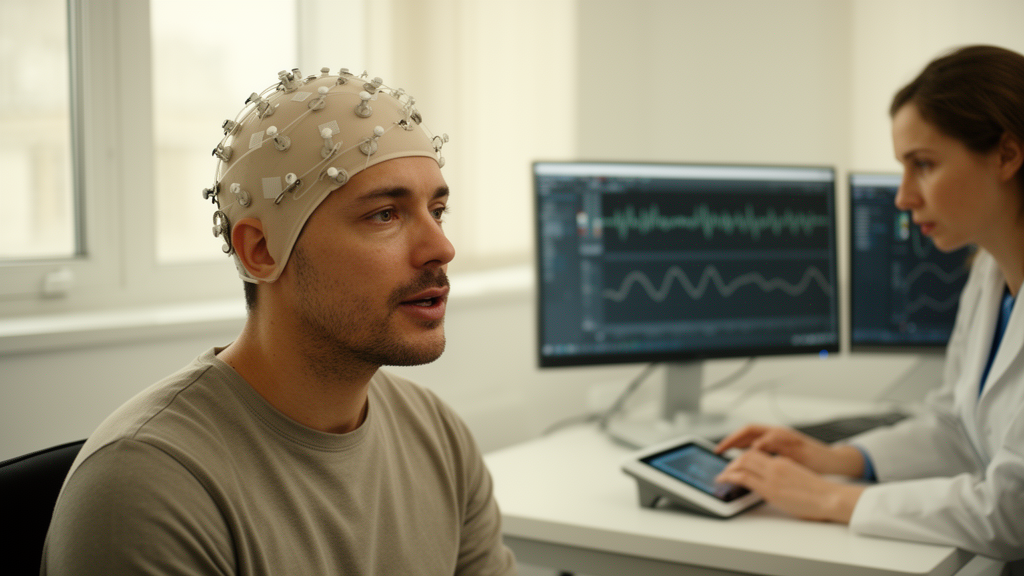
For people who have lost the ability to speak because of severe, chronic, and otherwise irreversible motor and speech impairments, the most advanced brain-computer interfaces now on the horizon promise something extraordinary: the direct translation of neural activity into words. A new narrative review published in Artificial Intelligence Review by Dongyi He, Wai Ting Siok, and Nizhuan Wang of The Hong Kong Polytechnic University takes stock of this rapidly moving field and delivers a sobering but constructive message. Intracranial speech neuroprosthetics, which record electrical signals from inside the skull and decode them into language, are scientifically viable and clinically promising, but the path from laboratory demonstrations to robust, reproducible, and widely accessible devices is blocked by a series of unresolved design trade-offs spanning neuroscience, hardware, algorithms, validation methods, and clinical integration. The review’s central contribution is an end-to-end synthesis that links each of these domains to the others, arguing that progress in one area cannot be meaningfully evaluated without accounting for the constraints imposed by the rest.
The starting point of the review is the neural substrate of speech itself. The authors distinguish carefully between overt speech, attempted speech, and imagined speech, and they show why this distinction matters enormously for interface design. Overt speech, in which a person actually articulates words, produces the richest and most spatially precise neural signals, but many candidate users cannot produce any observable movement at all. Attempted speech covers silent miming and attempts to speak without observable movement, and it preserves the natural intention-to-articulate mapping that makes decoding feel intuitive to the user. Imagined speech, by contrast, involves speech imagery without any attempt to articulate, and it raises a fundamental signal problem: the variable signal-to-noise ratio and limited temporal alignment of neural activity make imagined speech substantially harder to decode reliably. The review emphasizes that these three modes are not interchangeable, and that the choice among them shapes everything downstream, from electrode placement to decoder architecture to the subjective experience of using the device.
Hardware decisions form the second pillar of the synthesis. The review compares three surgically implanted recording modalities in a decision-oriented framework rather than as a simple ranking. Microelectrode arrays, or MEAs, penetrate brain tissue and record action potentials from individual neurons or small groups of neurons, offering the finest spatial and temporal resolution but raising questions about long-term stability and tissue response. Electrocorticography, or ECoG, places electrodes on the surface of the brain and provides a middle ground of spatial coverage and signal fidelity. Stereotactic electroencephalography, or SEEG, uses depth electrodes that are already familiar from clinical epilepsy monitoring, which could ease surgical adoption, though its sampling of speech-related cortex is constrained by electrode placement determined by clinical rather than communicative priorities. The review’s point is that there is no single best modality; the optimal choice depends on the neural representation being targeted, the surgical risk profile acceptable for the user, and the decoding strategy that will process the resulting signals.
On the algorithmic front, the review charts a decisive architectural shift. Early speech decoders relied on relatively simple sequence models, but the field has moved decisively toward attention-based architectures, particularly transformers, which can model long-range temporal dependencies in neural signals and integrate them with powerful language models. A particularly important trend is the use of articulatory intermediate representations. Rather than attempting to jump directly from neural activity to text or audio, these decoders first estimate articulatory features such as the movements of the lips, tongue, and larynx, and then synthesize speech from those intermediate targets. This approach leverages the fact that the brain’s motor cortex encodes speech in articulatory terms, and it provides a physically meaningful bridge between neural signals and acoustic output. The review also highlights language-prior-assisted frameworks, in which statistical knowledge about language structure constrains and improves decoding, effectively allowing the decoder to make educated guesses about likely words and sequences.
Perhaps the most persistent bottleneck the review identifies is generalization across subjects. Current systems typically require extensive individual calibration sessions before a user can communicate, and the review documents experimental strategies aimed at cross-subject generalization, in which models trained on one person’s neural data can be adapted to another with minimal additional data. Progress has been made, but the review is blunt about the current state: limited transfer without individual calibration remains a defining constraint of the field. Compounding this problem is long-term non-stationarity, the phenomenon by which neural signals drift over weeks and months as implants age, brain plasticity proceeds, and recording conditions change. This drift imposes a substantial recalibration burden on users and clinical teams, and the review argues that adaptive yet interpretable decoders are essential to managing it without sacrificing transparency about how decoding decisions are made.
Evaluation practices come in for pointed criticism. The review documents a landscape of heterogeneous and non-comparable evaluation metrics, in which different laboratories report performance using different tasks, different corpora, different scoring functions, and different user populations, making it nearly impossible to compare results across studies or to establish field-wide benchmarks. To address this, the authors propose a unified evaluation framework and a conceptual cross-linguistic, cross-task benchmark template that integrates objective, perceptual, expressive, conversational, and longitudinal metrics. The inclusion of longitudinal metrics is particularly significant, because the clinical value of a speech neuroprosthesis depends not on a single impressive demonstration but on sustained performance over months and years of daily use. The call for larger multilingual, multi-center longitudinal datasets follows directly from this evaluation gap, since most current evidence comes from small, single-language, single-center studies.
The translational guidance offered by the review is user-centered in a way that distinguishes it from purely technical surveys. The authors introduce the concept of agency-preserving shared control, a design philosophy in which the interface amplifies and supports the user’s communicative intent rather than overriding or replacing it. They also propose verifiable performance priorities and scenario-specific minimum viable product profiles that differentiate between two fundamentally different use cases. Reliability-first home communication prioritizes consistent, dependable output for everyday functional needs, even at the cost of natural expressivity. Fidelity-first conversational speech restoration, by contrast, prioritizes naturalistic, expressive output for rich social interaction, even if reliability is somewhat lower. The review argues that these two profiles demand different hardware choices, different decoding strategies, and different validation pathways, and that conflating them has contributed to the fragmented evidence base that currently limits clinical translation.
Clinical pathways receive sustained attention throughout the review, and the authors are clear that prospective clinical validation is a prerequisite for safe deployment. The field’s most celebrated results have come from small numbers of participants in highly controlled research settings, and the review argues that the evidence base must expand through multi-center longitudinal studies with harmonized protocols before regulators, clinicians, and insurers can reasonably support widespread adoption. The authors also call for transparent data-sharing and reporting practices with robust ethical safeguards, recognizing that intracranial recordings are among the most sensitive data a person can generate and that equitable deployment requires attention to who has access to these expensive, surgically implanted technologies. The review’s conclusion is a call to action rather than a victory lap: larger multilingual, multi-center longitudinal datasets, harmonized benchmarks, adaptive yet interpretable decoders, prospective clinical validation, and transparent reporting are all essential to accelerate the safe and equitable deployment of speech neuroprostheses.
What makes this review notable in a field crowded with optimistic projections is its insistence on coupling. The authors organize their synthesis around five coupled design questions, and their argument is that neural representations, recording choices, experimental design, decoding architectures, and translational constraints form an interdependent system in which no component can be optimized in isolation. A decoder that works brilliantly in the laboratory may fail in the home if the hardware cannot maintain signal quality over years. A recording modality that is surgically elegant may be useless if it samples the wrong neural representation. An evaluation metric that looks impressive in a paper may tell clinicians nothing about whether a person can actually hold a conversation. By making these couplings explicit and by providing a structured framework for navigating them, He, Siok, and Wang have produced something the field has lacked: a decision-oriented map of the entire translational landscape. For the individuals with severe communication impairments who stand to benefit most, the review’s message is ultimately one of cautious hope. The science is real, the engineering is advancing, and the clinical pathway is becoming clearer, but reaching robust, reproducible, and widely accessible speech brain-computer interfaces will require the field to solve its problems together, with shared benchmarks, shared data, and a shared commitment to the people these devices are meant to serve.
Subject of Research: Toward robust, reproducible, and widely accessible intracranial speech brain-computer interfaces: a comprehensive narrative review of neural mechanisms, hardware, algorithms, evaluation, clinical pathways and future directions
Article Title: Toward robust, reproducible, and widely accessible intracranial speech brain-computer interfaces: a comprehensive narrative review of neural mechanisms, hardware, algorithms, evaluation, clinical pathways and future directions
Article References: He, D., Siok, W. T., & Wang, N. (2026). Toward robust, reproducible, and widely accessible intracranial speech brain-computer interfaces: a comprehensive narrative review of neural mechanisms, hardware, algorithms, evaluation, clinical pathways and future directions. Artificial Intelligence Review. https://doi.org/10.1007/s10462-026-11728-x
Image Credits: AI Generated
DOI: 10.1007/s10462-026-11728-x
Keywords: Toward, robust, reproducible, widely, accessible, intracranial, speech, brain-computer, interfaces, comprehensive, narrative, review
Cite Scienmag News
Cassandra Pierce. (October 17, 2026). Inside the Brain’s Speech Code: What It Takes to Build a Talking Neuroprosthesis. Scienmag. https://scienmag.com/inside-the-brains-speech-code-what-it-takes-to-build-a-talking-neuroprosthesis/
Cassandra Pierce. "Inside the Brain’s Speech Code: What It Takes to Build a Talking Neuroprosthesis." Scienmag, 17 October 2026, https://scienmag.com/inside-the-brains-speech-code-what-it-takes-to-build-a-talking-neuroprosthesis/. Accessed 17 October 2026.
Cassandra Pierce. "Inside the Brain’s Speech Code: What It Takes to Build a Talking Neuroprosthesis." Scienmag. October 17, 2026. https://scienmag.com/inside-the-brains-speech-code-what-it-takes-to-build-a-talking-neuroprosthesis/


