


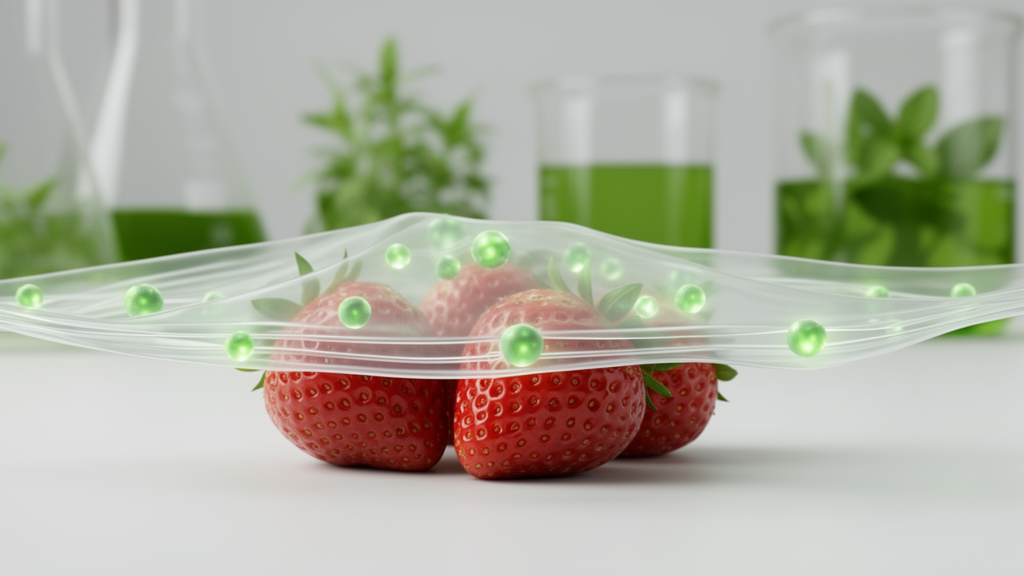
A new review published in Frontiers in Industrial Microbiology maps out how green nanotechnology and biopolymer science are converging to create antimicrobial food packaging that is both effective and environmentally responsible. The authors, led by Avinash Anand of the Indian Institute of Technology Guwahati and Kaustubh Chandrakant Khaire of the University of Manchester, argue that the future of food preservation lies not in synthetic chemical preservatives but in biodegradable polymer matrices reinforced with sustainably synthesized nanoparticles. Their analysis arrives at a moment when the European nanomaterials market, valued at approximately USD 4.39 billion in 2024, is forecast to reach roughly USD 15.54 billion by 2033, a growth trajectory driven largely by the food industry’s demand for safer, longer-lasting packaging.
The review’s central premise is that nature itself provides the blueprints for advanced nanomaterials. Biological systems act as natural nanofactories, producing pure metallic and metal oxide nanoparticles through biomimetic processes that align with six of the twelve principles of green chemistry, including waste reduction, renewable feedstocks, and energy-efficient synthesis. Among the three primary routes to nanomaterial production—physical, chemical, and biological—the biological approach, which employs microorganisms and plant extracts, is regarded as safe, straightforward, high-yielding, and minimally toxic. Biological precursors reduce metal ions into atoms and simultaneously act as capping agents, preventing aggregation and maintaining nano-sized materials with defined shapes. Fungi such as Fusarium oxysporum, Aspergillus terreus, and Candida albicans produce natural polypeptides that reduce and stabilize metal ions; bacteria like Pseudomonas stutzeri A259, first isolated from a Utah silver mine, convert silver ions into nanoparticles of 35 to 46 nanometers using their innate metal resistance; and algae hyperaccumulate heavy metals to serve as living reducing agents.
Plant extracts offer a distinct advantage over microbial systems by eliminating pathogenic risks entirely. The active molecules that enable reduction and stabilization of nanomaterials are remarkably diverse, spanning proteins, polyphenols, aldehydes, polysaccharides, amino acids, and terpenoids. In one documented example, cellulose fiber recovered from waste paper was functionalized with biogenic silver nanoparticles synthesized using Eucalyptus camaldulensis leaf extract, producing an antimicrobial composite active against Bacillus cereus and E. coli O157:H7. In another, cassava starch films were infused with biogenic selenium nanoparticles generated by an enterocin-producing lactic acid bacterium, yielding biodegradable antimicrobial films that were tested on cherry tomatoes and reduced Listeria, Salmonella, and E. coli populations.
Once these biogenic nanoparticles are produced, they must be incorporated into biopolymer matrices that can carry them into commercial use. The review examines three broad families of such matrices. Polysaccharides including cellulose, chitosan, and starch are naturally biodegradable and non-toxic, with semi-crystalline structures whose ordered regions survive acid hydrolysis and can be recovered as nanoscale reinforcements. Chitosan, derived from shrimp and lobster shells as well as insect cocoons and fungi, is a cationic polysaccharide composed of D-glucosamine and N-acetyl-D-glucosamine units linked by β-1,4 glycosidic bonds. At approximately 50 percent degree of deacetylation it becomes soluble in mildly acidic environments, forming a viscous polycationic solution whose protonated amino groups activate reactive sites for covalent bonding with diverse functional groups. Its antimicrobial activity is modulated by pH, molecular weight, physical morphology, and the cell wall structure of the target microorganism.
Protein-based matrices offer a complementary set of properties. Zein, the hydrophobic storage protein of maize, forms edible coatings that function effectively in wet environments through hydrophobic, hydrogen, and disulfide bonds that develop as solvents evaporate. Whey protein, a by-product of cheese manufacturing, produces clear, colorless, self-supporting films whose strength arises from intermolecular disulfide bonds between hydrophobic amino acid residues. Soy protein isolate, containing at least 90 percent protein, exhibits an amphiphilic character that makes it useful for packaging moisture-containing foods such as fresh meat, bakery products, and cheese, though its hydrophilicity necessitates chemical modification or crosslinking with agents such as furfural to increase hydrophobicity. Gelatin, obtained through hydrolysis, transitions from random-coil polypeptide chains into three-dimensional networks upon cooling, providing cost-effective barriers to moisture, ultraviolet light, and oxygen.
Thermoplastic biopolyesters complete the matrix portfolio. Polylactic acid competes directly with commodity petroleum-based plastics in stiffness, tensile strength, clarity, thermal stability, and gas barrier performance, and holds FDA approval for food contact—explaining the pervasiveness of PLA-based disposable cutlery, straws, and lamination films. Polybutylene succinate, produced by polycondensation of succinic acid with 1,4-butanediol, offers heat resistance and mechanical properties that surpass some petroleum-based materials, and blends reinforced with nanocrystalline cellulose whiskers show enhanced tensile strength alongside reduced oxygen and water transmission.
The review’s technical core lies in explaining how nanofillers transform the structure-property-function relationships of these biopolymers. Adding small amounts of nanofillers improves tensile strength and elongation at break through uniform distribution that transfers stress from the biopolymer to the nanoparticles via shear stress, with hydrogen and covalent bonds between fillers and matrix further strengthening molecular forces. However, there is a critical concentration beyond which tensile strength declines, as excessive nanoparticles prevent uniform distribution and nanocrystals agglomerate into large crystals. Barrier properties show even more dramatic gains: nanocomposites require only approximately 2 volume percent of filler to form complex structures that substantially reduce gaseous penetration, compared with the roughly 60 volume percent needed in traditional composites. Layered silicates and exfoliated nanoclay platelets lengthen diffusion pathways for gases and moisture, while nanocellulose provides tensile reinforcement from renewable feedstocks.
Antimicrobial performance emerges from several synergistic mechanisms. Positively charged polymers such as chitosan interact electrostatically with negatively charged microbial surfaces, increasing membrane permeability and causing leakage of intracellular contents. Metal-based nanoparticles containing silver, zinc oxide, and titanium dioxide generate reactive oxygen species—hydroxyl and superoxide radicals—that oxidatively damage lipids, proteins, and DNA. Controlled release of antimicrobial ions such as Ag+ and Zn2+ is regulated by matrix swelling, degradation, and external triggers including moisture and temperature, providing prolonged protection during storage. These systems also inhibit biofilm formation by disrupting quorum sensing and extracellular polymeric substances. Gram-positive bacteria generally possess a thick peptidoglycan layer that limits nanoparticle penetration, whereas Gram-negative bacteria have a thinner peptidoglycan layer but an outer membrane that acts as a selective barrier, leading to variable susceptibility that depends on nanoparticle size, surface charge, ion release, and growth kinetics.
Translating laboratory efficacy into real food systems presents formidable challenges that the review addresses candidly. In vitro models involve simple, homogeneous environments, whereas food systems are inherently complex and dynamic, containing proteins, carbohydrates, lipids, minerals, and water that interact with antimicrobial compounds in ways that alter their effectiveness. Foods with high fat content bind hydrophobic antimicrobial compounds, reducing their capacity to reach microorganisms, while pH, ionic strength, redox potential, and water activity affect both efficacy and solubility. Microbes also occupy inconsistent locations, hiding in safety zones such as fat droplets, minute crevices, or biofilms on surfaces. Well-designed antimicrobial systems can extend food shelf life by 20 to 100 percent depending on the food type, antimicrobial agent, and application method, and hurdle-based approaches that combine antimicrobial packaging with mild heat treatment, high-pressure processing, sonication, modified atmosphere packaging, and refrigeration inhibit microbial growth more efficiently than single treatments while preserving sensory attributes.
Safety evaluation and regulatory approval remain critical bottlenecks for commercialization. Migration of antimicrobial substances from packaging into food must be restricted to safe limits, with smaller and polar compounds migrating more readily in aqueous or acidic foods and fatty foods influencing the movement of fat-soluble substances. Toxicological evaluation spans short- and long-term toxicity, genotoxicity, carcinogenicity, allergenicity, and effects on the human gut microbiota, with nanomaterials demanding more stringent testing due to limited understanding of bioaccumulation and long-term health effects. Regulatory frameworks show considerable regional diversity: the United States centers on GRAS status and food contact substance notification, the European Union under EFSA follows more rigorous migration limits and risk assessment standards, and Asia-Pacific regulations remain dynamic and evolving with significant differences among countries. The review concludes that without globally harmonized regulations, industrial scalability, and consumer acceptance of naturally derived clean-label solutions, the promise of green nanocomposite packaging will remain unrealized—yet with circular bioeconomy integration, life cycle assessment, and waste valorization strategies, these technologies represent a reliable pathway toward a safer and more sustainable food supply chain.
Subject of Research: Green synthesis of biopolymer nanocomposites for antimicrobial food packaging
Article Title: Green nanotechnology-enabled biopolymer nanocomposites for eco-innovative and regulatory-compliant antimicrobial food packaging
Article References: Anand, A., Kaur, H., Hansepi, H., & Khaire, K. C. (2026). Green nanotechnology-enabled biopolymer nanocomposites for eco-innovative and regulatory-compliant antimicrobial food packaging. Frontiers in Industrial Microbiology, 4, Article 1801909. https://doi.org/10.3389/finmi.2026.1801909
Image Credits: AI Generated
DOI: 10.3389/finmi.2026.1801909
Keywords: green nanotechnology, biopolymer nanocomposites, antimicrobial food packaging, biogenic nanoparticles, chitosan, food safety, regulatory frameworks, sustainable synthesis, shelf life, circular bioeconomy, Green, nanotechnology-enabled
Cite Scienmag News
Neil Sanderson. (October 17, 2026). Green Nanotechnology Turns Biopolymers Into Antimicrobial Food Packaging. Scienmag. https://scienmag.com/green-nanotechnology-turns-biopolymers-into-antimicrobial-food-packaging/
Neil Sanderson. "Green Nanotechnology Turns Biopolymers Into Antimicrobial Food Packaging." Scienmag, 17 October 2026, https://scienmag.com/green-nanotechnology-turns-biopolymers-into-antimicrobial-food-packaging/. Accessed 17 October 2026.
Neil Sanderson. "Green Nanotechnology Turns Biopolymers Into Antimicrobial Food Packaging." Scienmag. October 17, 2026. https://scienmag.com/green-nanotechnology-turns-biopolymers-into-antimicrobial-food-packaging/


