


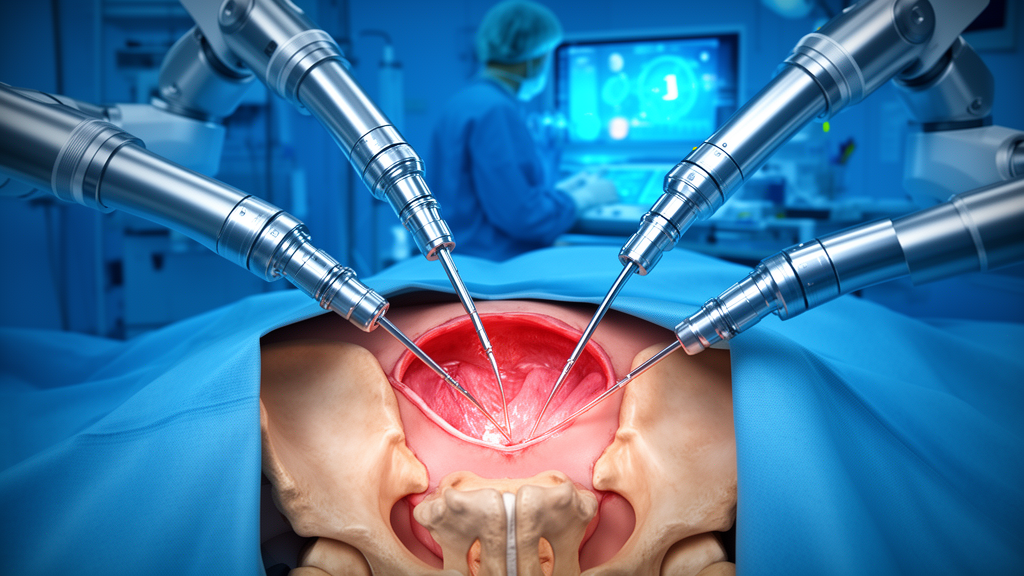
Surgeons in Israel have reported some of the strongest early evidence yet that robotic-assisted surgery can tame one of the most technically punishing operations in abdominal wall reconstruction: the repair of lateral abdominal wall hernias. In a study published in the journal Hernia, a multi-center team completed 39 of these complex repairs entirely robotically between 2018 and 2025, without converting a single procedure to open surgery or to conventional keyhole techniques. Most patients went home after just one day in the hospital, and during a median follow-up of approximately 14 months, not one of the hernias returned. For an operation that has long been considered exceptionally difficult, the results offer a striking glimpse of how robotic platforms may be redrawing the boundaries of what is possible through small incisions.
To understand why this matters, it helps to appreciate what makes lateral abdominal wall hernias so unforgiving. A hernia occurs when tissue or part of an organ pushes through a weak spot in the abdominal wall. While the most familiar hernias appear in the groin or along the midline of the abdomen, lateral hernias form along the flank, the side of the body. That location places them in a crowded and hazardous neighborhood, wedged near the ribs above, the pelvis below, and layered among the flat muscles of the abdominal wall, along with the nerves and blood vessels that run between them. Surgeons working in this region have little room to maneuver, little space to position the reinforcing mesh that strengthens the repair, and an unforgiving margin for error.
The challenge is compounded by the fact that most of these hernias do not arise spontaneously. In the new study, the majority of patients developed their hernias at the site of an earlier operation, including kidney, colorectal, spinal, or gallbladder surgery. These so-called incisional hernias emerge through the scars of previous procedures, which means the surgeon must contend not only with awkward anatomy but also with scar tissue that distorts the normal planes of the body and makes dissection more treacherous. Previous operations can fundamentally alter the landscape of the abdominal wall, leaving the surgeon to rebuild a structure whose original architecture has already been compromised.
The traditional answer to this problem has been open surgery, which can require a large incision and a correspondingly long and painful recovery. Conventional laparoscopy, or keyhole surgery, offers smaller incisions, but it comes with its own limitation in this particular territory: the rigid, straight instruments used in standard laparoscopy can be extremely difficult to articulate at the oblique angles needed to reach and repair a defect along the side of the body. The instruments simply do not bend. Working around the curve of the ribs or the crest of the pelvis with straight tools, while trying to close an opening and position a large piece of mesh flat behind the abdominal muscles, has pushed conventional keyhole techniques to their mechanical limits.
This is where the robot changes the equation. Robotic surgical systems use instruments that bend and rotate much like a human wrist, giving the surgeon degrees of freedom that rigid laparoscopic tools cannot match. The platform also provides a magnified, three-dimensional, high-definition view of the operative field, restoring the depth perception that is lost in standard two-dimensional laparoscopy. Together, these features make it easier to reach the hernia, close the defect, and place a large piece of reinforcing mesh in the retro-muscular space, behind the muscle layer, where the body’s own tissue separates the mesh from the internal organs. That positioning is considered important for long-term durability and for reducing the risk of the mesh contacting the bowel.
The study, led by Dr. Michael Freund of the Hebrew University of Jerusalem and Shaare Zedek Medical Center under the guidance of Prof. David Hazzan of Raphael Hospital, in collaboration with Sheba Medical Center and Tel Aviv University, is one of the largest investigations focused specifically on robotic repair of lateral abdominal wall hernias. The researchers emphasize that the technique they employed, a robotic transabdominal preperitoneal repair, allowed them to work in the delicate plane between the peritoneum and the abdominal wall muscles, creating room for wide mesh overlap even in an anatomically cramped region.
The team’s enthusiasm is grounded in how these outcomes compare with the published experience of similar operations. In another recent study of hernias located away from the center of the abdomen, some procedures had to be partly converted to open surgery, complications occurred in roughly one-third of patients, and some hernias recurred. In the new Israeli series, by contrast, every operation was completed robotically and no hernias returned during the follow-up period. The researchers are careful to note, however, that the two studies involved different patients and cannot be directly compared; the comparison is suggestive rather than definitive, a distinction that responsible surgical science insists upon.
“Robotic technology is changing the boundaries of what surgeons can do through small incisions,” said Dr. Freund. “In this case, it allowed us to reach one of the most unforgiving parts of the abdominal wall, an area surrounded by bone, muscle, nerves, and blood vessels, and rebuild the abdominal wall with remarkable precision. It transforms how we can approach an operation that has traditionally been exceptionally difficult.” His co-author Prof. Hazzan framed the results as the beginning of a broader shift: “We are entering a new era in which even highly complex operations can be performed with greater precision and far less disruption to the patient. In our study, every procedure was completed robotically, most patients returned home after just one day, and no hernias returned during follow-up. These are early results, but they offer a powerful glimpse of how robotic surgery could reshape complex abdominal reconstruction.”
The recovery data are as notable as the technical achievements. Most patients in the series recovered without complications and reported little pain after surgery, a reflection of the smaller incisions and reduced tissue trauma that robotic approaches can offer. Two patients did develop bowel obstructions after their operations and required a second laparoscopic procedure to resolve the problem, but both recovered fully without any part of the bowel having to be removed. Bowel obstruction is a recognized risk after any abdominal operation, and the fact that both cases could be managed laparoscopically, without open reoperation, underscores the minimally invasive ethos of the entire approach.
The researchers are candid about the limitations of their work. This was a relatively small, retrospective study, meaning it looked back at cases already performed rather than assigning patients prospectively to robotic or conventional repair, and it did not directly compare robotic surgery against other methods in a controlled fashion. Longer follow-up will also be needed to determine whether the repairs remain sound over many years, since hernia recurrence can emerge slowly over time. Even so, with 39 consecutive completions, no conversions, rapid discharges, and no recurrences at 14 months, the study stands as one of the largest of its kind and suggests that robotic technology may make these difficult operations more precise, less invasive, and dramatically easier on the patient. For the thousands of people who develop hernias along the side of the abdomen after previous surgery, the robotic wrist may prove to be exactly the tool their surgeons have been missing.
Subject of Research: Robotic-assisted repair of lateral abdominal wall hernias
Article Title: Robotic surgery enables effective and safe repair of hard-to-reach abdominal hernias
Article References: Robotic surgery enables effective and safe repair of hard-to-reach abdominal hernias. (n.d.). Original publication
Image Credits: AI Generated
DOI: Not provided
Keywords: robotic surgery, hernia repair, lateral abdominal wall hernia, minimally invasive surgery, abdominal wall reconstruction, incisional hernia, laparoscopy, surgical mesh, transabdominal preperitoneal repair, surgical outcomes, Hebrew University of Jerusalem, Hernia journal
Cite Scienmag News
Ophelia Keating. (October 17, 2026). Robotic Surgery Reaches the Abdomen’s Toughest Corner to Fix Rare Hernias. Scienmag. https://scienmag.com/robotic-surgery-reaches-the-abdomens-toughest-corner-to-fix-rare-hernias/
Ophelia Keating. "Robotic Surgery Reaches the Abdomen’s Toughest Corner to Fix Rare Hernias." Scienmag, 17 October 2026, https://scienmag.com/robotic-surgery-reaches-the-abdomens-toughest-corner-to-fix-rare-hernias/. Accessed 17 October 2026.
Ophelia Keating. "Robotic Surgery Reaches the Abdomen’s Toughest Corner to Fix Rare Hernias." Scienmag. October 17, 2026. https://scienmag.com/robotic-surgery-reaches-the-abdomens-toughest-corner-to-fix-rare-hernias/


