


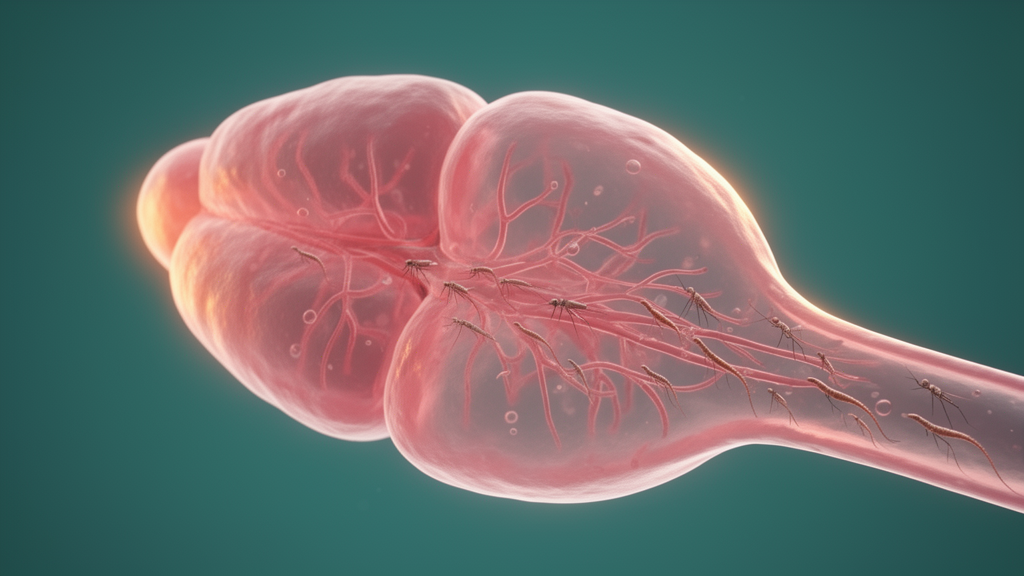
Malaria remains one of the world’s most stubborn infectious diseases, and a growing body of research suggests that the key to stopping it may lie in an unexpected place: the microscopic bacterial community living inside the salivary glands of the mosquito itself. A new review published in Frontiers in Insect Science synthesizes what scientists know about the salivary gland microbiome of Anopheles gambiae, the primary African malaria vector, and reveals a field of study that is both promising and surprisingly underexplored. While the midgut microbiome of mosquitoes has received considerable attention over the past two decades, the salivary gland — the final checkpoint that Plasmodium parasites must pass through before being transmitted to humans — remains comparatively neglected. This gap in knowledge could be costing scientists a critical opportunity to block malaria transmission at its very last stage.
The stakes could not be higher. According to the World Health Organization, an estimated 282 million malaria cases and 610,000 deaths were reported in 2024 alone. Eleven countries in the WHO African region bear the greatest burden, accounting for approximately two-thirds of global cases and deaths. Nigeria carries the highest burden of any single nation, responsible for roughly 24.3 percent of the global malaria burden and 31 percent of malaria deaths. Anopheles gambiae is the primary vector driving ongoing transmission of Plasmodium falciparum in the Nigerian population. Despite decades of investment in indoor residual spraying and insecticide-treated bed nets, resistance to these interventions has spread among vector populations, undermining their effectiveness. Resistance to artemisinin-based combination therapies — the most widely used antimalarial treatments — has also been reported in Plasmodium parasites, underscoring the urgent need for entirely new strategies to diminish the parasite-transmitting capacity of the mosquito.
One powerful approach involves using the bacteria that naturally inhabit the mosquito to erect physiological or immunological barriers to infection. Through physical interference, immune priming, or resource competition, these resident microbes can render the mosquito refractory to Plasmodium. The concept builds on a landmark 2011 study published in Science, which demonstrated that natural microbe-mediated refractoriness to Plasmodium infection exists in Anopheles gambiae. Since then, researchers have increasingly recognized that the mosquito microbiome is not merely a passive collection of hitchhikers but an active determinant of vector competence — the ability of a mosquito to acquire, maintain, and transmit a pathogen.
The salivary gland occupies a unique position in the Plasmodium life cycle. The first site of infection in the mosquito is the midgut, where parasites develop into oocysts and then release sporozoites into the hemocoel. These sporozoites must then successfully invade the salivary glands before transmission to a human host can occur. Critically, even if a mosquito carries a heavy midgut infection, transmission will not occur if the salivary gland microbiome or immune environment blocks sporozoite entry or survival. This makes the salivary gland a potentially decisive target for transmission-blocking interventions — and a site where resident bacteria may exert a profound influence on whether the parasite completes its journey.
The review, led by Celestina O. Olafusi and colleagues at Covenant University in Nigeria, systematically searched four databases — Scopus, Web of Science, PubMed, and Google Scholar — using terms combining Anopheles, salivary gland, microbiome, and vector competence. The search identified 821 articles, of which 19 were ultimately included in the qualitative synthesis after rigorous screening. The authors organized their findings thematically around three questions: how the salivary gland microbiome is acquired, what microorganisms compose it, and what functional significance it holds for Plasmodium development and mosquito immunity.
Acquisition of the salivary gland microbiome may occur through several distinct routes. Larval mosquitoes filter-feed on bacteria in their aquatic environment, ingesting microorganisms that may survive metamorphosis and eventually colonize adult salivary glands. The bacterial community composition in the water surface microlayer differs from that in the subsurface water where larvae live, with Betaproteobacteria and Cytophagia dominating the surface and Bacilli, Alphaproteobacteria, and Actinobacteria more abundant in the subsurface. Vertical transmission from mother to offspring has also been documented, with fluorescent in situ hybridization revealing that Asaia bacteria concentrate at the periphery of eggs in the female reproductive tract, suggesting that egg-smearing mediates vertical transmission of this genus. Transstadial transfer — the carryover of microbial taxa between developmental stages — is well documented for the midgut, though whether it consistently leads to salivary gland colonization remains incompletely understood. Horizontal acquisition during blood feeding has also been demonstrated: Rickettsia felis bacteria acquired from an infected mouse were subsequently detected in the salivary glands of Anopheles gambiae and transmitted to naive mice during subsequent blood feeding, showing that pathogens and potentially commensal microbes can be acquired horizontally and colonize the salivary gland.
Despite these documented routes, the relative contribution of each to the final salivary gland microbiome remains unknown. Whether nectar or sugar meals introduce bacteria directly into the salivary glands, and whether the glands harbor a stable, self-sustaining community or are continually reseeded from the midgut or the environment, remain open questions that no study has yet resolved. No research has traced a single bacterial strain from larval ingestion through metamorphosis to salivary gland colonization in the adult — a critical experimental gap that limits the field’s ability to understand how these communities assemble.
Compositional studies reveal that the salivary gland harbors a distinct bacterial community dominated by Gram-negative genera. Serratia, Elizabethkingia, Acinetobacter, Pseudomonas, and Asaia are the predominant organisms identified, though other taxa including Comamonas, Escherichia-Shigella, Klebsiella, Staphylococcus, Streptococcus, and Enterococcus have also been detected. Notably, Plasmodium infection correlates with increased Serratia abundance and decreased Elizabethkingia abundance in the salivary gland microbiome. Using 16S rRNA sequencing and MALDI-TOF mass spectrometry, researchers characterized the saliva microbiome of Anopheles gambiae and demonstrated that bacteria are present in mosquito saliva using a transgenic fluorescent strain of Serratia marcescens. These bacteria are transferred to a mammalian host during blood feeding and can colonize mammalian tissues. Both Plasmodium berghei and Serratia were co-transferred and colonized mammalian tissues together, although the study did not establish whether sporozoite invasion was promoted or inhibited by this bacterial presence.
The salivary gland is not merely a passive site for sporozoite accumulation — it expresses a range of immune-related genes that could be modulated by resident bacteria. Serial Analysis of Gene Expression identified 37 immune-related genes in the Anopheles gambiae salivary gland, of which four — GNBP, Serpin6, Defensin1, and Cecropin2 — were upregulated during Plasmodium berghei invasion. These findings suggest that the salivary gland can sense and respond to microbial stimuli, including its own bacterial inhabitants. Mechanistically, diaminopimelic-type peptidoglycan on Gram-negative bacterial cell walls is a primary target of the Immune deficiency (Imd) pathway, which recognizes the peptidoglycan recognition protein PGRPLC and activates the Rel/NF-κB transcription factor REL2 to initiate transcription of antimicrobial peptides such as cecropins and defensins. In Anopheles gambiae, functional genetic analysis across five bacterial species showed that Imd/REL2 is the predominant pathway for resisting systemic bacterial infection, even Gram-negative challenge, while the Toll/REL1 pathway is involved only in highly virulent infections. Activation of the JAK-STAT pathway has also been observed following bacterial challenge, with nuclear translocation of the STAT orthologue Ag-STAT in fat body cells.
Perhaps most intriguingly, emerging evidence suggests that the salivary gland may mount a distinct, locally independent immune response compared to the systemic pathway. In a study examining the effects of local and systemic immune challenges on salivary gene expression in Anopheles coluzzii, most salivary transcripts increased between 5 and 24 hours after a local challenge with Escherichia coli delivered via infectious sugar meal. In contrast, following a systemic challenge via thoracic injection with the same bacterium, cecropin was rapidly induced within 5 hours — consistent with a fat-body and hemocyte systemic response — yet none of the salivary-gland-enriched candidate genes showed any increase at either 5 or 24 hours post-injection. This dissociation indicates that local Gram-negative challenge triggers an intrinsic salivary gland response independent of the systemic response and possibly locally gated. This local immune capacity is functionally supported by the salivary peptide hyp6.2, whose transcript is induced by local bacterial challenge and which directly inhibits Serratia marcescens in vitro.
Pathway usage is also strain-specific. Serratia strain Y1 restricts Plasmodium via the Toll/REL1 pathway, whereas another Serratia strain (J1) has no such effect — demonstrating that individual Gram-negative strains determine which immune pathway is engaged. Whether this immune modulation in the salivary gland is locally driven or systemically controlled from the gut remains unresolved, though tissue-specific silencing experiments in gnotobiotic mosquitoes colonized with defined strains of Serratia or Elizabethkingia could resolve this question. Studies have not yet identified which specific pathway — Imd, Toll, or JAK-STAT — is predominantly engaged by either Serratia or Elizabethkingia in the salivary gland, though both genera are known to be particularly predominant in the midgut and reproductive tissues.
Direct evidence that resident bacteria inhibit or promote sporozoite invasion remains lacking, but one immune gene offers a tantalizing clue. The immune-inducible serine protease inhibitor SRPN6, initially reported as a midgut invasion marker, is also specifically induced in salivary glands with the onset of sporozoite invasion. SRPN6 localizes to the basal region of salivary gland epithelial cells in proximity to invading sporozoites. When researchers knocked down SRPN6 during the late phase of sporogony, the number of sporozoites present in the salivary gland increased significantly, with no effect on oocyst rupture — demonstrating that SRPN6 actively limits sporozoite accumulation in the salivary gland. Whether resident bacteria modulate SRPN6 expression or other salivary immune genes in ways that affect sporozoite invasion has not been experimentally tested.
Paratransgenesis — the genetic modification of symbiotic bacteria to deliver anti-pathogen effectors — represents one of the most promising strategies for exploiting the salivary gland microbiome. Asaia is a strong candidate for salivary gland-targeted paratransgenesis. This bacterium has been isolated from both laboratory-reared and wild colonies of Anopheles gambiae, detected by PCR in all developmental stages, and localized in the midgut, salivary glands, and reproductive organs of every specimen analyzed. Recombinant strains of Asaia expressing fluorescent proteins have demonstrated the bacterium’s ability to colonize Anopheles gambiae mosquitoes, suggesting its potential for paratransgenic control of malaria. However, no engineered Asaia strain has yet been tested for anti-sporozoite effector delivery in the salivary gland of Anopheles gambiae — a critical gap between concept and application.
Ecological pressures common in West Africa may exert additional selective forces on mosquito-associated bacteria with downstream effects on the salivary gland microbiome. Agricultural pesticide use, widespread insecticide resistance, and contamination of larval breeding water with organic pollutants all shape the bacterial communities available for larval acquisition. In southern Ghana, Anopheles-positive breeding habitats harbored distinct bacterial profiles dominated by Gammaproteobacteria and Betaproteobacteria, and larvae acquired these same taxa from their breeding water — meaning that environmental water quality directly influences the microbial pool that can be passed through metamorphosis to adult stages. A field study in West Africa revealed that collection site was the key factor contributing to bacterial diversity, accounting for about 20 percent of the variation, whereas mosquito species, blood meal source, and insecticide resistance genotype did not significantly explain variation in bacterial composition. Despite these likely associations, no study has explicitly linked environmental factors to the salivary gland microbiome of wild Anopheles gambiae from West Africa.
The review identifies several critical knowledge gaps that must be addressed before the salivary gland microbiome can be leveraged as a transmission-blocking target. Field studies of the salivary gland microbiome in wild populations of Anopheles gambiae in Nigeria are almost non-existent, despite the country carrying the highest malaria burden globally. Insecticide resistance and high transmission intensity in Nigerian settings could affect the microbiome in ways not seen in laboratory colonies. The absence of experimental manipulation to establish causality — whether resident bacteria actually inhibit or promote sporozoite invasion — remains perhaps the most significant barrier to progress. Tissue-specific silencing of PGRPLC, REL2, or JAK-STAT pathway components in gnotobiotic Anopheles gambiae colonized with defined strains of Serratia or Elizabethkingia would help determine whether PGRPLC-induced immune modulation in the salivary gland is a local or systemic response.
Addressing these priorities is critical to determine whether the salivary gland microbiome can be exploited as a last barrier in malaria control. The convergence of rising insecticide resistance, emerging antimalarial drug resistance, and persistent high-burden transmission in regions like Nigeria creates an urgent imperative to explore every available avenue for blocking transmission. The salivary gland microbiome — positioned at the very final checkpoint before parasites reach a human host — may hold answers that the midgut microbiome cannot provide. Whether scientists can harness this microscopic community to render mosquitoes incapable of transmitting malaria remains one of the most compelling open questions in vector biology today.
Subject of Research: Salivary gland microbiome of Anopheles gambiae: a mini-review of acquisition, composition, and functional significance
Article Title: Salivary gland microbiome of Anopheles gambiae: a mini-review of acquisition, composition, and functional significance
Article References: Olafusi, C. O., Afolabi, I. S., & Ogunlana, O. O. (2026). Salivary gland microbiome of Anopheles gambiae: a mini-review of acquisition, composition, and functional significance. Frontiers in Insect Science, 6, Article 1911294. https://doi.org/10.3389/finsc.2026.1911294
Image Credits: AI Generated
DOI: 10.3389/finsc.2026.1911294
Keywords: Anopheles gambiae, salivary gland microbiome, malaria, Plasmodium, paratransgenesis, Asaia, Serratia, Elizabethkingie, vector competence, mosquito immunity, transmission-blocking, Nigeria
Cite Scienmag News
Morgan Morrow. (October 17, 2026). Inside the Mosquito Salivary Gland: The Last Microbial Barrier Against Malaria. Scienmag. https://scienmag.com/inside-the-mosquito-salivary-gland-the-last-microbial-barrier-against-malaria/
Morgan Morrow. "Inside the Mosquito Salivary Gland: The Last Microbial Barrier Against Malaria." Scienmag, 17 October 2026, https://scienmag.com/inside-the-mosquito-salivary-gland-the-last-microbial-barrier-against-malaria/. Accessed 17 October 2026.
Morgan Morrow. "Inside the Mosquito Salivary Gland: The Last Microbial Barrier Against Malaria." Scienmag. October 17, 2026. https://scienmag.com/inside-the-mosquito-salivary-gland-the-last-microbial-barrier-against-malaria/


