


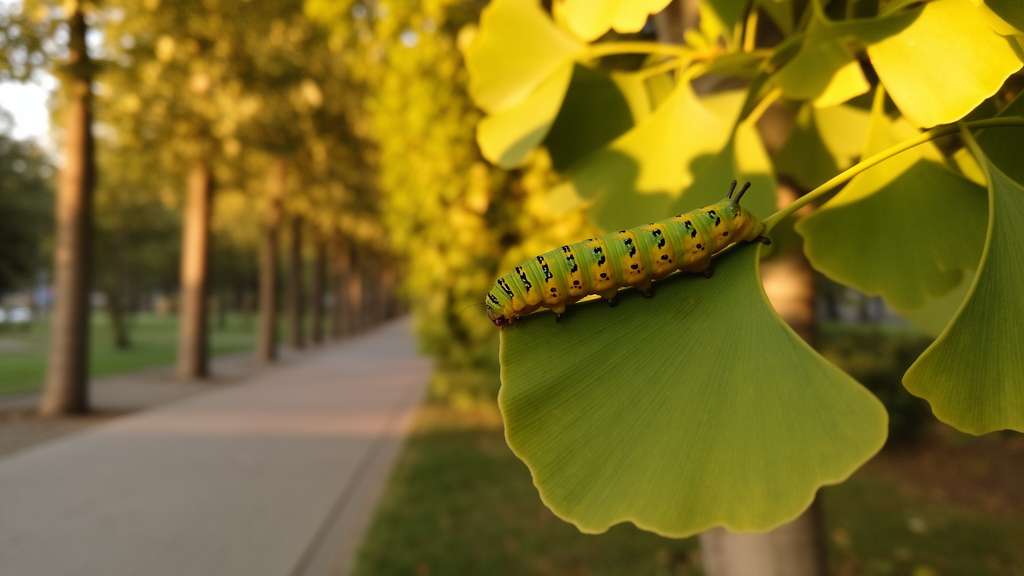
In the quiet corners of botanical gardens, university campuses, and suburban streets, ornamental trees are doing far more than decorating landscapes. According to new research published in the journal NeoBiota, human-planted soapberry trees have pushed native seed-eating bugs far beyond their historical ranges in Australia and South Africa, driving rapid shifts in proboscis length, wing form, and even interspecific hybridisation under laboratory conditions.
The study, led by researchers working on Leptocoris soapberry bugs, documents how the introduction and movement of plants in the soapberry family (Sapindaceae) has reshaped the distribution and evolution of these specialised seed predators. In Australia, the native Leptocoris rufomarginatus was found feeding on ornamental Alectryon trees roughly 500 kilometres south of its previously published range, while in South Africa, the native Leptocoris mutilatus now occurs more than 1,000 kilometres beyond its historical distribution, sustained by invasive balloon vines and a planted Australian tree.
Soapberry bugs are hemipterans in the subfamily Serinethinae, specialised seed predators of sapindaceous plants. Their co-evolutionary history with soapberry hosts means they carry pre-adaptations that allow them to colonise novel, phylogenetically close host plants introduced by humans. When native insects adopt abundant non-native or extralimital hosts, they can undergo extralimital spread, expanding their geographic ranges well beyond historical limits.
In Australia, the researchers collected Leptocoris insects between 2022 and 2024 across New South Wales and the Northern Territory. Most Leptocoris rufomarginatus individuals were found on Alectryon tomentosus planted as ornamentals in the Greater Sydney region, well outside the natural range of the host trees. At two sites, the bugs were feeding on Alectryon coriaceus, a novel host record for the species. Meanwhile, the non-native Leptocoris vicinus, likely co-introduced with the ornamental tree Schleichera oleosa from Southeast Asia, remains localised at its initial introduction site in Darwin more than 60 years after its first discovery.
Species distribution models built using MaxEnt revealed vast areas of climatically suitable habitat for both native and non-native host plants beyond the current distributions of the soapberry bugs. For Leptocoris tagalicus, suitable areas for native hosts covered approximately 262,760 square kilometres, while non-native hosts covered about 331,765 square kilometres, with these areas overlapping almost completely. For Leptocoris rufomarginatus, roughly 189,426 square kilometres of suitable native host habitat lies outside and mostly southwards of the insect’s inferred historical range. For the introduced Leptocoris vicinus, an estimated 919,620 square kilometres of suitable habitat for its known hosts exists across northern and eastern Australia, suggesting that further range expansions by both host plants and insects are likely to continue.
In South Africa, Leptocoris mutilatus was collected from ten sites in Kruger National Park on native Cardiospermum corindum and invasive C. halicacabum, and from three extralimital sites in the Western Cape province on invasive C. grandiflorum and the planted Australian tree Alectryon connatus. The Western Cape records place the insect more than 1,000 kilometres outside its previously known distribution. Notably, this study provides the first record of Leptocoris mutilatus feeding on an Alectryon species.
Morphological measurements revealed significant differentiation in proboscis length among Leptocoris mutilatus populations feeding on different host plants. A two-way ANOVA showed that both host plant species and sex significantly predicted proboscis length. Insects collected from invasive C. halicacabum had significantly longer proboscides than those from other hosts, while those from native C. corindum had longer proboscides than those from A. connatus and invasive C. grandiflorum. Insects feeding on A. connatus had proboscides significantly shorter than those from the historical native range, suggesting contemporary evolutionary change since the adoption of this novel host.
Wing morphology also differed dramatically between populations. In the Western Cape, 97 percent of Leptocoris mutilatus individuals were short-winged and flightless, compared with only 12.5 percent in Kruger National Park. This pattern mirrors findings in North American Jadera haematoloma populations, where flightless morphs have shorter generation times and may be physiologically incapable of diapause, adapting to seasonal seed availability on isolated host patches. The high frequency of volant morphs in Kruger National Park likely reflects the proximity of multiple Cardiospermum host species and other abundant native hosts, promoting frequent movement between plants that fruit at different times of the year.
Perhaps the most striking finding came from laboratory no-choice mating trials. The researchers successfully hybridised the native Leptocoris tagalicus with the non-native Leptocoris vicinus, producing viable first-generation hybrids and backcrossed offspring, the first report of interspecific hybridisation for soapberry bugs under laboratory conditions. Genetic analysis based on 6,077 SNP loci confirmed the intermediate genomic ancestry of hybrid and backcross individuals. However, all first-generation by first-generation crosses produced eggs but no offspring, indicating substantial postzygotic reproductive isolation between the two species. Pairings involving Leptocoris rufomarginatus with either of the other species produced no hatchlings and no observed copulations, suggesting this larger, more arboreal species is too divergent to hybridise successfully.
The findings demonstrate how human-mediated plant dispersal affects the ecology, distribution, and evolution of native insects. The shared evolutionary history between soapberry bugs and sapindaceous host plants suggests that further changes in these insects’ distributions and adaptive responses to novel hosts are likely to occur. The researchers suggest that eradicating the small, isolated Leptocoris vicinus population in Darwin before it spreads could be an effective management option, and they call for future surveys to identify additional plantings of non-native host trees and to explore whether hybridisation among other soapberry bug species is being promoted by non-native and extralimital host plants worldwide.
Subject of Research: Human-mediated dispersal of soapberry host plants and its effects on the distribution and evolution of Leptocoris soapberry bugs
Article Title: Human-mediated plant dispersal changes insect distributions with potentially important evolutionary implications
Article References: Brown, L., Geraghty, D. M., Lambos, M., O’Hare, J. A., Delamotte, N. M., Carroll, S. P., & Le Roux, J. J. (2026). Human-mediated plant dispersal changes insect distributions with potentially important evolutionary implications. NeoBiota, 108, 145-170. https://doi.org/10.3897/neobiota.108.175185
Image Credits: AI Generated
DOI: 10.3897/neobiota.108.175185
Keywords: soapberry bugs, Leptocoris, host shifts, invasive plants, Sapindaceae, range expansion, hybridisation, proboscis length, species distribution models, Australia, South Africa, NeoBiota
Cite Scienmag News
Gavin Prescott. (October 17, 2026). How ornamental trees are quietly rewriting the evolution of native insects. Scienmag. https://scienmag.com/how-ornamental-trees-are-quietly-rewriting-the-evolution-of-native-insects/
Gavin Prescott. "How ornamental trees are quietly rewriting the evolution of native insects." Scienmag, 17 October 2026, https://scienmag.com/how-ornamental-trees-are-quietly-rewriting-the-evolution-of-native-insects/. Accessed 17 October 2026.
Gavin Prescott. "How ornamental trees are quietly rewriting the evolution of native insects." Scienmag. October 17, 2026. https://scienmag.com/how-ornamental-trees-are-quietly-rewriting-the-evolution-of-native-insects/


