


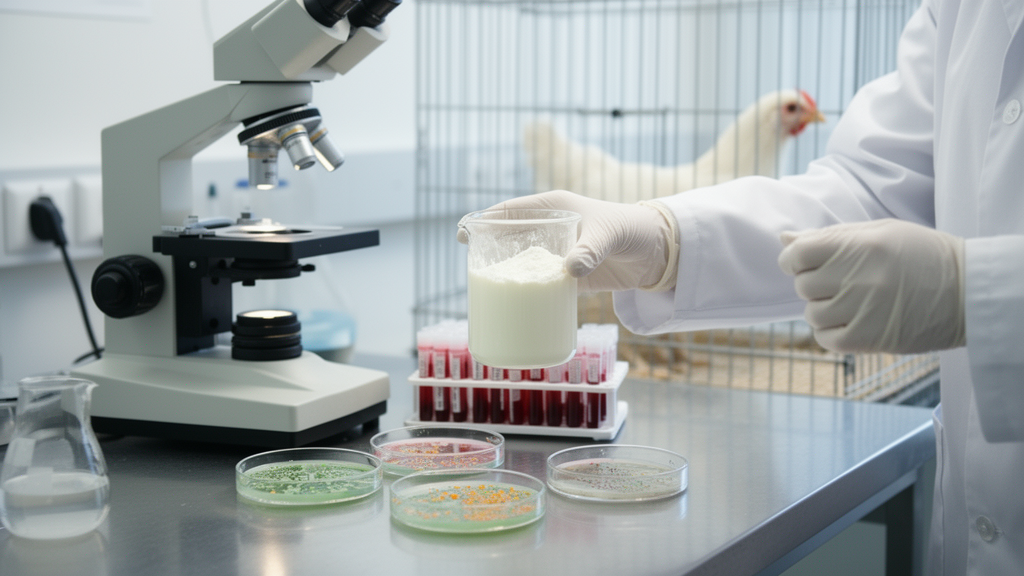
In a finding that could reshape how poultry farmers fight one of their costliest bacterial enemies, researchers have shown that a simple dietary addition of camel milk powder can restore growth, lower bacterial burdens, and fine-tune immune gene activity in the blood cells of chickens infected with Escherichia coli. The study, published in Frontiers in Veterinary Science, is the first to examine how camel milk regulates immune-related gene expression inside chicken erythrocytes during an E. coli challenge, offering a glimpse into a non-antibiotic strategy for controlling avian colibacillosis.
Avian colibacillosis, caused by E. coli, remains a major threat to global poultry production. Although E. coli is a natural inhabitant of the chicken intestine, it acts as an opportunistic pathogen capable of causing severe systemic disease under conditions of stress, overcrowding, poor ventilation, temperature extremes, or immunosuppression. With antibiotic resistance rising sharply among E. coli strains and regulatory bodies such as the European Union restricting dietary antibiotics as growth promoters, the search for safe, antibiotic-free feed additives has become urgent for the poultry sector.
Camel milk has long been recognized for its unique bioactive compounds, including high levels of lactoferrin, lysozyme, immunoglobulins, and lactoperoxidase. These components exhibit germicidal activity against both Gram-positive and Gram-negative bacteria, including Staphylococcus aureus, Listeria monocytogenes, and E. coli. Lactoferrin is particularly notable as a heme-binding protein that sequesters iron, inhibiting bacterial growth while simultaneously preventing oxidative damage to erythrocytes. Unlike mammalian red blood cells, chicken erythrocytes are nucleated and participate directly in immune responses, expressing Toll-like receptors and initiating cytokine transcription upon encountering pathogens.
To test whether camel milk could harness these properties, a team led by researchers at Shandong Agricultural University in China, Sindh Agriculture University in Pakistan, and Jeju National University in South Korea conducted a 35-day trial with 240 one-day-old Cobb broiler chickens. The birds were randomly assigned to four groups: a Control group receiving a basal diet with a sterile PBS mock challenge, an Infected group receiving the basal diet and an intranasal E. coli O78 challenge, and two treatment groups receiving the same challenge plus either 5 g/kg (T1) or 10 g/kg (T2) of freeze-dried camel milk powder mixed into the feed daily.
The E. coli O78 strain (CVCC1555) was prepared to a target concentration of 10,000 colony-forming units per milliliter and administered intranasally on day 7 to mimic the natural respiratory entry of avian pathogenic E. coli and induce systemic colibacillosis. Clinical signs of depression, ruffled feathers, and mild diarrhea appeared in the Infected group post-challenge but were less pronounced in the camel milk-supplemented groups. Overall mortality remained low, below 5 percent, with no significant difference among treatment groups.
Growth performance results revealed a clear dose-dependent pattern. While the E. coli challenge did not significantly affect feed intake, it significantly depressed weight gain compared to the Control group, suggesting that the growth reduction stemmed from the systemic impact of infection on nutrient utilization rather than a loss of appetite. The T1 group receiving 5 g/kg camel milk exhibited significantly superior feed intake and weight gain compared to the T2 group receiving 10 g/kg, and also showed a significantly more favorable feed conversion ratio when compared to both the T2 group and the unsupplemented Infected group. The researchers attribute the reduced performance at the higher dose to possible negative effects on palatability or a nutrient dilution effect in the basal mash.
Beyond growth metrics, camel milk supplementation produced measurable improvements in tissue architecture and hematological parameters. Histomorphological analysis of the duodenum revealed that villi in the T2 group appeared longer than those in the Infected group, although shorter than those in the T1 group, with a more preserved villus structure qualitatively observed in both supplemented groups. Liver histopathology showed clear hepatocellular necrosis and disorganized cell structures in the Infected group, while the T2 group displayed relatively preserved hepatic architecture. On day 35, hemoglobin levels and packed cell volume were significantly lower in the Infected group but significantly increased in the T2 group, suggesting recovery from infection-induced anemia. Conversely, red blood cell and white blood cell counts were significantly elevated in the Infected group but reduced toward Control levels in the supplemented groups, indicating a restoration of hematological homeostasis.
Viable E. coli counts in blood and cecal contents told a similar story over time. No viable E. coli were detected in the blood of the Control group throughout the experiment. On day 14, bacterial counts did not differ significantly among groups. However, by day 21, the Infected group displayed significantly higher viable E. coli counts in both blood and cecum, a trend that persisted until day 35. Camel milk supplementation significantly reduced these loads, with the T2 group showing a greater reduction in cecal E. coli counts compared to the T1 group. The researchers suggest that the antimicrobial action of camel milk components, particularly lactoferrin’s ability to chelate free iron and bind the Lipid A portion of lipopolysaccharides on Gram-negative bacteria, likely mediated this reduction in bacterial burden.
To identify candidate immune genes for validation, the team first conducted an exploratory bioinformatic screen using a public Marek’s disease virus-infected erythrocyte dataset (GPL8764) from the Gene Expression Omnibus database. Differential expression analysis identified 990 differentially expressed genes, with 467 significantly downregulated and 523 significantly upregulated in MDV-infected chickens relative to Controls. Gene Ontology and KEGG pathway enrichment analyses revealed significant enrichment in immune-related signaling cascades including the Jak–STAT pathway, Toll-like receptor signaling, B cell receptor signaling, T cell receptor signaling, and cytokine–cytokine receptor interaction. Enriched genes included IL1RAP, IL15RA, IL17RA, IL7R, IFNAR2, IFNAR1, and TNFRSF25, guiding the selection of interleukin genes for quantitative real-time PCR validation.
Quantitative real-time PCR performed on purified erythrocytes collected on day 21 demonstrated that camel milk supplementation significantly modulated the expression of interleukin genes in challenged birds. Expression of IL-2 was significantly higher in the Infected group compared to both T1 and T2 groups, and IL-12 expression was significantly downregulated in the supplemented groups. For IL-6 and IL-10, the Infected group exhibited the highest expression levels, which were significantly reduced in the T2 group and further reduced in the T1 group. Notably, IL-6 and IL-10 expression in the T1 group was restored to levels comparable to the Control group, indicating successful mitigation of the inflammatory response. The researchers emphasize that this downregulation should not be interpreted as immune suppression but rather as a resolution of inflammation, likely because the antimicrobial action of camel milk had already reduced the pathogen load, preventing the need for a hyper-inflammatory cytokine storm that would otherwise divert energy from growth toward immunopathology.
Subject of Research: Effects of camel milk powder supplementation on growth performance and erythrocyte immune gene expression in Escherichia coli-challenged broiler chickens
Article Title: Camel milk concerning erythrocytic immune-related gene expression in Escherichia coli-challenged broilers
Article References: Arain, U., Rajput, N., Arain, M., Jahejo, A. R., Lee, Y., & Zhang, G. (2026). Camel milk concerning erythrocytic immune-related gene expression in Escherichia coli-challenged broilers. Frontiers in Veterinary Science, 13, Article 1960495. https://doi.org/10.3389/fvets.2026.1960495
Image Credits: AI Generated
DOI: 10.3389/fvets.2026.1960495
Keywords: camel milk, broiler chickens, Escherichia coli, erythrocytes, interleukins, poultry health, immunomodulation, lactoferrin, antibiotic alternatives, avian colibacillosis, qRT-PCR, feed conversion ratio
Cite Scienmag News
Juliet Wilcox. (October 17, 2026). Camel Milk Powder Calms Chicken Blood Cells and Fights E. coli in Broilers. Scienmag. https://scienmag.com/camel-milk-powder-calms-chicken-blood-cells-and-fights-e-coli-in-broilers/
Juliet Wilcox. "Camel Milk Powder Calms Chicken Blood Cells and Fights E. coli in Broilers." Scienmag, 17 October 2026, https://scienmag.com/camel-milk-powder-calms-chicken-blood-cells-and-fights-e-coli-in-broilers/. Accessed 17 October 2026.
Juliet Wilcox. "Camel Milk Powder Calms Chicken Blood Cells and Fights E. coli in Broilers." Scienmag. October 17, 2026. https://scienmag.com/camel-milk-powder-calms-chicken-blood-cells-and-fights-e-coli-in-broilers/


