


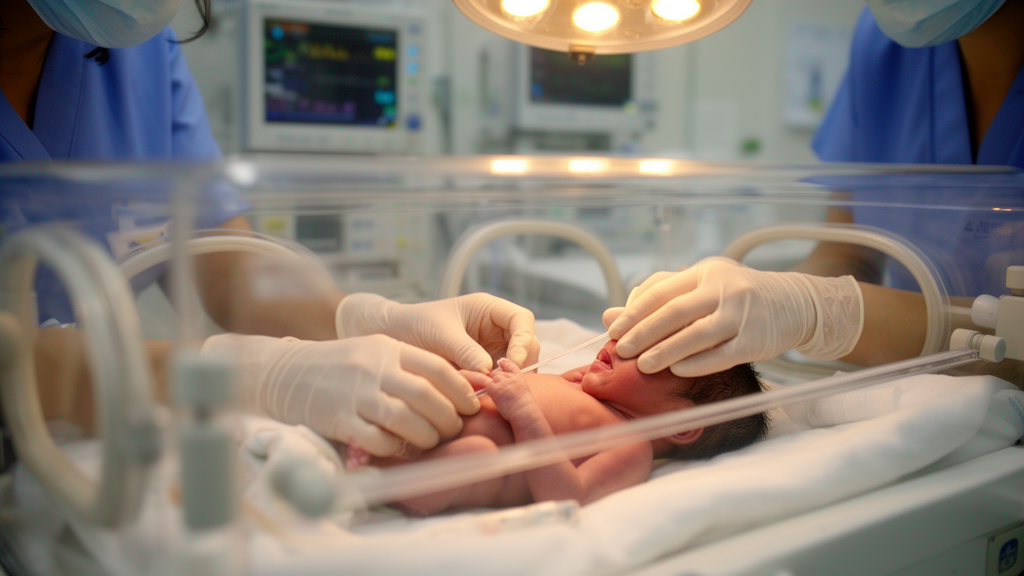
For decades, neonatologists have faced an uncomfortable dilemma: should the most fragile premature babies be fed through their gut within the first hours of life, or should feeding be delayed to protect their immature intestines? Early enteral nutrition—delivering milk directly into the stomach or intestine rather than through an intravenous line—has long been viewed with suspicion because of its possible association with necrotizing enterocolitis, a devastating inflammatory disease of the newborn gut. Now, a retrospective cohort study from two neonatal intensive care units in Cali, Colombia, adds context-specific evidence from a middle-income country, where feeding protocols and patient populations can differ substantially from those in high-income settings.
The research, published in Frontiers in Pediatrics, followed 173 preterm infants born at 32 weeks of gestation or earlier and/or weighing less than 1,500 grams—the very low birth weight category that represents some of the highest-risk patients in neonatology. Of these, 117 infants, or 67.6 percent, began enteral feeding within 48 hours of life, while 56 infants, or 32.4 percent, started later. The team, led by Javier Torres-Muñoz of Universidad del Valle, compared clinical outcomes between the two groups across four endpoints that matter most in the neonatal intensive care unit: necrotizing enterocolitis, sepsis, bronchopulmonary dysplasia, and mortality.
The physiological rationale for early feeding is compelling. Preterm birth interrupts fetal development during the third trimester, a critical stage of accelerated organ maturation, and infants with very low birth weight rarely achieve adequate nutritional intake in their first postnatal days. Observational studies suggest that cumulative deficits in energy and protein account for roughly half of the decline in weight-for-age between birth and hospital discharge. Beyond calories, early enteral feeding offers trophic stimulation of the gastrointestinal tract, promotes a healthy gut microbiota, strengthens the mother-infant bond, and supports the neurological maturation of sucking and swallowing—benefits that intravenous nutrition cannot replicate.
Methodologically, the study was ambitious for a resource-limited setting. The researchers fitted separate multivariable logistic regression models with robust standard errors for each outcome, adjusting for gestational age, birth weight, five-minute Apgar score, and study institution; the sepsis and bronchopulmonary dysplasia models were additionally adjusted for neonatal resuscitation. To address confounding by indication—the problem that sicker babies are more likely to have feeding delayed in the first place—the team estimated propensity scores among 159 infants with complete data and performed one-to-one nearest-neighbor matching with replacement, using a caliper of 0.05 and restricting the analysis to the region of common support. After matching, all standardized mean differences fell below 10 percent, indicating adequate covariate balance.
The primary full-cohort analyses delivered a clear message: delayed initiation of enteral feeding was not significantly associated with any of the four major outcomes. The adjusted odds ratios were 1.13 for necrotizing enterocolitis, 1.32 for sepsis, 1.08 for bronchopulmonary dysplasia, and 0.68 for mortality, all with confidence intervals crossing unity and p values well above 0.05. In other words, once baseline characteristics and institution were accounted for, waiting more than 48 hours to start feeding did not appear to protect infants from gut disease, infection, chronic lung disease, or death.
The picture grew more nuanced in the propensity score–matched sensitivity analysis, which included 38 infants with delayed feeding initiation and 38 weighted control observations derived from just 18 unique early-fed infants. In this smaller, more carefully balanced sample, delayed initiation was associated with a longer time to achieve full enteral nutrition—a weighted mean difference of 6.19 days—and with markedly higher odds of bronchopulmonary dysplasia, defined as the need for supplemental oxygen at 36 weeks’ postmenstrual age, with an odds ratio of 8.25. Intriguingly, mortality appeared lower in the delayed group in this analysis, an exploratory finding the authors attribute to possible survival bias, since infants who died within the first 48 hours were excluded by design.
These findings align with a growing body of evidence from randomized trials. A 2022 Cochrane meta-analysis of 14 trials involving 1,551 neonates found that delaying progressive enteral feeding beyond four days of life did not reduce the risk of necrotizing enterocolitis. A separate 2022 meta-analysis by Walsh and colleagues, covering seven trials and 872 very preterm or very low birth weight infants, found that delayed feeding actually increased the risk of invasive infection. Earlier work by Konnikova and colleagues observed that infants born before 33 weeks who began enteral feeding after the third postnatal day had a 4.5-fold increase in chronic lung disease compared with those fed earlier—consistent with the bronchopulmonary dysplasia signal in the Colombian matched analysis.
The study also revealed striking institutional differences. Delayed feeding occurred in 53.1 percent of newborns at Hospital Universitario del Valle but only 6.6 percent at Clínica Versalles, and birth at the public hospital was independently associated with higher adjusted odds of all four complications. The authors caution that these associations likely reflect differences in patient complexity, referral patterns, and clinical protocols rather than a direct institutional effect. Notably, infants with delayed feeding more often required neonatal resuscitation—92.9 percent versus 60.9 percent—and more often had respiratory distress syndrome, suggesting that clinical severity drove the decision to withhold feeding, a classic example of confounding by indication.
The limitations are substantial and the authors are candid about them. The observational design cannot establish causation, and because the retrospective database lacked precise onset times for sepsis and necrotizing enterocolitis, reverse causality remains possible: early clinical deterioration may have delayed feeding initiation rather than the reverse. The small number of events, particularly for necrotizing enterocolitis, limited statistical power, and nonsignificant findings should not be read as proof of safety. The matched analysis relied on only 18 unique controls, producing imprecise estimates with wide confidence intervals, and generalizability to centers with high rates of human milk use remains uncertain.
Nevertheless, the study offers something rare: prospective-quality evidence from a middle-income country, where exclusive early enteral feeding trials in India and elsewhere have shown shorter hospitalizations and better weight gain without increased complications. The authors conclude that their findings do not provide consistent evidence that feeding within the first 48 hours increases the frequency of major complications, but they stop short of declaring safety, calling instead for larger prospective multicenter studies in low- and middle-income settings. For the roughly 60 percent of the city’s births handled by these two institutions, the message is pragmatic: early enteral nutrition, advanced at 20 to 30 milliliters per kilogram per day, appears compatible with good outcomes—and delaying it may simply prolong the wait for full nutrition while offering no clear protection.
Subject of Research: Early enteral nutrition and clinical outcomes in very preterm infants in a middle-income country
Article Title: Clinical outcomes of preterm infants under 32 weeks who receive early enteral nutrition in a low- and middle-income country
Article References: Torres-Muñoz, J., Chamorro, L., Torres-Figueroa, J., Ortega, J., Garzón, R., & Quintero, P. (2026). Clinical outcomes of preterm infants under 32 weeks who receive early enteral nutrition in a low- and middle-income country. Frontiers in Pediatrics, 14, Article 1952558. https://doi.org/10.3389/fped.2026.1952558
Image Credits: AI Generated
DOI: 10.3389/fped.2026.1952558
Keywords: preterm infants, enteral nutrition, necrotizing enterocolitis, bronchopulmonary dysplasia, neonatology, low- and middle-income countries, Clinical, outcomes, preterm, infants, under, weeks
Cite Scienmag News
Harold Sullivan. (October 17, 2026). Early feeding may be safe for the smallest preterm babies, study in Colombia finds. Scienmag. https://scienmag.com/early-feeding-may-be-safe-for-the-smallest-preterm-babies-study-in-colombia-finds/
Harold Sullivan. "Early feeding may be safe for the smallest preterm babies, study in Colombia finds." Scienmag, 17 October 2026, https://scienmag.com/early-feeding-may-be-safe-for-the-smallest-preterm-babies-study-in-colombia-finds/. Accessed 17 October 2026.
Harold Sullivan. "Early feeding may be safe for the smallest preterm babies, study in Colombia finds." Scienmag. October 17, 2026. https://scienmag.com/early-feeding-may-be-safe-for-the-smallest-preterm-babies-study-in-colombia-finds/


