


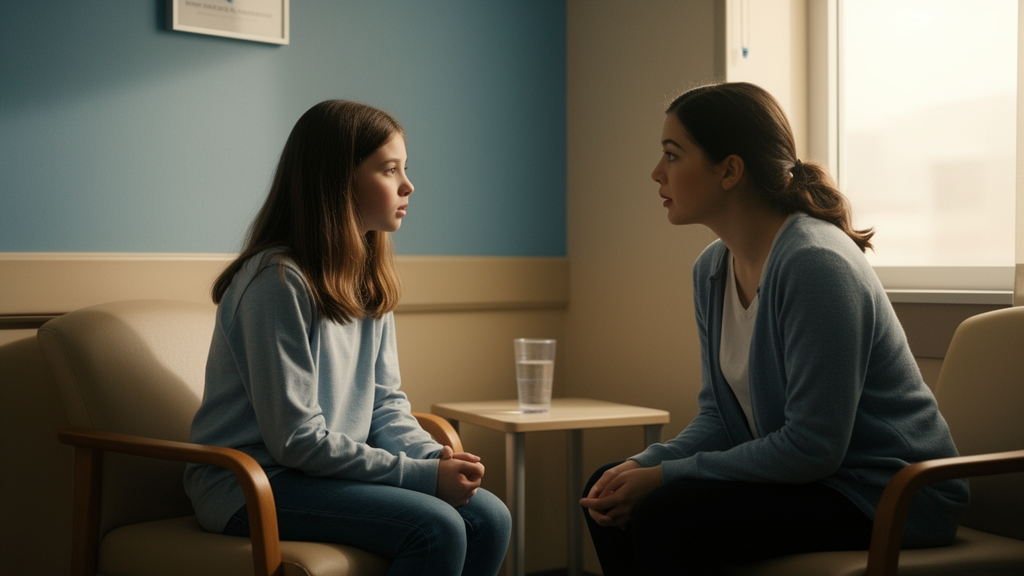
When an adolescent arrives at an Emergency Department after self-harming, the hours that follow are among the most consequential in their care. Suicide risk is elevated in young people after such attendances, yet evidence for effective interventions remains strikingly thin. A new qualitative study published in Frontiers in Child and Adolescent Psychiatry offers a rare window into what happens when crisis clinicians are given the tools and time to deliver a rapid brief psychological intervention, and the findings suggest a genuine transformation in how post-crisis care can be conceived.
The intervention, known as Supporting Adolescents with Self-Harm, or SASH, was evaluated in a multicentre randomised controlled trial across three NHS mental health trusts and nine Emergency Departments in London. It comprises three components: Therapeutic Assessment, in which practitioner and young person collaboratively build a personalised formulation of the self-harm; Enhanced Safety Planning, which co-constructs an individualised safety plan using the young person’s own words and preferences; and Solution-Focused Brief Therapy follow-up sessions that help the young person identify their preferred future, recognise existing strengths and take small, achievable steps towards change. Up to six sessions can involve parents or carers, either jointly with the young person or in individual sessions.
The new study forms part of the qualitative process evaluation of the SASH trial. Researchers conducted semi-structured interviews with 15 practitioners who delivered the intervention and four senior staff members, analysing the transcripts thematically. The practitioners came from varied professional backgrounds, including mental health nurses, social workers, psychiatrists, assistant psychologists, an occupational therapist and a support worker, and each had delivered SASH to between one and seven young people. From 549 line-by-line codes, the analysis distilled six overarching themes that together map how a brief intervention can reshape crisis care.
The first theme was a transformation in practice. Practitioners described SASH as bridging the gap in crisis care, the period in which young people are typically discharged to their GP or placed on a lengthy waiting list for community Child and Adolescent Mental Health Services. Median wait times for CAMHS treatment run to eight months, with some young people waiting over a year, and evidence shows that mental health problems often worsen while young people wait. By offering immediate therapeutic intervention and continuity over multiple sessions, SASH meant young people did not have to repeat their story to a new practitioner, and clinicians had time to build rapport and work with the system around the young person, including carers, schools and sometimes social services.
The second theme centred on patient-centred care that builds shared understanding. Practitioners emphasised how the Therapeutic Assessment validated and acknowledged the young person’s difficulties rather than medicalising them, positioning the young person as the expert in their own experience. Co-constructing the self-harm cycle, a visualisation of the thoughts, feelings and behaviours that feed into self-harm, was described as enlightening, helping young people distinguish between the internal processes that drive their actions. For many, it was the first time anyone had broken down self-harm in this way, and the shared formulation also gave practitioners a stronger foundation for risk assessment and onward referral.
The third theme captured how the intervention harnesses young people’s strengths and motivates change. The Enhanced Safety Plan begins with a section on what the young person is like when they are well, drawing out values and resilience in a way that standard safety plans, which focus on restricting access to means and crisis helplines, do not. Coping strategies are broken into small categories such as distractions, environment, trusted people and professionals, and practitioners stressed the importance of the young person generating their own solutions rather than being told what to do, a process one practitioner compared to motivational interviewing. Solution-focused scales, asking where the young person sits on a one-to-ten scale towards their best hope, helped break change down into granular, realistic steps, and practitioners repeatedly noticed small progress between sessions that they could draw attention to.
Carer involvement emerged as the fourth theme, with practitioners describing better outcomes when involvement was personalised. Not all young people wanted their carers in sessions, and practitioners respected those wishes unless risk management made involvement essential. Where carers did participate, joint sessions using the self-harm cycle helped parents understand why their child had reached the point of self-harm, often softening anger into empathy. Individual sessions gave carers their own containing space, and practitioners noted that some parents began using solution-focused language at home, asking questions such as what difference would that make, which helped the young person feel more understood and supported.
The fifth theme was more sobering. Practitioners felt SASH worked well for most young people, particularly those motivated to change, able to express their emotions, or who had recently started self-harming, for whom the intervention could be eye-opening. But it was seen as less suited to those who struggled to articulate their feelings, had complex or enduring difficulties, or whose problems lay largely outside their control, such as bullying or family breakdown. Views on suitability for autistic young people were mixed; some valued the clear structure, which reduced anxiety, while others found the Therapeutic Assessment and safety planning challenging when young people struggled to identify and discuss feelings, suggesting adaptations such as visual supports and more concrete language may be needed.
The sixth theme described a paradigm shift for practitioners themselves. Accustomed to risk-averse, problem-focused crisis work, some initially worried that a solution-focused approach might feel invalidating or repetitive. Over time, however, they gained confidence in balancing validation of distress with strengths-based conversations, and many reported feeling more optimistic and hopeful in their clinical work, with some describing the approach as becoming second nature. Most practitioners continued to use components of SASH, including the self-harm cycle, the Enhanced Safety Plan and solution-focused techniques such as scales and best hopes questions, and some team members who had not been involved in the trial adopted the approach, suggesting it was preferred to usual practice.
The study’s authors argue that SASH offers a feasible model of post-crisis support that can be integrated within routine CAMHS crisis services, with the Therapeutic Assessment and Enhanced Safety Plan achievable within the seven-day follow-up window recommended by national guidance. They caution that effectiveness cannot yet be determined because outcome data from the randomised controlled trial are not yet available, and that insights from young people and carers who received the intervention are still being analysed. Implementation would also require investment in training, supervision and service configuration. Nevertheless, the findings suggest that a brief, collaborative, strengths-based intervention delivered in the aftermath of a self-harm crisis can bridge the gap between emergency care and longer-term treatment, offering continuity, shared understanding and hope at a moment when young people are at their most vulnerable.
Subject of Research: adolescent mental health
Article Title: Supporting adolescents with self-harm: practitioners’ experiences of delivering a rapid brief psychological intervention to adolescents presenting to Emergency Departments
Article References: O’Keeffe, S., Long, M., Saour, T., & McCabe, R. (2026). Supporting adolescents with self-harm: practitioners’ experiences of delivering a rapid brief psychological intervention to adolescents presenting to Emergency Departments. Frontiers in Child and Adolescent Psychiatry, 5, Article 1959051. https://doi.org/10.3389/frcha.2026.1959051
Image Credits: AI Generated
DOI: 10.3389/frcha.2026.1959051
Keywords: self-harm, adolescent mental health, Emergency Department, brief intervention, Therapeutic Assessment, safety planning, Solution-Focused Brief Therapy, CAMHS, crisis care, qualitative research, carer involvement, suicide risk
Cite Scienmag News
Ophelia Keating. (October 17, 2026). Rapid brief therapy after self-harm crises transforms emergency care for teens. Scienmag. https://scienmag.com/rapid-brief-therapy-after-self-harm-crises-transforms-emergency-care-for-teens/
Ophelia Keating. "Rapid brief therapy after self-harm crises transforms emergency care for teens." Scienmag, 17 October 2026, https://scienmag.com/rapid-brief-therapy-after-self-harm-crises-transforms-emergency-care-for-teens/. Accessed 17 October 2026.
Ophelia Keating. "Rapid brief therapy after self-harm crises transforms emergency care for teens." Scienmag. October 17, 2026. https://scienmag.com/rapid-brief-therapy-after-self-harm-crises-transforms-emergency-care-for-teens/


