


Wound healing is a dynamic process, and one of the most telling indicators of its progress is a parameter that clinicians rarely see with the naked eye: pH. The exudates released from wounds respond to pH, which influences physiological processes such as the inflammatory response, collagen formation and angiogenesis. Healthy skin maintains an acidic pH between 4 and 6, providing resistance against microbial invasion, while chronic wounds shift toward an alkaline pH between 7 and 9, making them more vulnerable to bacterial infections. Acute wounds, by contrast, retain a pH similar to that of normal skin, around 4 to 6, due to the activity of neutrophils that prevent bacterial colonization. Monitoring this physicochemical parameter can therefore indicate the effectiveness of an applied treatment and act as an early identification of wound infection.
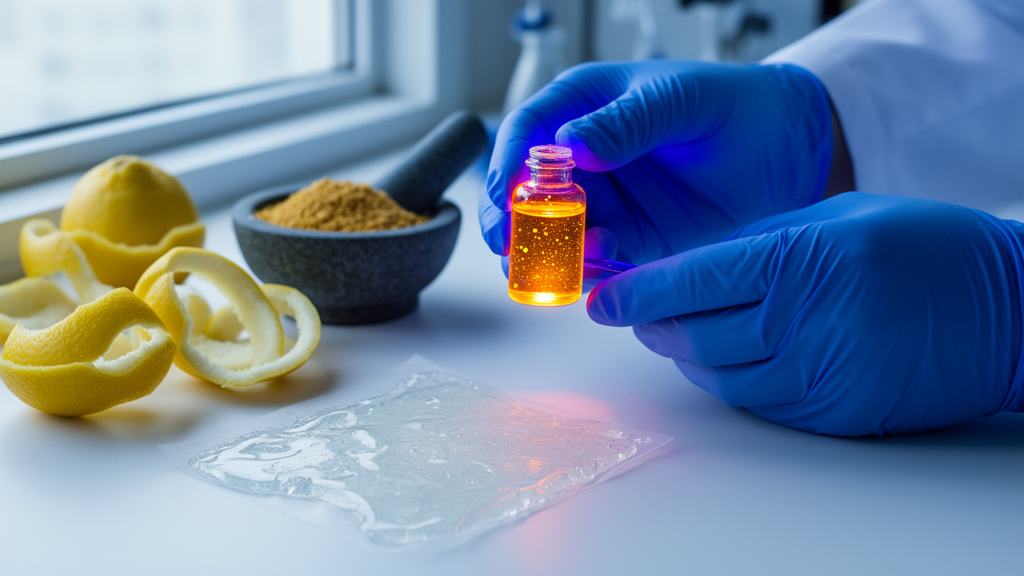
Now, a team of researchers at the Federal University of Alagoas in Brazil has developed a bifunctional fluorescent film that can monitor healing through pH changes while simultaneously acting as an antioxidant agent in the treatment of wounds. The study, published in Frontiers in Carbon, focuses on films based on polyvinyl alcohol (PVA) and carbon dots (CDs) derived from two very different sources: lemon peel bagasse, a food industry waste product, and ortho-phenylenediamine, a synthetic aromatic compound. The work represents a rare systematic attempt to combine pH sensing and antioxidant therapy in a single bioactive dressing, addressing a gap the authors note is still uncommon in wound research.
Carbon dots are luminescent carbon nanoparticles smaller than 10 nanometers with a spherical morphology, featuring a graphitic core and a surface decorated with functional groups characteristic of the precursor materials used during synthesis. They exhibit excellent optical properties, including fluorescence in the visible spectrum, good dispersion in water, biocompatibility, photo-stability, low toxicity, antimicrobial activity and low-cost synthesis. These properties, combined with their non-invasiveness and good sensitivity, have made them attractive candidates for biological fluorescent sensors. However, when exposed to different pH environments, individual carbon dots typically exhibit only one emission band, and gradations in the wavelength of maximum emission change with low clarity, making pH detection difficult to visualize reliably.
To overcome this limitation, the researchers turned to ratiometric fluorescent sensing, a strategy that employs dual emission bands at different wavelengths. Rather than relying on a single fluorescence intensity, a ratiometric sensor provides a correlation from the ratios of fluorescence intensities at different wavelengths, which minimizes background interferences and improves sensitivity, precision and detection. The team synthesized two types of carbon dots: CD-L, derived from Tahiti lemon bagasse via a rapid microwave method, and CD-oPD, derived from ortho-phenylenediamine via a hydrothermal reaction. CD-L emits in the blue region with a maximum centered at 450 nanometers, while CD-oPD emits in the yellowish-green region with a maximum centered at 550 nanometers. Both exhibited excitation-independent emission, a feature associated with uniform sizes, molecular states and passivated surface defects.
Transmission electron microscopy revealed that both CD-L and CD-oPD exhibited spherical graphitic morphology with uniform size dispersion, with average diameters of 2.54 ± 0.44 nanometers and 2.64 ± 0.60 nanometers respectively. The interplanar distances typical of graphitic structure were observed at 0.21 and 0.24 nanometers, corresponding to the (100) diffraction plane for CD-L and CD-oPD respectively. Fourier transform infrared spectroscopy identified the main functional groups: broad O-H stretching bands around 3,445 and 3,330 cm⁻¹ for CD-L and CD-oPD respectively, C-H vibrations between 2,970 and 2,700 cm⁻¹, and for CD-L, bands suggestive of C=O, C=C and C-N groups associated with oxygenated functionalities, a polyaromatic graphitic core and surface-functionalizing nitrogen groups. For CD-oPD, peaks characteristic of aromatic C-N and N-H angular deformation were observed at 1,330 and 780 cm⁻¹ respectively.
The photostability of both carbon dots was assessed using photoluminescence spectroscopy, with fluorescence intensity recorded under UV lamp excitation for 60 minutes continuously. The results remained practically unchanged during the analyzed period, with variations in the fluorescence signal of less than 10 percent, confirming their suitability for sustained sensing applications. When solutions of CD-L and CD-oPD were mixed in an optimized ratio, the researchers observed a dual emission with bands centered at 450 and 550 nanometers, consistent with the individual spectra of each carbon dot. The resulting ratiometric system, named CD-L/oPD, showed a high sensitivity for detecting pH in the range of 5 to 10, an interval suitable for monitoring the wound healing process.
The analytical response of the CD-L/oPD system to pH variation was investigated using photoluminescence spectroscopy. The ratio of fluorescence intensities at 460 and 550 nanometers, I460/I550, as a function of pH value, fit well to a sigmoidal curve in the pH range of 5 to 10, with a relationship having an r² of 0.992. This variation in the I460/I550 ratio allows for the visualization of a color change from yellowish-green to green with increasing pH, a gradient that can be seen with the naked eye. By contrast, the individual carbon dots showed only linear functions in the pH range from 6 to 10, with CD-L demonstrating a blue emission with no perceptible change to the naked eye and CD-oPD revealing a consistent yellow emission except at pH 9, where a pale yellowish-green color was observed. The protonation and deprotonation of oxygenated groups on the carbon dot surfaces explains the fluorescence modulation: after pH 7, these groups are deprotonated, causing a decrease in fluorescence intensity.
The researchers then incorporated the carbon dots into a PVA matrix to produce flexible, transparent fluorescent films. Under natural light, the films were colorless for CD-L-F and yellowish for CD-oPD-F and CD-L/oPD-F. Under UV light, the characteristic blue emission of CD-L was observed for CD-L-F, and yellow and yellowish-green for CD-oPD and CD-L/oPD films respectively. The maximum emission wavelengths of the films shifted toward the blue compared to the carbon dots in solution, a phenomenon the researchers attribute to the formation of hydrogen bonds between the PVA and the surface functional groups of the carbon dots when the nanoparticles are stabilized in the polymer. When applied to an ex vivo pig skin model sprayed with different pH solutions ranging from 5 to 9, the CD-L/oPD-F film was more efficient at visually discriminating color in relation to pH changes than films prepared from the individual carbon dots, displaying a significant change from greenish-yellow to green as pH increased from 5 to 9.
Swelling tests conducted in Britton-Robinson buffer at pH 5, 7 and 9 revealed that the degree of swelling of the films increased with pH and time, reaching equilibrium in 60 minutes. The minimum and maximum swelling percentages at pH 5, 7 and 9 were 47.5 to 59.5, 59.0 to 75.5 and 97.5 to 153.5 respectively. These values were suitable to maintain the shape and uniform edges of the films after the swelling tests. The pH-dependent swelling response is attributed to ionizable functional groups of the PVA (hydroxyl) and the carbon dots (hydroxyl and carboxyl), which promote electrostatic repulsion and increase interactions with water as pH increases, expanding the film and creating a greater surface area available for the diffusion of water molecules.
Beyond pH sensing, the carbon dots demonstrated significant antioxidant capacity against reactive oxygen species, which are formed during normal cellular respiration but in excess contribute to the development and progression of diseases resulting from oxidative stress. In the inflammatory phase of wound healing, an excess of ROS is produced and is considered the main factor hindering skin regeneration, causing oxidative structural modifications in lipids, DNA and proteins that lead to necrosis at the wound site. The IC50 values for CD-L and CD-oPD were 56.7 and 39.5 μg mL⁻¹ in the DPPH radical inhibition assay, and 25.1 and 63.4 μg mL⁻¹ in the hypochlorous acid scavenging assay respectively. CD-L exhibited higher antioxidant capacity against physiologically relevant reactive species such as superoxide anion and HOCl, while CD-oPD showed no elimination capacity against superoxide anion but demonstrated greater potential for capturing the DPPH radical. These values compare favorably with carbon dots derived from beet juice, which exhibited an IC50 of 231.7 μg mL⁻¹ against DPPH, and clove-derived carbon dots, which showed an IC50 of 57 μg mL⁻¹ against the same radical.
Biocompatibility was evaluated using MTT viability assays with human non-tumoral skin fibroblast HFF-1 cells, which showed a cell survival rate of over 80 percent for both carbon dots up to a concentration of 1,000 μg mL⁻¹, corroborating the relatively negligible cytotoxicity of the nanoparticles in non-transformed human fibroblasts. Cells treated with triton-X (1 percent) were used as a control for reduced cell viability, showing only 28 percent viable cells. The authors suggest that the developed films can act in a bifunctional way, monitoring healing through pH changes and acting as an antioxidant agent in the treatment of wounds, offering a real-time, in situ measurement of pH value and redox status. While carbon dots have been explored as fluorescent pH sensors, systematic studies aimed at combining different properties to offer both monitoring and treatment of wound healing remain rare, and this work seeks to address that gap by combining the use of carbon dots in film form to act as an antioxidant agent, protective barrier and colorimetric pH sensor with a view to their use as bioactive dressings.
Subject of Research: Materials Science
Article Title: Carbon dots-based fluorescent films to act as a potential antioxidant agent and pH ratiometric sensor for skin applications
Article References: Da Silva, L. E., Araujo, A. P. D. L., Almeida, J. H., de Vasconcelos, L. B. O. D., Silva, M. D. O., Lima, D. J. P., Viana, R. D. S., Ferro, J. N. D. S., Goulart, M. O. F., Xavier, J. A., & Barbosa, C. D. A. E. S. (2023). Carbon dots-based fluorescent films to act as a potential antioxidant agent and pH ratiometric sensor for skin applications. Frontiers in Carbon, 2, Article 1300811. https://doi.org/10.3389/frcrb.2023.1300811
Image Credits: AI Generated
DOI: 10.3389/frcrb.2023.1300811
Keywords: carbon dots, wound healing, pH sensor, antioxidant, polyvinyl alcohol, fluorescent films, reactive oxygen species, smart dressings, nanotechnology, biomaterials, Carbon, dots-based
Cite Scienmag News
Matthew Wilson. (October 17, 2026). Lemon Waste Carbon Dots Power Dual-Action Smart Wound Dressings That Sense pH and Fight Oxidative Stress. Scienmag. https://scienmag.com/lemon-waste-carbon-dots-power-dual-action-smart-wound-dressings-that-sense-ph-and-fight-oxidative-stress/
Matthew Wilson. "Lemon Waste Carbon Dots Power Dual-Action Smart Wound Dressings That Sense pH and Fight Oxidative Stress." Scienmag, 17 October 2026, https://scienmag.com/lemon-waste-carbon-dots-power-dual-action-smart-wound-dressings-that-sense-ph-and-fight-oxidative-stress/. Accessed 17 October 2026.
Matthew Wilson. "Lemon Waste Carbon Dots Power Dual-Action Smart Wound Dressings That Sense pH and Fight Oxidative Stress." Scienmag. October 17, 2026. https://scienmag.com/lemon-waste-carbon-dots-power-dual-action-smart-wound-dressings-that-sense-ph-and-fight-oxidative-stress/


