


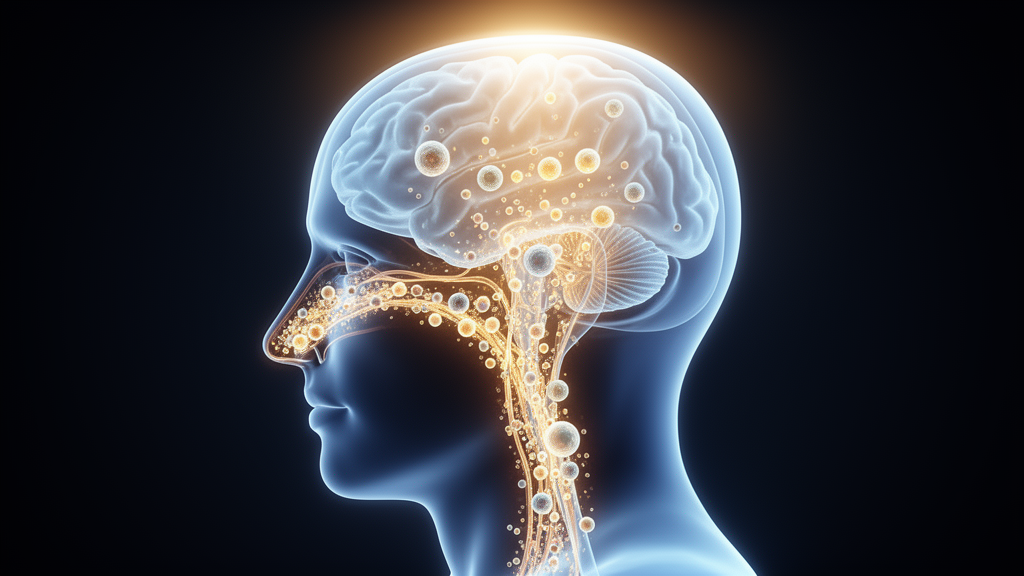
For decades, the blood-brain barrier has been the great wall of neurology—a tightly sealed border of endothelial cells and tight junctions that keeps out more than 98 percent of large-molecule drugs, including nearly every stem cell preparation and exosome suspension ever designed to repair damaged neural tissue. Now a systematic review published in Frontiers in Drug Delivery has pulled together, for the first time, every published human clinical study that tried to sidestep that wall through an unexpected doorway: the nose. The verdict is a fascinating mix of encouraging signals and sobering caveats, and it may reshape how the field approaches one of the most tantalizing delivery strategies in regenerative medicine.
The review, led by Umm E Habiba, Iqra Sarwar, Sabiha Shamim, and David Lawrence Greene, screened nearly 18,700 records from PubMed, Google Scholar, ClinicalTrials.gov, and the Chinese trial registry ChiCTR, covering literature from January 2015 through August 2026. After rigorous filtering, just 16 publications survived—describing 18 distinct patient cohorts and 153 treated individuals across 12 neurological conditions. That small yield from such a broad search is itself telling: despite a decade of enthusiastic preclinical work on nose-to-brain delivery of stem cells and their secretions, the human clinical evidence base remains remarkably thin, scattered across disease areas, biologic classes, and delivery techniques that barely overlap.
What the included studies reveal is a field in its infancy but moving fast. The conditions treated ranged from Alzheimer’s disease and Parkinson’s disease to cerebral palsy, amyotrophic lateral sclerosis, autism spectrum disorder, perinatal arterial ischemic stroke, germinal matrix-intraventricular hemorrhage in preterm neonates, hypoxic-ischemic encephalopathy, Lewy body dementia, Kennedy disease, congenital myasthenic syndrome, and Coffin-Siris syndrome. The biologics delivered intranasally spanned six distinct classes: mesenchymal stromal cells, neural stem cells, extracellular vesicles and exosomes, secretome and conditioned medium products, and—perhaps most surprisingly—fresh breast milk, which was dripped into the nasal vestibules of preterm infants as a novel neuroprotective intervention.
The safety picture, the review’s primary analytic anchor, is cautiously optimistic. Across all 18 cohorts, with follow-up periods ranging from one month to 39 months, investigators reported no serious adverse events attributable to the intranasal treatment itself. When adverse events did occur, they were mild and transient: brief fever in a neonate after intranasal mesenchymal stromal cell administration in the Dutch PASSIoN trial, transient olfactory irritation and headache in a phase 1 neural stem cell study in Parkinson’s disease, and a short episode of fever and shivering in an autism case report that prompted a precautionary dose reduction. Thirteen of the 18 cohorts reported no adverse events at all, though the review’s authors note that adverse-event reporting was incomplete in at least two studies, meaning the apparent absence of complications should be interpreted with care.
The clinical signals, however, are where the review becomes both exciting and sobering. Fifteen of the 18 cohorts reported improvement on their primary outcome measures, and one reported stabilization rather than the progressive decline expected in ALS. In the Alzheimer’s disease exosome trial, cognitive scores improved modestly on both the ADAS-cog and MoCA-B scales. In the Parkinson’s neural stem cell study, motor scores on the MDS-UPDRS dropped by nearly 20 points at six months. In the cerebral palsy randomized trial, gross motor function scores on the GMFM-88 were dramatically higher in the treatment group than in controls. In the breast milk studies, preterm infants receiving intranasal fresh milk showed substantially lower rates of post-hemorrhagic ventricular dilatation than historical controls.
But the review’s authors are emphatic that these signals cannot be read as evidence of efficacy. The overwhelming majority of included studies were uncontrolled, enrolling small numbers of patients without placebo groups or sham comparators. Only one randomized controlled trial appears in the entire dataset—the cerebral palsy study—and even it carried
Understanding why the intranasal route has attracted so much attention requires appreciating the unique anatomy of the nasal cavity. The olfactory epithelium, located in the upper reaches of the nasal passage, is the only place in the human body where the central nervous system comes into direct contact with the external environment. Olfactory sensory neurons extend their axons through the cribriform plate into the olfactory bulb, and surrounding this pathway are perineural channels and lymphatic spaces that have been shown in animal studies to permit the movement of particles, proteins, and even whole cells from the nasal mucosa toward the brain. The trigeminal nerve, which innervates the respiratory epithelium of the nasal cavity, offers a second, parallel conduit into the cranial vault. Together, these routes explain why preclinical investigators have been able to demonstrate measurable delivery of intranasally administered biologics to brain tissue in rodents, bypassing the vascular barriers that render systemic administration so inefficient for large molecules.
Translating that anatomy into reliable human dosing, however, has proven far more difficult than the preclinical literature might suggest. The review highlights that the five distinct delivery techniques used across the included studies—ranging from simple nasal drops applied with a pipette to pressurized aerosols and specialized atomizing devices—differ enormously in where the delivered fluid actually lands. Nasal anatomy varies substantially between individuals, and even more dramatically between a preterm neonate and an adult with neurodegeneration. A droplet or cell suspension deposited in the anterior nasal vestibule may never reach the olfactory cleft, while material deposited too forcefully risks being swallowed or cleared by mucociliary action before any nose-to-brain transport can occur. This deposition problem is one of the central reasons the review’s authors call for standardized delivery frameworks: without agreement on device type, head positioning, volume, and targeting strategy, results from one study cannot meaningfully inform the design of another.
The dosing heterogeneity documented in the review deserves particular emphasis. Across the 18 cohorts, the quantities of biologic administered varied by orders of magnitude, and the units themselves were often incomparable—some studies reported total cell counts per administration, others reported doses per kilogram of body weight, and acellular products such as exosomes and conditioned medium were quantified by particle number, protein concentration, or volume alone. Treatment schedules ranged from single administrations to repeated dosing over weeks or months. Because biologic class was strongly confounded with disease indication—meaning that, for example, nearly all the neural stem cell data came from Parkinson’s disease while the breast milk preparations were used exclusively in preterm neonates—it is impossible to disentangle whether differences in outcomes across studies reflect the biologic itself, the disease being treated, the dose, or the delivery method. This confounding is a structural feature of the evidence base rather than a flaw of any individual study, and it is precisely why the review declined to pool results quantitatively.
The methodological quality assessment adds further context to the encouraging signals. The application of the Cochrane Risk of Bias 2 tool to the randomized trial, ROBINS-I to non-randomized comparative studies, and the Joanna Briggs Institute checklists to case series and case reports revealed the expected pattern: uncontrolled designs are inherently vulnerable to regression to the mean, investigator expectancy, and placebo effects, all of which can produce apparent improvement in subjective or caregiver-reported outcomes. In neurodevelopmental conditions such as autism spectrum disorder and cerebral palsy, where outcome measures often depend on observational scales, the absence of blinded assessment is a particularly serious limitation. Natural disease fluctuation also plays a role; conditions with relapsing-remitting or variable trajectories can appear to improve simply through the passage of time.
Against this backdrop, the consistency of the safety findings takes on real significance. Intranasal administration avoids many of the risks associated with systemic cell infusion, including infusion reactions and the potential for ectopic cell trapping in the lungs or other organs. The nasal route also avoids the need for invasive procedures such as intrathecal injection or stereotactic surgical implantation, which have historically been required for delivering cells directly to the central nervous system. The fact that the included studies spanned neonates, children, and adults, and that no treatment-related serious adverse events emerged across follow-up periods extending to 39 months, suggests that the procedural feasibility of the route is no longer the primary question facing the field.
What remains unresolved is everything downstream of feasibility. The review’s framework for standardized future trials points toward several priorities: consensus on delivery devices and deposition targets, harmonized dose reporting that allows cross-study comparison, biologic product characterization standards that specify cell identity, potency, and cargo composition, and—above all—adequately powered randomized controlled trials with sham-treated comparators and blinded outcome assessment. The single randomized trial in the dataset, despite its positive findings in cerebral palsy, is insufficient to carry the weight of an entire field. Until such trials exist, the appropriate reading of this systematic review is not that intranasal regenerative biologics work, but that they can be administered safely in carefully monitored settings and that the preliminary signals justify the rigorous controlled studies needed to determine whether the promise of nose-to-brain regenerative medicine can survive contact with experimental scrutiny.
Subject of Research: Intranasal delivery of regenerative biologics for neurological disorders: a systematic review of clinical studies
Article Title: Intranasal delivery of regenerative biologics for neurological disorders: a systematic review of clinical studies
Article References: Habiba, U. E., Sarwar, I., Shamim, S., & Greene, D. L. (2026). Intranasal delivery of regenerative biologics for neurological disorders: a systematic review of clinical studies. Frontiers in Drug Delivery, 6, Article 1969111. https://doi.org/10.3389/fddev.2026.1969111
Image Credits: AI Generated
DOI: 10.3389/fddev.2026.1969111
Keywords: Intranasal, delivery, regenerative, biologics, neurological, disorders, systematic, review, clinical, studies, scientific research
Cite Scienmag News
Cassandra Pierce. (October 17, 2026). Nose-to-Brain Stem Cells and Exosomes: What the First Systematic Review of Intranasal Regenerative Therapies Really Found. Scienmag. https://scienmag.com/nose-to-brain-stem-cells-and-exosomes-what-the-first-systematic-review-of-intranasal-regenerative-therapies-really-found/
Cassandra Pierce. "Nose-to-Brain Stem Cells and Exosomes: What the First Systematic Review of Intranasal Regenerative Therapies Really Found." Scienmag, 17 October 2026, https://scienmag.com/nose-to-brain-stem-cells-and-exosomes-what-the-first-systematic-review-of-intranasal-regenerative-therapies-really-found/. Accessed 17 October 2026.
Cassandra Pierce. "Nose-to-Brain Stem Cells and Exosomes: What the First Systematic Review of Intranasal Regenerative Therapies Really Found." Scienmag. October 17, 2026. https://scienmag.com/nose-to-brain-stem-cells-and-exosomes-what-the-first-systematic-review-of-intranasal-regenerative-therapies-really-found/


