


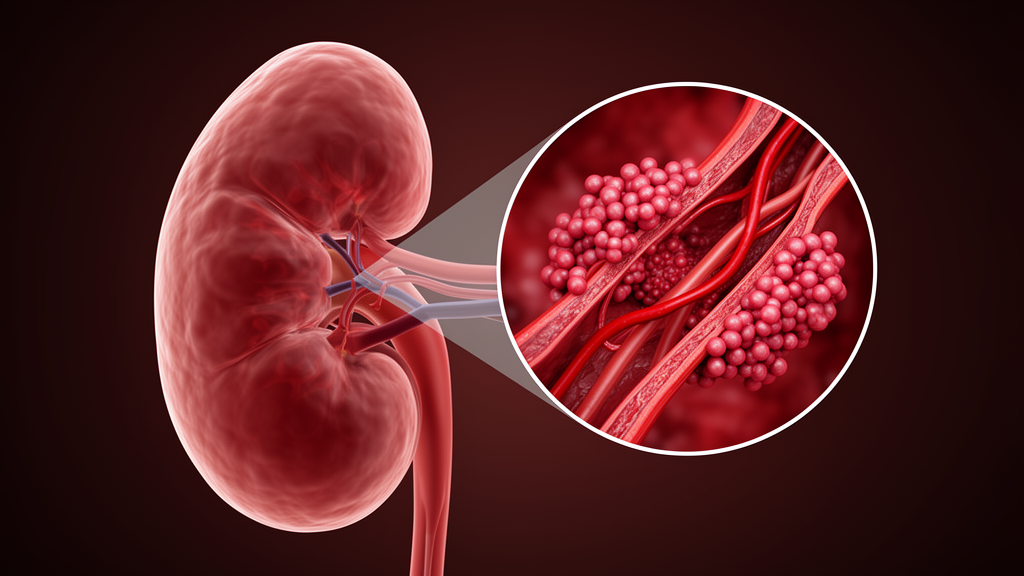
A 37-year-old man walked into a hospital in China with black, tarry stools and blood pressure so high it threatened to shear the lining of his smallest blood vessels apart. Within weeks, clinicians would uncover one of the rarest and most diagnostically treacherous forms of thrombotic microangiopathy, a disease family in which microscopic clots choke the tiniest arteries and capillaries until organs begin to fail. What makes this case, published in Clinical Case Reports, so compelling is not just the rarity of the diagnosis, but the sobering lesson it delivers about eculizumab, the blockbuster complement-blocking antibody that has transformed the treatment of atypical hemolytic uremic syndrome since its FDA approval in 2011.
Thrombotic microangiopathy, or TMA, is classically taught as a triad: microangiopathic hemolytic anemia, in which red blood cells are shredded as they squeeze through partially occluded vessels; thrombocytopenia, a dangerous drop in platelets consumed by runaway clotting; and ischemic damage to end organs, most often the kidneys. But medicine’s tidy categories are increasingly breaking down. A growing body of evidence shows that many patients never develop the dramatic hematologic signature at all. Instead, they present with nothing more than a quietly rising serum creatinine, the standard marker of kidney dysfunction. When kidney biopsy confirms the characteristic vascular pathology in these patients, the entity is called renal-limited TMA, or RL-TMA. A French retrospective study cited by the case authors found that this localized form may account for as many as 45 percent of TMA cases, yet its indolent course and non-specific presentation mean it is frequently overlooked.
The patient at the center of this report arrived at the gastroenterology department with intermittent melena, the passage of digested blood that signals upper gastrointestinal bleeding. His blood pressure measured a staggering 218 over 140 millimeters of mercury despite a five-year history of hypertension for which he had never taken a single antihypertensive medication, a family pattern echoed by his father and grandfather, both diagnosed in their thirties. His serum creatinine was severely elevated at 437 micromoles per liter, indicating acute kidney injury on a background of chronic damage. Yet his initial laboratory profile was strikingly atypical for TMA: platelets were actually high at 578 billion per liter, no schistocytes, the fragmented red cells that hallmark microangiopathic hemolysis, were seen on his blood smear, and lactate dehydrogenase and bilirubin were normal. The absence of systemic hematologic involvement would prove to be the first clue that this was a disease confined almost entirely to the kidney.
The differential diagnosis was daunting. Uncontrolled hypertension with renal impairment, anemia, and a suspicious monoclonal protein band on serum electrophoresis raised immediate concern for multiple myeloma and monoclonal gammopathy of renal significance, known as MGRS. Immunofixation electrophoresis revealed an IgA-kappa monoclonal immunoglobulin, and the serum free light chain assay showed an abnormal involved-to-uninvolved ratio of 2.73, though still within the renal-function-corrected reference limit of 3.1. Bone marrow aspiration, however, showed normocellular marrow with no clonal plasma cell proliferation. After intensive antihypertensive therapy brought his blood pressure to roughly 150 over 90 and produced partial renal recovery, the clinical team finally persuaded the reluctant patient to undergo kidney biopsy on day 45 after symptom onset, a delay that would later carry therapeutic consequences.
The biopsy findings were textbook for TMA confined to the renal microvasculature. Of twelve glomeruli examined, three were globally sclerosed, and the surviving filters showed ischemic collapse of capillary tufts with a small fibrous crescent. The arterioles told the deeper story: walls thickened with mucinous degeneration, the so-called onion-skin intimal hyperplasia characteristic of malignant hypertensive vascular injury, severe luminal stenosis, and visible thrombus formation. Roughly 80 percent of tubules were atrophied amid diffuse interstitial fibrosis, evidence of irreversible chronic damage. Direct immunofluorescence showed no immunoglobulin or complement deposits, and even immunoelectron microscopy found no clear monoclonal light chain deposition, meaning the paraprotein had left no direct histologic fingerprint on the kidney.
Then came the complement workup, and with it the case’s central paradox. Soluble membrane attack complex, sC5b-9, the terminal effector of the complement cascade whose elevation signals ongoing activation of the pathway that eculizumab is designed to block, was massively elevated at greater than 2100 nanograms per milliliter against a normal range of 75 to 219. There were no antibodies against complement factors H, B, or I, ADAMTS13 activity was normal, ruling out thrombotic thrombocytopenic purpura, stool culture was negative, excluding Shiga toxin-producing Escherichia coli-associated HUS, and whole-exome sequencing found no pathogenic variants in complement pathway genes. The picture pointed to complement-mediated TMA driven by malignant hypertension, with the monoclonal gammopathy as a probable co-conspirator rather than a proven direct injurer.
After intensifying antihypertensive therapy with sacubitril/valsartan, the team initiated eculizumab, the recombinant humanized monoclonal antibody against complement component C5 that prevents formation of the membrane attack complex. The regimen followed the standard aHUS protocol: 900 milligrams weekly for four weeks, then 1200 milligrams every two weeks. For the first month, things looked promising. Serum creatinine fell from 277 to 248 micromoles per liter. But by week 10, it had rebounded to 335. Here is the technical crux: throughout treatment, CH50, the 50 percent hemolytic complement assay, sat at 13.7 to 13.8 units per milliliter against a reference range of 23.0 to 46.0, and sC5b-9 had dropped to 280 to 335 nanograms per milliliter, near-normal territory. The terminal complement pathway was completely and sustainably inhibited. The drug was doing exactly what it is supposed to do. The kidney was deteriorating anyway.
This disconnect between pharmacologic success and clinical failure is where the case becomes genuinely instructive. The authors attribute the suboptimal response to two converging factors. First, delayed initiation: evidence suggests eculizumab should ideally be started within 24 to 48 hours of disease onset, yet the diagnostic difficulty of RL-TMA, which typically requires renal biopsy for confirmation in the absence of specific biomarkers, meant complement blockade began 45 days after symptoms appeared. By then, the biopsy had already documented approximately 80 percent tubular atrophy with diffuse interstitial fibrosis, structural changes that no amount of complement inhibition can reverse. Second, complement-independent mechanisms: the persistent IgA-kappa paraprotein, though never demonstrated as direct renal deposition, may have sustained endothelial damage through indirect pathways. Mayo Clinic data analyzed by Ravindran and colleagues found that 13.7 percent of 146 TMA patients had paraproteinemia, roughly four times more common than expected, positioning monoclonal immunoglobulin as a potential susceptibility factor for the second hit that tips endothelial injury into full-blown microvascular thrombosis.
With the patient’s consent, the team pivoted the day after discontinuing eculizumab to empirical plasma cell-directed therapy: weekly bortezomib at 2.6 milligrams per square meter, cyclophosphamide 600 milligrams, and dexamethasone 20 milligrams. The response was gradual but sustained. By week 7 of anti-myeloma therapy, creatinine had declined to 261 micromoles per liter. At the day-300 follow-up visit, it stood at 233, with the monoclonal protein persisting at low concentration, involved free light chain of 36.82 milligrams per liter and a ratio of 1.91. The concurrent improvement in renal function and decline in paraprotein levels provides compelling clinical evidence that the monoclonal immunoglobulin was a genuine pathogenic driver of this complex TMA phenotype, even without histologic proof of direct deposition.
The broader literature on eculizumab in RL-TMA is vanishingly small. A PubMed search combining the terms thrombotic microangiopathy and renal-limited yields only 22 references, including six reviews, and just four publications covering a total of 11 cases specifically address eculizumab treatment. Among those 11 patients, only two responded effectively with renal function recovery and dialysis discontinuation, while five showed no improvement and progressed to end-stage renal disease. The pattern suggests eculizumab demonstrates inferior efficacy in RL-TMA compared to systemic TMA, a finding this case, with its dual malignant hypertension and monoclonal gammopathy etiology, reinforces. The take-home messages are twofold: patients with TMA should be routinely screened for underlying monoclonal immunoglobulinemia, and C5 inhibitor therapy should be initiated as promptly as possible, because in a disease whose diagnosis is confirmed only by biopsy, every day of delay allows irreversible structural damage to accumulate beyond the reach of even the most complete complement blockade.
Subject of Research: Suboptimal Response to Eculizumab in Renal‐Limited Thrombotic Microangiopathy Associated With Malignant Hypertension and Monoclonal Gammopathy: A Case Report
Article Title: Suboptimal Response to Eculizumab in Renal‐Limited Thrombotic Microangiopathy Associated With Malignant Hypertension and Monoclonal Gammopathy: A Case Report
Article References: Lei, W., Shi, T., Xu, M., & Zhou, J. (2026). Suboptimal Response to Eculizumab in Renal‐Limited Thrombotic Microangiopathy Associated With Malignant Hypertension and Monoclonal Gammopathy: A Case Report. Clinical Case Reports, 14(10), Article e73712. https://doi.org/10.1002/ccr3.73712
Image Credits: AI Generated
DOI: 10.1002/ccr3.73712
Keywords: thrombotic microangiopathy, eculizumab, complement, malignant hypertension, monoclonal gammopathy, kidney disease, renal-limited TMA, bortezomib, MGRS, case report, Suboptimal, Response
Cite Scienmag News
Ophelia Keating. (October 17, 2026). When a Complement Blocker Fails: Malignant Hypertension and a Hidden Blood Protein Behind a Rare Kidney Disease. Scienmag. https://scienmag.com/when-a-complement-blocker-fails-malignant-hypertension-and-a-hidden-blood-protein-behind-a-rare-kidney-disease/
Ophelia Keating. "When a Complement Blocker Fails: Malignant Hypertension and a Hidden Blood Protein Behind a Rare Kidney Disease." Scienmag, 17 October 2026, https://scienmag.com/when-a-complement-blocker-fails-malignant-hypertension-and-a-hidden-blood-protein-behind-a-rare-kidney-disease/. Accessed 17 October 2026.
Ophelia Keating. "When a Complement Blocker Fails: Malignant Hypertension and a Hidden Blood Protein Behind a Rare Kidney Disease." Scienmag. October 17, 2026. https://scienmag.com/when-a-complement-blocker-fails-malignant-hypertension-and-a-hidden-blood-protein-behind-a-rare-kidney-disease/


