


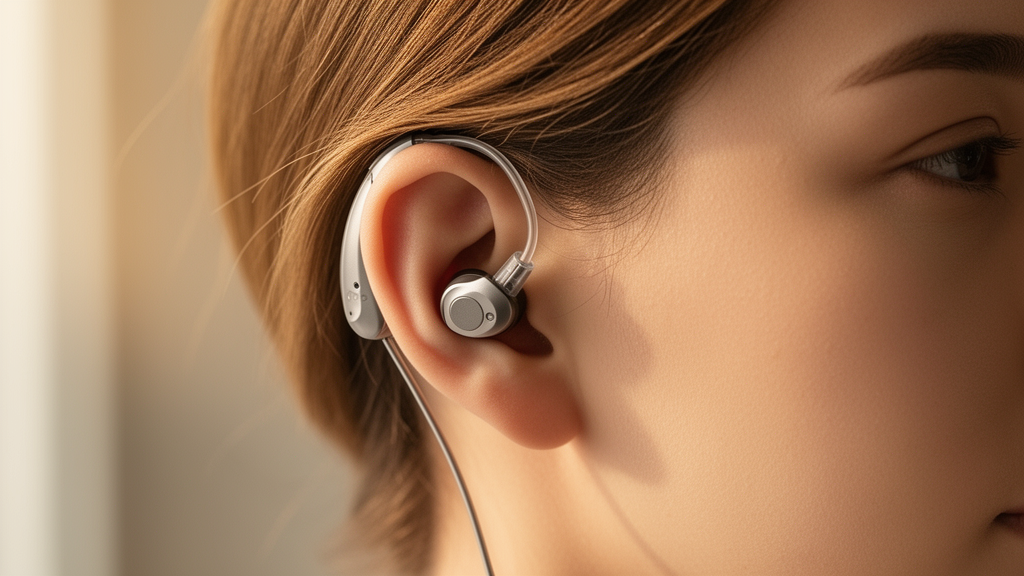
Cochlear implants have given functional hearing to hundreds of thousands of people worldwide, yet their outcomes remain stubbornly unpredictable. Some recipients gain near-normal speech perception almost immediately, while others continue to struggle with everyday communication even after years of intensive rehabilitation. Now, a narrative review published in Frontiers in Audiology and Otology suggests that artificial intelligence and machine learning could help close this gap, offering tools to predict who will benefit, sharpen the sound the implant delivers, and extend therapy beyond the clinic walls.
The review, conducted by Amulya Sathish of the Institute for Special Education and Hanna Ehlert of the Institute of Information Processing, both at Leibniz University Hannover, synthesized 22 peer-reviewed studies published between 2015 and 2025. The authors searched PubMed, Scopus, Web of Science, and Google Scholar for research applying AI or machine learning to cochlear implant rehabilitation, ultimately grouping the evidence into four emerging domains: machine-learning-based prediction of implant outcomes, deep-learning approaches for speech enhancement and signal processing, AI-assisted auditory and speech therapy tools, and tele-rehabilitation platforms that integrate algorithmic feedback.
The search began with 1,842 records after deduplication. Two hundred fourteen studies underwent full-text review, and only 22 met all eligibility criteria, which required human cochlear implant users, AI or machine learning methods, and standardized speech, language, or auditory outcomes. The strict filters excluded conference abstracts, editorials, case reports, and studies without full text, underscoring how narrow the evidence base remains despite a decade of growing interest.
In the outcome prediction domain, seven studies showed that supervised learning models can outperform conventional statistical methods when estimating post-implantation speech perception. A Korean study of 120 postlingually deaf adults found that Random Forest Regression achieved a correlation of 0.96 between predicted and observed word recognition scores, compared with 0.70 for linear regression, while reducing mean absolute error from 15.6 to 6.1 percentage points. Duration of deafness emerged as the most influential predictor, followed by age at implantation and duration of hearing aid use. A separate study of 82 South Korean children used Random Forest to predict speech intelligibility with 78.8 percent accuracy, identifying implant wear time, vocabulary, household income, age, and gender as key variables.
The largest prediction study to date, published in Ear and Hearing in 2025, applied XGBoost to 1,877 cochlear implant recipients in the United States. The model slightly outperformed traditional regression in predicting word and sentence recognition scores at six months post-implantation, with mean absolute error improvements of roughly one to two percentage points. While the gains were not clinically dramatic for overall prediction, XGBoost significantly improved classification of low performers, showing better calibration and discrimination. The authors of the review note that such models could support more personalized counseling before surgery, helping patients and families form realistic expectations.
Deep-learning speech enhancement represents the technically most mature domain in the review. Ten studies demonstrated that neural networks can meaningfully improve speech intelligibility for implant users in noisy environments, often outperforming classical noise reduction methods. Early work with deep denoising autoencoders showed significant gains for Mandarin-speaking recipients under competing speech at signal-to-noise ratios of 0 and 5 decibels. Recurrent neural networks later improved intelligibility in babble noise and reduced perceived listening effort, with benefits persisting even in unseen acoustic conditions. More recent architectures, including the SepFormer speech separation model and a deep complex convolution transformer network, restored intelligibility in multi-talker interference without degrading speech quality.
One 2024 study in the Journal of the Acoustical Society of America pushed the approach further by fusing deep-learning models across two microphones for bilateral implant users. Multi-microphone deep-learning models improved speech reception thresholds by approximately 7.4 to 10.3 decibels in noisy, reverberant conditions, outperforming single-microphone versions and demonstrating the value of spatial information for suppressing noise and reverberation. The review authors emphasize that these laboratory gains could help generalize therapy improvements to everyday communication, where background noise remains one of the biggest barriers for implant recipients.
Yet a persistent challenge runs through this literature: the gap between laboratory performance and real-world deployment. Current deep-learning enhancement systems require offline or near-real-time processing and are not yet integrated into clinical implant processors. Computational latency, hardware constraints of existing implant architectures, and the need for device-specific calibration remain significant engineering barriers. Pediatric-specific enhancement models have not been developed; existing systems are trained primarily on adult speech corpora, which may limit performance for children given differences in vocal tract characteristics and speech acoustics.
AI-assisted therapy tools and tele-rehabilitation platforms show promise but rest on a narrower foundation. Three studies of computer-based auditory training found improvements in trained speech recognition tasks, particularly consonant recognition, and one 2024 study of 114 new adult recipients linked computer-based auditory training to durable improvements in quality of life across all domains at twelve months post-implantation, though speech recognition scores themselves did not improve. Adaptive phoneme discrimination training produced greater gains than non-adaptive training in experienced adult users, establishing that algorithmic adaptation enhances training efficiency. In tele-rehabilitation, an AI-guided remote fitting system based on psychoacoustic self-tests proved feasible in selected users, and a remote monitoring test battery successfully identified 94 percent of clinical issues and correctly predicted the need for clinic visits in 99 percent of cases, with high patient and clinician acceptance.
The review authors identify several cross-cutting concerns that must be resolved before AI can achieve meaningful clinical impact. Most machine-learning models have been developed on datasets from high-income countries and predominantly adult populations, raising concerns about systematic underperformance for pediatric users, patients from diverse linguistic backgrounds, and recipients in low- and middle-income settings. Individual neurobiological heterogeneity presents a distinct validity threat: group-averaged demographic predictors may not capture the biological variability that drives outcome differences, as evidenced by findings that individual perceptual measures like spectral ripple discrimination correlate more strongly with speech recognition than age alone. Model explainability also matters, since clinicians cannot be expected to act on opaque black-box predictions; the authors recommend integrating explainable AI methods such as SHAP values as standard practice, while cautioning that interpretability cannot correct for biased or underspecified training data.
Regulatory readiness adds another layer of complexity. The European Union classifies healthcare outcome prediction tools as high-risk AI, mandating strict conformity assessments and continuous post-market monitoring, requirements that extend to automated therapy adaptation algorithms and remote monitoring systems used in implant rehabilitation. The review also highlights extensive methodological heterogeneity across studies, with no agreed accuracy thresholds, standardized outcome batteries, or common open-source data infrastructure to enable cumulative progress. The authors call for collaborative benchmarking datasets, minimum reporting standards for AI architectures in audiology, and consensus outcome batteries developed jointly by data scientists, engineers, and practicing clinicians.
Perhaps the most significant gap concerns ecological validity. AI-assisted therapy tools have been evaluated almost exclusively on isolated phoneme discrimination and word-level tasks, with no published tool providing automated feedback for connected speech or spontaneous language production, the communicative contexts most relevant to real-world functional outcomes. This is particularly consequential for pediatric recipients, whose rehabilitation goals extend to narrative competence, conversational turn-taking, and complex syntax in natural interactions. Similarly, tele-rehabilitation platforms have demonstrated clinical equivalence for structured auditory tasks delivered remotely but have not been evaluated in naturalistic speech contexts. Fully autonomous AI-driven tele-rehabilitation, in which algorithms independently adapt therapy content, intensity, and scheduling based on real-time outcome data, has not yet been demonstrated in implant populations.
The review concludes that AI and machine learning are potent new tools that can supplement, not replace, professional expertise in cochlear implant rehabilitation. Personalized outcome estimates, better auditory input through sophisticated signal processing, and improved therapy delivery via adaptive and remote platforms all show promise. But the integration of these innovations into standard clinical practice remains in its infancy, requiring prospective multicenter trials, standardized outcome measures that reflect functional communication in everyday life, and close collaboration between data scientists, engineers, and clinicians. With cautious integration and thorough evaluation, these technologies could significantly improve long-term communication outcomes for both pediatric and adult implant users.
Subject of Research: Artificial intelligence and machine learning in cochlear implant rehabilitation: a narrative review of outcome prediction, speech enhancement, and therapy-support applications
Article Title: Artificial intelligence and machine learning in cochlear implant rehabilitation: a narrative review of outcome prediction, speech enhancement, and therapy-support applications
Article References: Sathish, A., & Ehlert, H. (2026). Artificial intelligence and machine learning in cochlear implant rehabilitation: a narrative review of outcome prediction, speech enhancement, and therapy-support applications. Frontiers in Audiology and Otology, 4, Article 1922746. https://doi.org/10.3389/fauot.2026.1922746
Image Credits: AI Generated
DOI: 10.3389/fauot.2026.1922746
Keywords: Artificial, intelligence, machine, learning, cochlear, implant, rehabilitation, narrative, review, outcome, prediction, speech
Cite Scienmag News
Blake Davidson. (October 17, 2026). AI Meets the Cochlear Implant: Machines Learn to Predict Hearing Outcomes and Clean Up Speech in Noise. Scienmag. https://scienmag.com/ai-meets-the-cochlear-implant-machines-learn-to-predict-hearing-outcomes-and-clean-up-speech-in-noise/
Blake Davidson. "AI Meets the Cochlear Implant: Machines Learn to Predict Hearing Outcomes and Clean Up Speech in Noise." Scienmag, 17 October 2026, https://scienmag.com/ai-meets-the-cochlear-implant-machines-learn-to-predict-hearing-outcomes-and-clean-up-speech-in-noise/. Accessed 17 October 2026.
Blake Davidson. "AI Meets the Cochlear Implant: Machines Learn to Predict Hearing Outcomes and Clean Up Speech in Noise." Scienmag. October 17, 2026. https://scienmag.com/ai-meets-the-cochlear-implant-machines-learn-to-predict-hearing-outcomes-and-clean-up-speech-in-noise/


