


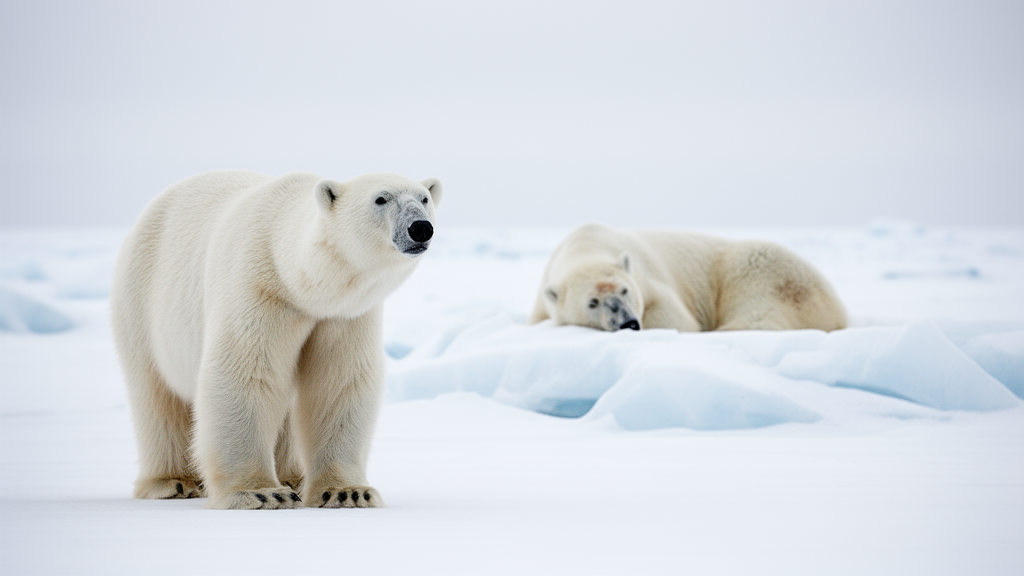
Do polar bears have personalities? And if so, do those personalities change as the bears grow older, climb the social ladder, or spend their days pacing, swimming, and playing? A new seven-year study at Assiniboine Park Zoo in Winnipeg, Canada, set out to answer those questions by scoring nine polar bears on a modified five-factor personality assessment every year between 2018 and 2024. The results, published in Frontiers in Ethology, reveal that eight of the nine bears showed significant changes in at least one personality trait as they aged, that individual differences dominated the data, and that behavioral diversity may be a better window into bear personality than any single behavior alone.
Personality research in animals is a rapidly growing field that quantifies consistent individual differences in behavior and stress responses. For animals in managed care, measuring personality can reveal the social structure within groups, inform compatible breeding matches, and help caretakers tailor enrichment and choice to each individual. If housing or management fails to meet an animal’s biological or social requirements, the consequences can include boredom, stress, health issues, and unwanted behaviors such as compulsive stereotypic pacing or overgrooming. Bears are particularly prone to stereotypic behavior in human care, which makes understanding their individual differences especially important for welfare optimization.
The study used a modified version of the five-factor model of personality, an assessment framework previously tested on primates, dolphins, hyenas, and other bear species. The five traits scored were openness, conscientiousness, extraversion, agreeableness, and neuroticism. Each trait was assessed with six statements, three positively formulated and three negatively formulated, rated on a seven-point scale. Openness has been correlated with exploratory behavior, conscientiousness with vigilance, extraversion with vocalizing and locomotion, neuroticism with aggressive and stereotypic behavior, and agreeableness with positive social behavior such as affiliation. Fifteen animal care professionals completed a total of 311 assessments across the nine bears, with ages ranging from 2 to 13 years old.
The bears at Assiniboine Park Zoo were all orphaned cubs taken in at approximately 11 months of age or young bears involved in human-bear conflict deemed non-releasable by wildlife management authorities in Manitoba. Six individuals were housed at the zoo for the full seven years of the study. The facility encompasses two polar bear habitat spaces: the Journey to Churchill exhibit, approximately 8,400 square meters with caves, varying topography, and three pools, and the Leatherdale International Polar Bear Conservation Centre, roughly 1,450 square meters of outdoor areas with rock formations and seasonal pools.
When the researchers examined the relationship between age and personality using linear mixed models, they found small but significant effects of age on openness, conscientiousness, and agreeableness, with the lowest scores for all three traits measured at age 2. No significant effect of age was found for extraversion or neuroticism. However, the pattern of change was not consistent across individuals. The random effect of each bear explained the majority of variation in the models, including 54.9 percent for openness, 67.1 percent for conscientiousness, 63.1 percent for extraversion, 55.3 percent for agreeableness, and 57.9 percent for neuroticism, indicating that individual differences exceeded any mean effect across the population.
Only one bear, Baffin, showed changes in personality that could be attributed to a life stage transition. His conscientiousness and agreeableness scores increased strongly between ages 2 and 3, while his extraversion and neuroticism scores decreased during the same period, which the researchers attributed to the transition between adolescence and maturity. All male bears in the study were neutered around four years of age, which may have influenced these results, and the researchers had no information about the personality of the bears’ mothers, as all animals arrived from the wild between 11 months and 2 years of age. Early life experiences and maternal personality traits have been shown to impact personality development in other species.
To investigate whether personality predicted social hierarchy, the researchers translated animal care notes about dominant, submissive, and aggressive interactions into dominance matrices for each year from 2020 to 2024, then used David’s Score to establish each bear’s rank. The hierarchical structure remained generally stable throughout the years, with most individuals shifting by only one position. One bear, Nanuq, ascended three positions between 2022 and 2023, a deviation that appeared unrelated to housing or social causes. None of the five personality dimensions significantly predicted dominance rank, though the effect directions were consistent with biologically meaningful trends. Openness showed the largest positive effect, suggesting higher-scoring individuals tended to occupy higher ranks, while neuroticism produced the strongest negative trend, suggesting more neurotic bears were less likely to attain higher rank. Bear identity explained very large variability in dominance outcomes, far beyond what any single trait captured.
For the behavioral component, the researchers observed five socially housed bears for three weeks in April 2024, collecting approximately 86 hours of scan-sampling data using an ethogram that matched behaviors to personality traits. Interobserver reliability was near perfect, with a Cohen’s kappa of 0.899. While no significant relationship was found between behavior categories and personality scores, trends emerged for three of the five traits. For openness, agreeableness, and neuroticism, individuals who scored higher on the positive codes of a trait in the personality assessment also spent more time on behaviors belonging to those positive codes. For conscientiousness and extraversion, the pattern was reversed, likely because the negative statements for those traits focused on how unexcitable or lazy an animal is, while polar bears naturally rest frequently during warmer months regardless of their personality.
The researchers also calculated a behavioral Shannon Diversity index for each bear, excluding rest and stereotypic behaviors, as a measure of overall behavioral richness. The index was negatively associated with neuroticism and extraversion, while it was positively associated with openness, conscientiousness, and agreeableness. This suggests that behavioral diversity may better capture inter-individual differences relative to personality dimensions than correlations to single behaviors alone, offering a promising welfare indicator that aligns with the widely accepted goal of enrichment programs to increase behavioral diversity overall.
Based on these findings, the researchers provided recommendations to improve personality assessments in bears. Item analysis using Cronbach’s alpha showed that the statements within the traits conscientiousness and extraversion were not highly correlated, suggesting weak coherence between statements for polar bears. The researchers recommend rewriting four statements of the extraversion trait, noting that in polar bears, how vocal an individual is may be a better fit for neuroticism than for extraversion, since adult male and non-maternal female polar bears vocalize rarely. They also suggest that statements for extraversion might be better focused on how playful and active an individual is rather than on assertiveness or timidity. Despite these adjustments, both traits showed high repeatability, allowing the results to still be considered reliable. The researchers argue that after some refinement, this assessment is a useful way to quantify polar bear personality and better tailor care to individual needs, and they recommend a pilot study to verify and optimize personality assessments for each species before broad application.
Subject of Research: Animal Behavior
Article Title: Exploring personality assessments of animals in human care: a case study on polar bear ages, hierarchy, and behavior
Article References: Möhlmann, A. M., Penninga, M. S., Petersen, S. D., & Shuert, C. R. (2026). Exploring personality assessments of animals in human care: a case study on polar bear ages, hierarchy, and behavior. Frontiers in Ethology, 5, Article 1867861. https://doi.org/10.3389/fetho.2026.1867861
Image Credits: AI Generated
DOI: 10.3389/fetho.2026.1867861
Keywords: polar bears, animal personality, zoo welfare, ethology, behavioral diversity, Exploring, personality, assessments, animals, human, care, case
Cite Scienmag News
Arthur Russell. (October 17, 2026). Polar bears have personalities that shift with age, new seven-year study reveals. Scienmag. https://scienmag.com/polar-bears-have-personalities-that-shift-with-age-new-seven-year-study-reveals/
Arthur Russell. "Polar bears have personalities that shift with age, new seven-year study reveals." Scienmag, 17 October 2026, https://scienmag.com/polar-bears-have-personalities-that-shift-with-age-new-seven-year-study-reveals/. Accessed 17 October 2026.
Arthur Russell. "Polar bears have personalities that shift with age, new seven-year study reveals." Scienmag. October 17, 2026. https://scienmag.com/polar-bears-have-personalities-that-shift-with-age-new-seven-year-study-reveals/


