


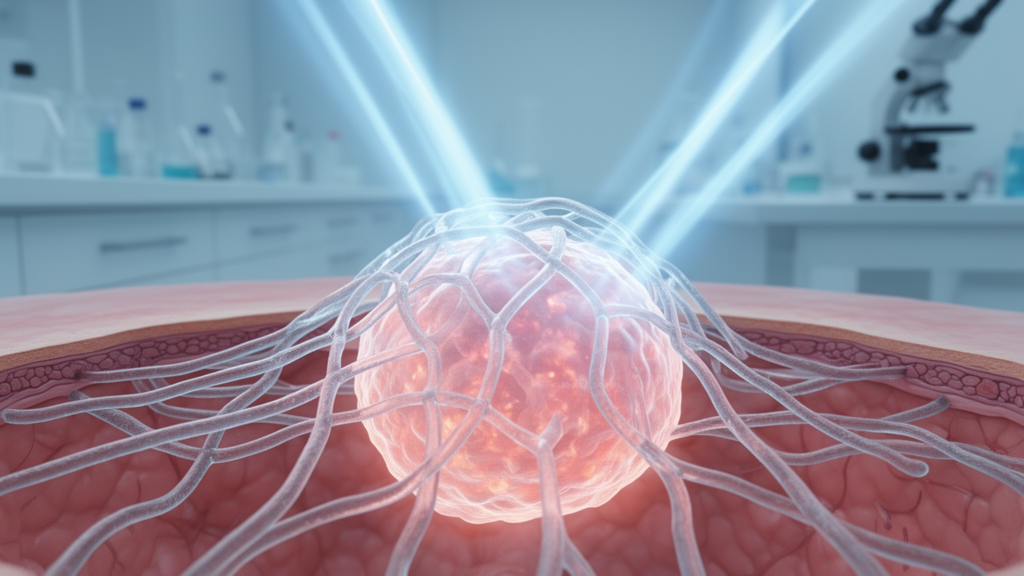
Nuclear medicine has long faced a stubborn paradox: the very radiation that can destroy cancer cells must first travel through the body without destroying anything else. A new review published in Frontiers in Biomaterials Science argues that an unusual class of genetically engineered protein polymers, known as elastin-like polypeptides, may offer a way out of this dilemma. Written by Haidong Tian and colleagues at Lanzhou University and the Chinese Academy of Sciences, the review pulls together two decades of evidence on these programmable biomaterials and lays out, with unusual candor, both their promise and the considerable distance that remains before they reach the clinic.
Elastin-like polypeptides are not synthetic polymers in the conventional sense. They are proteins built by recombinant DNA technology, typically consisting of many repeats of the pentapeptide sequence VPGXG, where the guest residue X can be swapped for almost any amino acid. This simple design rule gives researchers extraordinary control. By choosing the guest residue and the number of repeats, they can tune the polymer’s molecular weight, its hydrophobicity, and, most importantly, its phase-transition temperature. Below this temperature the chains stay dissolved in water; above it they collapse into coacervates, micelles, or gel-like depots. In effect, researchers can encode a material that behaves like a soluble drug in the bloodstream but turns into an insoluble depot the moment it encounters body temperature or a mild heat source applied to a tumor.
This thermoresponsive behavior is what makes ELPs interesting for radiopharmaceutical delivery. Radiopharmaceuticals work by attaching radionuclides, which emit alpha particles, beta particles, or Auger electrons, to carrier molecules that guide them to diseased tissue. The carrier determines biodistribution, target accumulation, local retention, and clearance, while the radionuclide determines half-life, emission energy, and tissue range. Effective treatment requires aligning the physical half-life of the radionuclide with the biological kinetics of the carrier. Small molecules and short peptides penetrate tissues rapidly and provide favorable imaging kinetics, but they clear so quickly that lesion retention and sustained dose deposition suffer. Antibodies offer high affinity and specificity but circulate slowly, potentially increasing radiation exposure to bone marrow, liver, and spleen. Nanoparticles carry high payloads but suffer from reticuloendothelial uptake, persistent tissue retention, manufacturing complexity, and batch variability. ELPs, the review argues, sit at a different point on this spectrum: they are biodegradable, genetically programmable, and capable of self-assembly, which may support more defined production than conventional nanocarriers.
The review identifies three main labelling strategies. Direct radioiodination exploits tyrosine residues in the ELP sequence, allowing isotopes such as iodine-123, iodine-124, iodine-125, and iodine-131 to be introduced by electrophilic substitution on the aromatic ring. This approach avoids an additional chelator and may preserve the ELP architecture, phase transition, and self-assembly, which is why it has been used for local injectable depots and short-term in vivo tracking. Chelator-mediated labelling, by contrast, attaches bifunctional chelators such as DOTA, NOTA, or DTPA to coordinate radiometals including gallium-68, copper-64, indium-111, lutetium-177, yttrium-90, and actinium-225. Site-specific labelling, using cysteine, lysine, tyrosine, or noncanonical amino acids positioned genetically outside the repetitive domain, offers better control over conjugation site and stoichiometry and may preserve ELP structure and function. Beyond covalent conjugation, amphiphilic ELP block copolymers can self-assemble into micelles, vesicles, and nanoparticles whose hydrophobic domains can accommodate radiolabelled compounds or co-therapeutic agents, although direct radiopharmaceutical evidence for physically loaded ELP assemblies remains limited.
The review then examines three delivery modes. Systemic delivery uses soluble ELP chains, macromolecular conjugates, or defined nanostructures, with molecular weight, conformation, surface charge, and hydrophilic-hydrophobic balance influencing renal clearance, circulation, and organ uptake. Fluorescence studies of ELPs ranging from 25 to 110 kilodaltons reported longer terminal plasma half-lives with increasing size and substantial size-dependent renal deposition, but the review cautions that these non-radioactive findings are indirect and cannot define an optimal radiopharmaceutical size, because longer residence also changes integrated exposure in blood, kidney, liver, and marrow. Thermally triggered delivery exploits the lower critical solution temperature transition: suitable constructs remain soluble in circulation and undergo local phase transition when a lesion is exposed to clinically achievable mild hyperthermia. In an early direct study, radioiodinated ELPs were used to test whether mild local hyperthermia increased tumour accumulation after intravenous administration, and one hour of heating produced approximately twofold greater accumulation in SKOV-3 and D-54MG xenografts, with higher uptake than a soluble control. Local in situ depot delivery, the third mode, aims to retain radionuclides within accessible lesions and currently provides the strongest direct therapeutic evidence. After intratumoural or image-guided administration, selected ELPs can undergo phase separation, self-assembly, or gelation to form a radioactive depot, and preclinical radiolabelled depots have delayed tumour growth, although efficacy varied between models and complete spatial dose information was generally unavailable.
The review is refreshingly honest about the limits of current evidence. Direct evidence for ELP radiopharmaceuticals remains limited and comes mainly from local or intratumoural depot studies. Systemic therapy and thermally triggered targeting rely mostly on radiotracer studies or non-radioactive ELP research. Available studies differ in ELP design, radionuclide, administration route, tumour model, and evaluation methods. Complete spatial dose information is uncommon, and no clinical comparison has established superiority over existing carriers or local radiation methods. Claims of improved tumour uptake, lower normal-organ exposure, multimodal synergy, or personalised theranostics should therefore remain cautious, the authors write. They also note that the heterogeneous enhanced permeability and retention effect, often invoked to justify passive tumour targeting of macromolecules, should be treated as a patient- and lesion-specific factor rather than a general claim, since human lesions are generally more heterogeneous than rapidly growing xenografts and average nanoparticle delivery remains low.
Several technical challenges stand between the laboratory and the clinic. The transition temperature of an ELP is not a fixed material constant; it depends on guest-residue composition, molecular mass, polymer concentration, ionic strength, co-solutes, attached cargo, and the heating or cooling protocol. Measurements of an unlabelled precursor do not show whether the radioconjugate will remain injectable or form a depot at 37 degrees Celsius, so the transition profile should be measured for the final labelled product at the administered concentration and in the intended vehicle. Radiolysis may cause oxidation, fragmentation, or crosslinking that is absent from the non-radioactive precursor, and these changes can alter phase behaviour and biological clearance. Radioiodinated ELPs may undergo in vivo deiodination, leading to activity in iodine-avid tissues such as the thyroid and stomach, while high labelling density may alter hydrophobicity, conformation, transition temperature, and biodistribution. For radiometals, stable chelation can reduce radionuclide dissociation, but performance depends on the metal-chelator pair, conjugation chemistry, labelling conditions, and in vivo stability, all of which must be optimised without disrupting ELP phase behaviour or pharmacokinetics.
Biocompatibility offers some reassurance. ELPs are derived from conserved motifs in natural elastin and have shown favourable biocompatibility and potential biodegradability. Unlike nondegradable inorganic materials and some synthetic polymers, ELPs are protein-based and can enter normal metabolic pathways, with endogenous proteases gradually degrading ELP chains into smaller peptides and amino acids that are subsequently eliminated. This behaviour may reduce risks associated with persistent tissue accumulation, chronic inflammation, and delayed toxicity, although safety must be established for each final formulation. Genetic engineering also enables production of ELPs with predetermined sequences and relatively uniform molecular structures, which may reduce broad molecular-weight distributions, batch variability, and residual synthetic impurities associated with some conventional polymers, supporting reproducibility, quality control, safety assessment, and clinical translation.
The review outlines a practical workflow for future development. It begins with a target product profile linking the administration route, lesion geometry, radionuclide properties, ELP kinetics, and required absorbed dose. Candidate products should then undergo staged evaluation of sequence, transition temperature, radiochemical purity, stability, assembly state, biodistribution, imaging, dosimetry, and safety, with predefined advancement criteria including batch reproducibility, manufacturability, sterility, stability, and evidence that radiolabelling preserves ELP function. For systemic formulations, measurements of blood clearance, lesion penetration and retention, and normal-organ exposure are essential, since longer circulation does not necessarily improve tumour delivery. Thermally triggered systems require reliable temperature monitoring and controls for heating-induced changes in blood flow. Local depots require three-dimensional activity maps, assessment of needle-track leakage, and adequate coverage of irregular lesions. Clinical translation will also require scalable production, purification, endotoxin control, identity and potency specifications, rapid release testing, and stability during use, alongside long-term degradation, clearance, immunogenicity, repeat-dose safety, regulatory classification, and comparison with established treatments.
At present, the authors conclude, ELPs are best regarded as a promising early-stage engineering platform rather than an established clinical delivery system. Their flexibility does not establish more effective or safer radionuclide delivery, because changing one feature may also alter solubility, assembly, clearance, or label stability. The final radiolabelled product must therefore be evaluated directly, under relevant biological conditions, with quantitative imaging and dosimetric modelling to estimate lesion and organ absorbed doses. Continued optimisation may support the development of ELP-based systems for controlled radionuclide delivery and cancer theranostics, but the burden of proof now rests on demonstrating, for each radiolabelled construct, that programmability translates into measurable benefit for patients. For a field where precision is everything, that is a reasonable place to start.
Subject of Research: Biomedical Engineering
Article Title: Elastin-like polypeptides in radiopharmaceutical delivery: current evidence, design principles, and translational challenges
Article References: Tian, H., Yang, K., Li, H., & Xiao, J. (2026). Elastin-like polypeptides in radiopharmaceutical delivery: current evidence, design principles, and translational challenges. Frontiers in Biomaterials Science, 5, Article 1911811. https://doi.org/10.3389/fbiom.2026.1911811
Image Credits: AI Generated
DOI: 10.3389/fbiom.2026.1911811
Keywords: elastin-like polypeptides, radiopharmaceuticals, radionuclide delivery, cancer theranostics, thermoresponsive phase transition, nuclear medicine, drug delivery, Elastin-like, polypeptides, radiopharmaceutical, delivery, current
Cite Scienmag News
Nathaniel Bowman. (October 17, 2026). Genetically Engineered Elastin Polymers Could Change How Radiation Reaches Tumors. Scienmag. https://scienmag.com/genetically-engineered-elastin-polymers-could-change-how-radiation-reaches-tumors/
Nathaniel Bowman. "Genetically Engineered Elastin Polymers Could Change How Radiation Reaches Tumors." Scienmag, 17 October 2026, https://scienmag.com/genetically-engineered-elastin-polymers-could-change-how-radiation-reaches-tumors/. Accessed 17 October 2026.
Nathaniel Bowman. "Genetically Engineered Elastin Polymers Could Change How Radiation Reaches Tumors." Scienmag. October 17, 2026. https://scienmag.com/genetically-engineered-elastin-polymers-could-change-how-radiation-reaches-tumors/


