


When the COVID-19 pandemic swept the world in early 2020, few groups faced greater occupational risk than healthcare workers. Dentists and their staff were particularly exposed: aerosol-generating procedures and close patient contact made dental clinics hotspots for potential viral transmission. Early epidemiological data showed substantially higher infection rates among frontline healthcare personnel compared with the general population, underscoring the urgent need for reliable tools to assess whether vaccination had actually conferred protective immunity. Now, a team at the University Dental Clinic Vienna and the Austrian Agency for Health and Food Safety has put one such tool through a rigorous analytical test, with encouraging results.
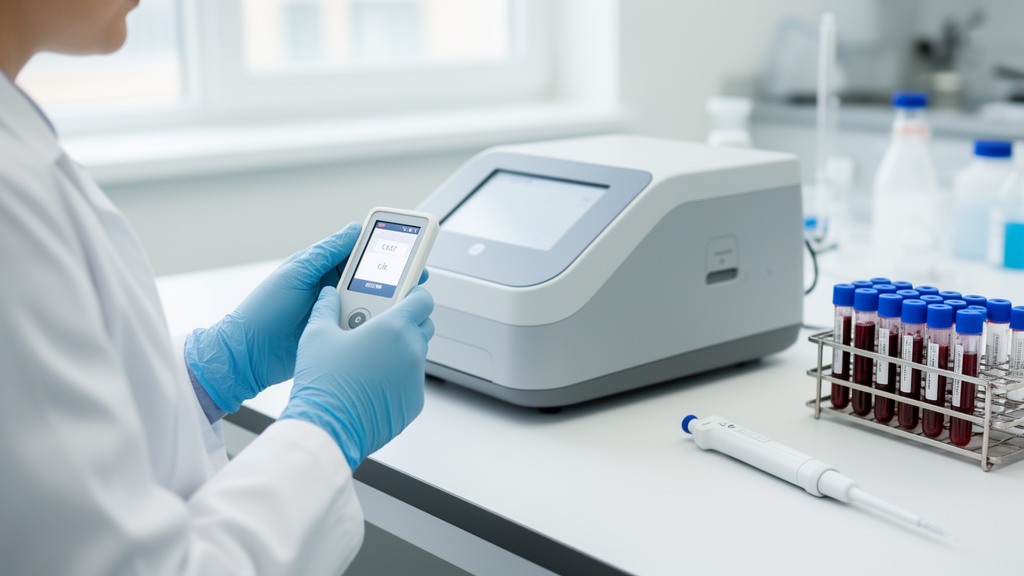
The study, published in Frontiers in Virology, evaluated the EDELVITAL fluorescence immunochromatographic assay, a rapid point-of-care test designed to measure neutralizing antibodies against SARS-CoV-2. The researchers compared its performance against the Abbott Alinity I SARS-CoV-2 IgG II Quant Assay, a fully automated chemiluminescent microparticle immunoassay widely regarded as a laboratory-based reference method. The question was simple but consequential: can a portable rapid test, delivering results in 15 to 20 minutes, reliably detect the same vaccine-induced antibody response that a sophisticated laboratory platform confirms?
To answer it, the team analyzed 334 serum samples from 291 vaccinated healthcare workers at the University Dental Clinic of the Medical University of Vienna between July 2021 and March 2022. Participants had received at least two doses of an mRNA vaccine, either Comirnaty (BNT162b2) or mRNA-1273, within the previous four to eight months. Of the samples, 257 were collected before a third booster dose and 77 after it, with 43 individuals providing paired samples at both time points. Individuals with documented SARS-CoV-2 infection were excluded, ensuring that measured antibodies reflected vaccination rather than prior natural exposure.
The two assays measure fundamentally different aspects of the humoral immune response. The Abbott Alinity I system quantifies binding antibodies, specifically immunoglobulin G directed against the receptor-binding domain (RBD) of the viral spike protein, reporting results in binding antibody units per milliliter calibrated to the WHO International Standard NIBSC 20/136. The EDELVITAL test, by contrast, employs a competitive fluorescence immunochromatography principle: serum samples are incubated with fluorescence-labeled RBD protein, and neutralizing antibodies block the interaction between the RBD and the human ACE2 receptor, reducing the fluorescence signal in the test field. A portable reader converts this inhibition into internationally standardized IU/mL values, offering a functional readout of neutralization capacity rather than mere antibody binding.
The results were striking. The two assays showed 95.5 percent agreement in detecting positive results, with 319 of 334 samples classified concordantly as positive by both methods. Only 15 samples, or 4.5 percent, were discordant, characterized by detectable IgG levels but negative neutralizing antibody responses. The Abbott assay detected all 334 samples as positive, while the EDELVITAL test identified 319 as positive above its cut-off value of 31.91 IU/mL. No concordant negative results appeared, reflecting the fact that all participants had mounted measurable vaccine-induced antibody responses.
Correlation analyses reinforced the picture of related but distinct measurements. Pearson analysis revealed a moderate positive correlation between IgG levels measured after the third dose and neutralizing antibody levels measured before the booster (r = 0.574, p < 0.001), while IgG and neutralizing antibody levels before the third dose correlated at r = 0.437. Spearman rank correlation confirmed a strong positive association between IgG and neutralizing antibody levels before the third dose (rs = 0.631, p < 0.001). These moderate-to-strong correlations suggest that individuals with higher binding antibody concentrations generally exhibit higher surrogate neutralizing activity, but the relationships were not strong enough to render the assays interchangeable.
The booster effect told an interesting quantitative story. In the paired-sample subset, mean IgG concentrations surged from 114.4 BAU/mL before the third dose to 4,716.7 BAU/mL afterward, an approximately 41-fold increase. Mean EDELVITAL measurements rose more modestly, from 48.5 IU/mL to 75.0 IU/mL, roughly a 56 percent increase in surrogate neutralizing activity. In the broader collective dataset, mean IgG climbed from 913.8 to 4,727.3 BAU/mL after the booster, while mean neutralizing antibody levels actually dipped slightly, from 75.84 to 70.2 IU/mL. Qualitatively, however, 94.2 percent of pre-booster samples and 100 percent of post-booster samples tested positive for neutralizing antibodies, indicating that the booster largely reinforced rather than fundamentally transformed the neutralizing response.
Age and sex played only limited roles in shaping these responses. Men showed slightly lower neutralizing antibody levels than women before the third dose, but no other sex-dependent differences emerged. Exploratory age-stratified analyses, dividing participants into groups of 16 to 26, 27 to 35, 36 to 50, and over 50 years, revealed statistically significant differences only for EDELVITAL measurements before the booster, with no significant age-group differences afterward. The authors caution that these comparisons should be interpreted cautiously given the variability within groups and the smaller number of post-booster samples.
The study has important limitations. The EDELVITAL assay was developed using an RBD antigen derived from the ancestral Wuhan strain, and during the study period the Omicron variant and its sublineages became increasingly dominant. Antigenic differences between ancestral and Omicron-derived strains may have affected variant-specific antibody recognition, potentially explaining some discordant findings. Moreover, the study did not include a direct comparison with live-virus or microneutralization assays, which limits formal validation of true neutralizing capacity. The binary output of the rapid test also cannot capture quantitative differences in antibody concentrations near diagnostic thresholds or during antibody decline. Undetected prior infections among occupationally exposed healthcare workers cannot be entirely excluded, meaning measured responses may partly reflect hybrid immunity.
Despite these caveats, the findings carry practical weight. The authors conclude that the EDELVITAL test, calibrated to the WHO reference standard, represents a reliable and practical complementary tool rather than a replacement for laboratory-based serology. Its speed, minimal infrastructure requirements, and suitability for finger-prick sampling make it attractive for occupational health programs, booster vaccination planning, and longitudinal monitoring of immune status in healthcare workers and other high-exposure populations. As the authors note, the combination of precise laboratory analysis and practical rapid test technology can contribute to more efficient vaccine response monitoring, bridging the gap between the laboratory and everyday clinical practice at a time when timely, evidence-based decisions about booster vaccination remain critical.
Subject of Research: Analytical performance evaluation of a rapid point-of-care neutralizing antibody test compared with a laboratory IgG assay in COVID-19-vaccinated healthcare workers
Article Title: Analytical performance evaluation of the EDELVITAL neutralizing antibody test in COVID-19-vaccinated staff of the University Dental Clinic Vienna
Article References: Wolf, A., Heger, F., Helal, A., Moritz, A., & Georgopoulos, A. (2026). Analytical performance evaluation of the EDELVITAL neutralizing antibody test in COVID-19-vaccinated staff of the University Dental Clinic Vienna. Frontiers in Virology, 6, Article 1867243. https://doi.org/10.3389/fviro.2026.1867243
Image Credits: AI Generated
DOI: 10.3389/fviro.2026.1867243
Keywords: SARS-CoV-2, neutralizing antibodies, point-of-care diagnostics, COVID-19 vaccination, serology, healthcare workers, IgG assay, fluorescence immunochromatography, booster dose, occupational health, Abbott Alinity I, EDELVITAL
Cite Scienmag News
Kristina Jarvis. (October 17, 2026). Rapid Point-of-Care Test Matches Lab Gold Standard for Measuring COVID-19 Vaccine Antibodies. Scienmag. https://scienmag.com/rapid-point-of-care-test-matches-lab-gold-standard-for-measuring-covid-19-vaccine-antibodies/
Kristina Jarvis. "Rapid Point-of-Care Test Matches Lab Gold Standard for Measuring COVID-19 Vaccine Antibodies." Scienmag, 17 October 2026, https://scienmag.com/rapid-point-of-care-test-matches-lab-gold-standard-for-measuring-covid-19-vaccine-antibodies/. Accessed 17 October 2026.
Kristina Jarvis. "Rapid Point-of-Care Test Matches Lab Gold Standard for Measuring COVID-19 Vaccine Antibodies." Scienmag. October 17, 2026. https://scienmag.com/rapid-point-of-care-test-matches-lab-gold-standard-for-measuring-covid-19-vaccine-antibodies/


