


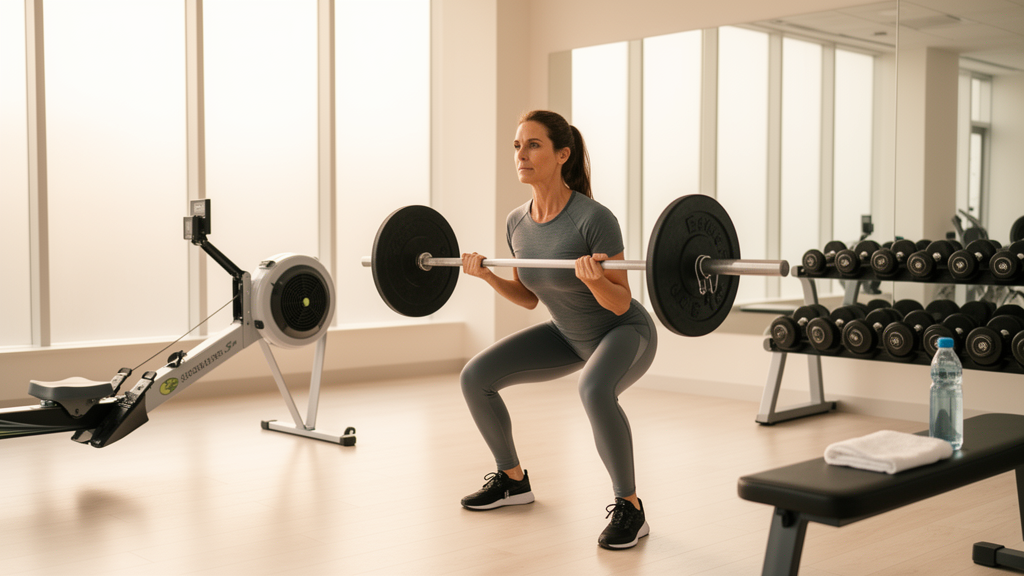
Perimenopause, the transitional phase leading up to menopause, is increasingly recognized as a critical window for women’s long-term health, with implications for cardiometabolic, musculoskeletal, functional, and psychosocial well-being. Yet despite growing interest in how exercise can support healthy aging, surprisingly little is known about how perimenopausal women actually organize their physical activity and structured exercise in real-world settings. A new cross-sectional study published in Frontiers in Global Women’s Health offers one of the first descriptive snapshots of this underexplored territory, revealing that endurance and strength training dominate the exercise repertoires of active perimenopausal women, while sport-based activities lag behind.
The research team, led by Adriana Duaso-Iriarte and Eduardo Piedrafita of Universidad San Jorge in Zaragoza, Spain, set out to characterize weekly physical activity levels, exercise modalities, reported training time, and supervision status among women navigating the menopausal transition. Using an anonymous online questionnaire distributed over a four-week period, the researchers recruited 121 women, of whom 57 met the eligibility criteria for perimenopause. After excluding six responses that did not allow calculation of total metabolic equivalent minutes per week (MET·min/week), the final analytical sample comprised 51 women aged between 45 and 55 years.
Eligibility was determined using the Stages of Reproductive Aging Workshop +10 (STRAW+10) framework, requiring participants to report a recent perimenopause diagnosis, irregular menstrual cycles with amenorrhea lasting more than 60 days but less than 11 months, or cycle length variability of at least 7 days over the previous 10 cycles. Women using medications affecting the menstrual cycle, those who were pregnant, and current users of hormone replacement therapy were excluded to preserve the interpretability of the menstrual-cycle-based criteria. The study was approved by the Ethics Committee of Universidad San Jorge and reported according to the STROBE guidelines for cross-sectional research.
Weekly physical activity was assessed using the International Physical Activity Questionnaire—Short Form (IPAQ-SF), a validated seven-item instrument that records the frequency and duration of walking, moderate-intensity activity, and vigorous-intensity activity over the previous seven days. Total physical activity was expressed in MET·min/week by multiplying minutes per day by days per week and by MET values: 3.3 for walking, 4.0 for moderate activity, and 8.0 for vigorous activity. The mean total physical activity in the sample was 2258.1 ± 1447.3 MET·min/week, a figure that reflects a comparatively active cohort.
According to the IPAQ-SF classification, moderate and high physical activity levels predominated, accounting for 43.1% and 39.2% of participants respectively, while only 17.6% were classified as having low physical activity. This distribution differs notably from reports in other populations of menopausal or midlife women, where insufficient activity or only moderate adherence to healthy lifestyle behaviors remains common. The researchers acknowledge that their convenience sampling strategy, which relied on social media dissemination and collaboration with healthcare and fitness-related centers, may have attracted women with a greater interest in exercise or menopause-related self-management, potentially inflating the apparent activity levels relative to the broader perimenopausal population.
Regarding exercise modalities, endurance training was the most frequently reported type of exercise, practiced by 66.7% of participants, followed closely by strength training at 62.7%. Sport-based activities were considerably less common, reported by only 35.3% of women. Importantly, these categories were not mutually exclusive, meaning many participants engaged in multiple modalities. The descriptive distribution across physical activity categories revealed a clear pattern: endurance training was reported by 44.4% of women in the low physical activity group, rising to 50.0% in the moderate group and 95.0% in the high group. Similarly, strength training was reported by 33.3%, 54.5%, and 85.0% of participants in the low, moderate, and high physical activity groups respectively, while sport-based activities increased from 22.2% to 36.4% to 40.0% across the same categories.
In exploratory comparisons of reported weekly training time across physical activity levels, the overall difference reached the predefined statistical threshold for strength training (p = 0.05, η² = 0.19), with the highest mean observed in the high physical activity group at 151.3 ± 100.6 minutes per week, compared with 75.4 ± 45.8 minutes in the moderate group and 86.7 ± 35.1 minutes in the low group. No statistically significant overall differences were found for endurance training minutes (p = 0.35) or sport-based activity minutes (p = 0.35). The researchers emphasize that given the achieved sample size and the exploratory nature of these subgroup comparisons, these findings require confirmation in larger and more comprehensively characterized samples.
Secondary exploratory comparisons according to sociodemographic and reproductive variables, including age, marital status, presence of children, municipality size, educational level, and employment status, revealed no statistically significant differences in total physical activity. However, one finding stood out: reported weekly strength training time was significantly higher among women aged 50 years or older than among younger participants (138.2 ± 63.0 vs. 97.1 ± 98.4 minutes per week; p = 0.02, Hedges’ g = 0.47). The authors caution that this result should be interpreted cautiously because age was dichotomized, multiple exploratory comparisons were performed, and the study was not adequately powered for confirmatory inference. Nevertheless, the finding aligns with previous literature supporting the relevance of strength training during midlife for musculoskeletal preservation.
Exercise supervision emerged as another dimension of interest. Of the 51 women in the analytical sample, 21 reported fully supervised exercise, 9 reported some supervised sessions, 11 reported no supervision, and 10 did not respond to this item. Combining the fully and partially supervised responses, 30 participants (58.8%) were classified as performing supervised or partially supervised exercise. Descriptively, the proportion of supervised women increased across physical activity categories, from 33.3% in the low group to 50.0% in the moderate group and 80.0% in the high group. Among participants with available supervision data, those reporting supervised exercise showed numerically higher total physical activity (2633.4 ± 1407.4 vs. 1973.9 ± 1671.6 MET·min/week) and more frequent participation in all three exercise modalities examined, although the inferential comparisons did not reach statistical significance.
The authors conclude that their findings provide a descriptive account of heterogeneous physical activity and exercise patterns in perimenopausal women, highlighting the value of recording exercise modality, reported training time, and supervision context alongside total physical activity volume. They stress that total MET·min/week alone does not capture whether endurance, strength, or sport-based activities are included in an individual’s routine or whether exercise is performed with professional guidance. Given the limitations of the cross-sectional design, the convenience sampling strategy, and the self-reported nature of the data, the researchers call for future studies with larger and more diverse samples, objective physical activity measures, and comprehensive assessments of menopausal symptoms, exercise motivations, barriers, and preferences to determine the health and functional implications of these patterns during the menopausal transition.
Subject of Research: Physical activity and structured exercise patterns in perimenopausal women: a cross-sectional study
Article Title: Physical activity and structured exercise patterns in perimenopausal women: a cross-sectional study
Article References: Duaso-Iriarte, A., Piedrafita, E., Sarría, A., & Gutiérrez, H. (2026). Physical activity and structured exercise patterns in perimenopausal women: a cross-sectional study. Frontiers in Global Women's Health, 7, Article 1933210. https://doi.org/10.3389/fgwh.2026.1933210
Image Credits: AI Generated
DOI: 10.3389/fgwh.2026.1933210
Keywords: perimenopause, physical activity, strength training, endurance training, exercise supervision, IPAQ-SF, healthy aging, women's health, menopause transition, cross-sectional study, Physical, activity
Cite Scienmag News
Ophelia Keating. (October 16, 2026). Perimenopausal women favor endurance and strength training, study finds. Scienmag. https://scienmag.com/perimenopausal-women-favor-endurance-and-strength-training-study-finds/
Ophelia Keating. "Perimenopausal women favor endurance and strength training, study finds." Scienmag, 16 October 2026, https://scienmag.com/perimenopausal-women-favor-endurance-and-strength-training-study-finds/. Accessed 16 October 2026.
Ophelia Keating. "Perimenopausal women favor endurance and strength training, study finds." Scienmag. October 16, 2026. https://scienmag.com/perimenopausal-women-favor-endurance-and-strength-training-study-finds/


