


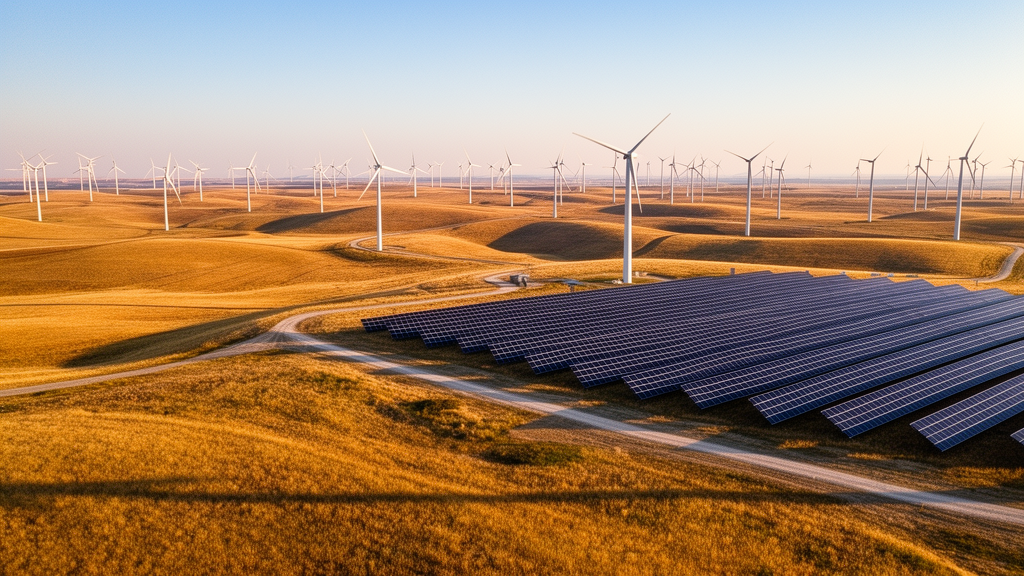
When a wind turbine or a field of solar panels is proposed in the United States, two bureaucratic hurdles stand between the developer and construction: connecting the project to the transmission grid and obtaining a permit to build it in a specific location. Interconnection queues and their notorious multi-year waits have been studied extensively, but the second hurdle, permitting, has remained largely opaque. Now a team of researchers at Lawrence Berkeley National Laboratory, the University of California Santa Barbara, and the University of Massachusetts Amherst has compiled the first project-level dataset of state-based permitting for wind and solar facilities across 19 states, and their findings upend some common assumptions about how hard it is to get a renewable energy project approved.
The headline result is striking: 90 percent of the projects considered by state permitting authorities during the study period were granted permits, and most received their decisions within roughly a year of entering the process. In other words, at least for projects adjudicated under state authority, permitting is not the wall blocking new clean energy from reaching the grid that anecdotes sometimes suggest. The study, published in Frontiers in Sustainable Energy Policy, documents 460 projects across 19 states, representing nearly half of the 41 states identified as having a state-based authority with jurisdiction over some or all large-scale energy facilities.
That such a dataset exists at all is itself a technical feat. Permitting for energy facilities on private land is particularized to individual states, with no common standard for docket record keeping or public data access. The research team searched and reviewed publicly available special permits and related documents, recording dates and decisions for all proposed large-scale solar and wind facilities with permit application dates after January 1, 2018 for solar and January 1, 2015 for wind, and expanded the wind timeline slightly to boost representation given less recent wind development. The data were organized in a relational PostgreSQL database, a structure the authors deemed necessary because individual projects often carry multiple permit applications, decision stages, and regulatory interactions that a flat table could not capture, and then analyzed using R statistical software.
The study period runs through a data collection cut-off of January 1, 2025, and the authors believe they captured the universe of proposed projects subject to state-level permitting authority in those 19 states. For statistically meaningful comparisons between states, they restricted their analysis to states with at least 20 projects with a known outcome, leaving six states, Kentucky, Mississippi, Maryland, Ohio, Minnesota, and New York, plus a combined set of the remaining states. Approval rates among those states varied from 80 percent in Maryland and Ohio to a perfect 100 percent in Kentucky, with Mississippi close behind at 97 percent.
Timelines told a more differentiated story. The overall average from permit application to a state decision was approximately one year, but a one-way analysis of variance testing whether mean permit days differed among the seven state groups was highly significant, F(6, N − 7) = 19.40, p = 2.01 × 10⁻¹⁹. Tukey post-hoc pairwise comparisons revealed two distinct clusters: New York, Minnesota, Ohio, and Maryland averaged about three months above the overall mean, while Kentucky and Mississippi averaged about five months below it. Notably, the researchers found no significant differences in decision time by application year, technology type, or project capacity, suggesting that where a project is permitted matters more than what or how big it is.
The two fastest states share a governance feature that may explain their speed and their near-universal approval rates. In Kentucky, facilities of 10 megawatts or more are reviewed by the State Board on Electric Generation and Transmission Siting, which must render a decision within 180 days of application completion, and the board cannot modify or waive local setback or decommissioning requirements. In Mississippi, the Public Service Commission grants a certificate of public convenience and necessity, but in most cases the project must first obtain agreement from local government. The authors suggest that in these states, most applicants may only apply after already bringing their projects into compliance with local regulations, which would help explain the very high approval rates.
Other states present more complicated relationships with local authority. Minnesota, Maryland, and New York typically preempt local requirements, and it may be that developers in these states propose projects with greater potential impacts, hoping the state authority will be more likely to grant approval. These states also carry state-level environmental regulations that could challenge certain projects. Ohio tells a different tale: since 2021, the Ohio Power Siting Board is not allowed to approve projects that a county has specifically precluded through zoning, a constraint the authors suggest may explain the 20 percent cancellation rate there. Maryland’s commission, meanwhile, may preempt local zoning authority, a power it has held since 2019.
Breaking the permitting process into stages reveals where the time actually goes. Four key dates structure the analysis: Notice of Intent, when a developer publicly announces plans to submit an application; Application Submission; Application Completion, when the authority deems the application complete and begins review; and Application Decision. Across most states, the longest stage is from completion to decision, indicating that authorities spend more time reviewing complete applications than requesting or waiting on additional information from developers. Oregon and New York stand out for substantially longer submission-to-completion stages, and Oregon also shows a long median timeline from Notice of Intent to submission, with the public typically notified at least a year before an application is filed. The authors suggest this may indicate the process is exceptionally onerous for developers to comply with in those states, and that clearer guidelines or standardization could help, though they caution this deserves further research.
Cancellations, the 10 percent of projects that did not receive permits, came in four flavors. A withdrawal is developer-initiated, removing an application before an official decision, and occurred in 8 of the 19 states. Terminations occur when the authority stops considering a project before issuing a decision. Denials are negative decisions from the authority, and one revocation of a previously approved permit occurred in North Dakota. Withdrawals may reflect developers observing a high likelihood of denial or increased costs during review, and the level of opposition a project will experience is notoriously difficult to predict at the onset. The authors note that many more projects request interconnection than are ever built, with connection request wait times typically exceeding four years and unpredictable, and that understanding the interplay between interconnection and permitting will require project-level matching of these datasets, which was not available for this study.
The findings carry weighty implications for the national debate over permitting reform, which in U.S. energy policy often fixates on federal policy and the National Environmental Policy Act. Yet federal permitting is most relevant to projects on federal lands, and to date less than 3 percent of all operating utility-scale land-based wind, photovoltaic solar, and geothermal facilities are located there. The real action, this study shows, is at the state level, where policies vary considerably and where reforms are reshaping the balance between local control and centralized review. The authors emphasize that their analysis cannot speak to community perception of process, project impacts, or cost, and that future research should measure those dimensions across permitting regime types, clarify what factors drive cancellations and long timelines, and establish whether swift approvals correlate with better or worse social and environmental outcomes. Administrative capacity, including sufficient staff and expertise, likely remains critical to states’ ability to process applications, and whether state processes better align projects with clean energy goals, or simply offer fewer opportunities for public participation, remains one of the most important open questions in sustainable energy policy.
Subject of Research: Energy Policy
Article Title: Outcomes and timelines for state-based energy facility permitting in the United States
Article References: Nilson, R., Tao, L., Maddock, W., Katz, J., Baillargeon, N., & Hoen, B. (2026). Outcomes and timelines for state-based energy facility permitting in the United States. Frontiers in Sustainable Energy Policy, 5, Article 1715811. https://doi.org/10.3389/fsuep.2026.1715811
Image Credits: AI Generated
DOI: 10.3389/fsuep.2026.1715811
Keywords: permitting, renewable energy, wind power, solar energy, state policy, energy transition, siting, United States, Outcomes, timelines, state-based, energy
Cite Scienmag News
Faith Mcneil. (October 16, 2026). State Permitting Approves 90% of US Wind and Solar Projects, Study Finds. Scienmag. https://scienmag.com/state-permitting-approves-90-of-us-wind-and-solar-projects-study-finds/
Faith Mcneil. "State Permitting Approves 90% of US Wind and Solar Projects, Study Finds." Scienmag, 16 October 2026, https://scienmag.com/state-permitting-approves-90-of-us-wind-and-solar-projects-study-finds/. Accessed 16 October 2026.
Faith Mcneil. "State Permitting Approves 90% of US Wind and Solar Projects, Study Finds." Scienmag. October 16, 2026. https://scienmag.com/state-permitting-approves-90-of-us-wind-and-solar-projects-study-finds/


