


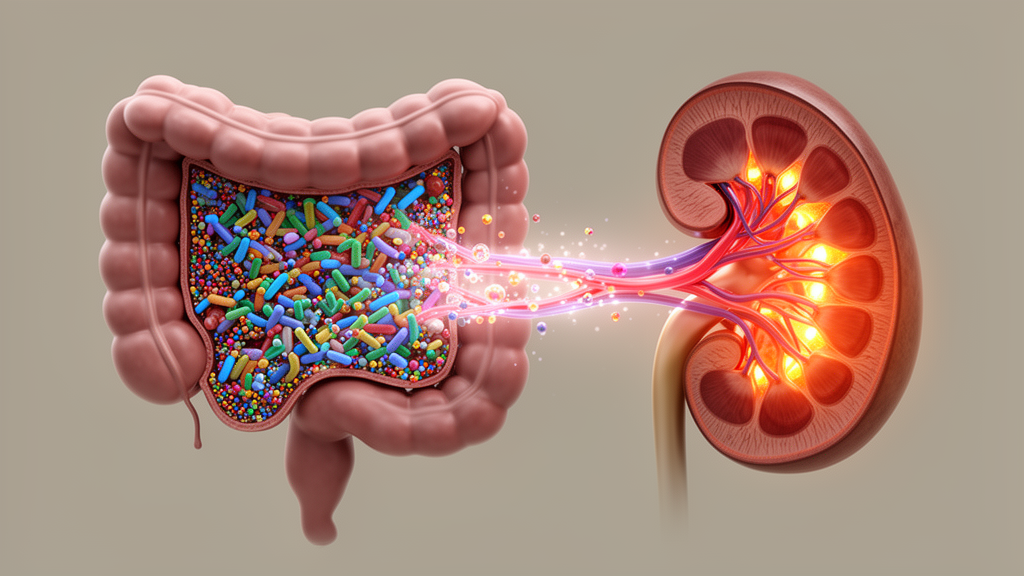
The trillions of bacteria living in the human gut have long been studied for their role in digestion and immunity, but a growing body of research now points to a far more consequential role: they may help determine whether the kidneys of people with obesity, type 2 diabetes, or hypertension stay healthy or slide into chronic disease. A new review published in Acta Biochimica Polonica examines how disruptions in the gut microbiome, known as dysbiosis, could contribute to metabolic dysfunction-associated kidney disease, or MDAKD, an emerging clinical entity in which kidney damage arises from the combined effects of insulin resistance, lipotoxicity, and chronic systemic inflammation. The review, which synthesizes experimental and clinical evidence across the gut-kidney axis, highlights both the promise and the persistent uncertainties of targeting the microbiome to slow kidney disease.
The scale of the underlying problem is enormous. In 2024, an estimated 589 million adults worldwide were living with diabetes, contributing to roughly 3.4 million deaths. Metabolic syndrome, defined by the clustering of abdominal obesity, hypertension, and hyperglycemia, markedly raises the risk of developing type 2 diabetes and cardiovascular disease. When these systemic disorders converge on the kidneys, the result is MDAKD, a condition now recognized as distinct from kidney disease caused by other mechanisms. Diabetic kidney disease, which can be accelerated by clinically significant dysbiosis, remains the leading cause of end-stage renal disease globally. Understanding how the gut microbiota feeds into this process has therefore become a priority for researchers seeking new points of intervention.
The pathways linking metabolic disorders to kidney damage are complex and often begin long before symptoms appear. In obesity, excess visceral fat drives overproduction of aldosterone through elevated leptin and activation of the renin-angiotensin-aldosterone system, promoting sodium retention and glomerular hyperfiltration. As the filtering units of the kidney enlarge to compensate, podocytes, the specialized cells that wrap around glomerular capillaries, are stretched beyond their mechanical limits. When their foot processes detach from the glomerular basement membrane, focal sclerotic lesions develop, marking the onset of obesity-associated glomerulopathy. Perirenal fat can compress the renal medulla, reducing tubular flow and further amplifying RAAS activation, while fat infiltrating the renal interstitium, so-called fatty kidney, promotes inflammation and fibrosis through adipokines that upregulate transforming growth factor beta.
In diabetes, kidney injury can begin during insulin resistance itself, before overt hyperglycemia. Insulin resistance promotes lipid droplet accumulation in renal tubular cells via the sterol regulatory element-binding protein 1c pathway, leading to tubular atrophy and interstitial fibrosis. Early diabetic kidney disease features glomerular hyperfiltration driven by impaired regulation of afferent and efferent arteriolar tone, a consequence of increased glucose uptake in proximal tubular cells. Persistent hyperglycemia raises endothelin-1, a potent vasoconstrictor that contributes to podocyte cytoskeletal breakdown and apoptosis. Proximal tubular cells, which rely exclusively on fatty acids for energy, face hypoxia as ATP consumption for glucose transport rises, activating hypoxia-inducible factor and AMP-activated protein kinase pathways. Inefficient fatty acid oxidation in these cells is now considered a primary driver of tubular damage and fibrosis in diabetes.
Against this backdrop, the gut microbiota emerges as a potential upstream modulator. The human colon harbors roughly 10^11 bacteria per gram, dominated by the phyla Bacteroidota and Bacillota. Studies in obese animals and humans have repeatedly reported an increased proportion of Bacillota alongside a decrease in Bacteroidota, along with reduced overall microbial diversity. Proposed mechanisms by which dysbiosis might promote obesity include increased energy harvest from food, enhanced fat synthesis and storage, and altered appetite regulation. Mouse studies suggest that obesity-associated microbiota can expand taxa such as Thomasclavelia ramosa, which increases intestinal expression of nutrient transporters including GLUT2 and the fatty acid translocase CD36, while also boosting microbial enzymes involved in polysaccharide degradation and short-chain fatty acid production. Interactions between hydrogen-producing bacteria and methanogenic archaea may further increase fermentation efficiency.
Yet the review is careful to distinguish plausible biology from established causation. Randomized human trials of fecal microbiota transplantation have shown no meaningful effect on body weight, and no definitive microbial signature of obesity has been identified. Short-chain fatty acids, the primary products of bacterial fiber fermentation, illustrate this ambiguity. In the gut lumen, acetate, propionate, and butyrate reach millimolar concentrations and locally activate G protein-coupled receptors such as GPR41 and GPR43, stimulating release of the satiety hormones GLP-1 and PYY. But in peripheral blood, SCFA concentrations drop to the low micromolar range due to extensive intestinal and hepatic metabolism, often near or below the EC50 values required for receptor activation in experimental systems. This discrepancy, the authors note, is a frequently overlooked limitation when extrapolating cell culture findings to human physiology.
Bile acids, branched-chain amino acids, and lipopolysaccharides add further layers of complexity. Dysbiosis disrupts the microbial conversion of primary to secondary bile acids, altering signaling through the FXR and TGR5 receptors that regulate lipid metabolism, glucose tolerance, and GLP-1 secretion. Elevated circulating branched-chain amino acids, consistently observed in insulin-resistant individuals, can activate the mTOR pathway and impair insulin signaling in skeletal muscle cells, though current evidence suggests they function more as biomarkers of impaired amino acid metabolism than as direct causal agents. Meanwhile, Gram-negative bacterial overgrowth increases the translocation of lipopolysaccharides into the bloodstream, a phenomenon termed metabolic endotoxemia. LPS binds to lipopolysaccharide-binding protein and CD14, engaging TLR4 receptors on macrophages and adipocytes to trigger NF-κB-dependent release of tumor necrosis factor alpha, interleukin 6, and other pro-inflammatory mediators that promote insulin resistance through serine phosphorylation of insulin receptor substrate 1.
The cardiovascular dimension of the gut-kidney axis centers heavily on trimethylamine N-oxide, or TMAO. Gut bacteria metabolize dietary choline, phosphatidylcholine, and carnitine into trimethylamine, which the liver oxidizes to TMAO. Elevated plasma TMAO is associated with increased risk of coronary plaque rupture, and mouse studies show it can upregulate macrophage scavenger receptors, destabilize cholesterol metabolism, inhibit bile acid synthesis, activate NF-κB and the inflammasome in endothelial cells, and enhance platelet reactivity through increased intracellular calcium release. In heart failure, TMAO levels correlate with mortality and transplantation need, and experimental supplementation worsens myocardial fibrosis. However, the review emphasizes that circulating TMAO is influenced by renal function, diet, and microbiota composition, making it difficult to establish whether the concentrations observed in humans are independently sufficient to cause cardiovascular dysfunction. TMAO is best regarded as both a biomarker and a potential modulator rather than a definitively established causal factor.
Within the kidneys themselves, the relationship with the gut is bidirectional. Uremic toxins accumulating in chronic kidney disease promote dysbiosis, while an altered microbiota produces metabolites that accelerate renal decline. Elevated blood urea fosters colonization by urea-metabolizing organisms, and the resulting ammonia increases intestinal permeability by disrupting intercellular junctions. Two protein-bound uremic toxins, indoxyl sulfate and p-cresol sulfate, deserve particular attention. Indoxyl sulfate, derived from hepatic metabolism of the tryptophan metabolite indole, upregulates TGF-β1 and tissue inhibitor of metalloproteinase 1, driving interstitial fibrosis. p-Cresol sulfate, produced from tyrosine and phenylalanine fermentation, induces reactive oxygen species via NADPH oxidase and promotes apoptosis through caspase-3 activation. Both toxins, along with TMAO, activate the intrarenal RAAS and promote profibrotic signaling. Because these compounds bind strongly to albumin, neither impaired kidneys nor dialysis clears them effectively, and their concentrations rise substantially in advanced disease.
Therapeutically, the review surveys a range of microbiota-targeted strategies now under investigation. Dietary fiber intake of 25 to 35 grams daily supports butyrate production, while prebiotics such as inulin, fructooligosaccharides, and resistant starch encourage growth of Bifidobacteria and Lactobacilli. A systematic review found probiotics, particularly Lactobacillus and Bifidobacterium strains, reduced plasma urea, blood urea nitrogen, ammonia, indoxyl sulfate, and p-cresol sulfate in CKD patients, though the limited number of studies prevents generalization. A network meta-analysis suggested multi-strain formulations containing three or more strains may offer greater benefits, but strain- and disease-specific effects complicate interpretation. Pharmacological agents are also entering the picture: SGLT-2 inhibitors reduce glucose availability in the intestinal lumen and have been shown in a study of 90 CKD patients to restore the Bacillota/Bacteroidota ratio while decreasing bacteria that produce indoxyl sulfate and p-cresol sulfate. GLP-1 receptor agonists such as liraglutide attenuate glomerular inflammation and fibrosis by modulating TLR4 signaling and, in rat models of diabetic nephropathy, improved microbiota composition and increased serum L-5-oxoproline, which reduces ectopic lipid deposition in renal tubular cells. Fecal microbiota transplantation, established for recurrent Clostridioides difficile infection with effectiveness exceeding 80 percent, has shown early promise in animal models and isolated human cases, including a patient with membranous nephropathy whose nephrotic syndrome improved after two transplants. The authors conclude that while these approaches are promising, further mechanistic and clinical studies are essential before microbiota-targeted therapies can be recommended as standard care for MDAKD, and that many microbiota-associated metabolites should currently be viewed as potential contributors or biomarkers rather than definitively established causative agents.
Subject of Research: The role of gut microbiome dysbiosis and microbial metabolites in the development and progression of metabolic dysfunction-associated kidney disease
Article Title: The role of gut microbiome disruption in the development of metabolic dysfunction-associated kidney disease
Article References: Witkowski, M., Przybyciński, J., Wojciuk, B., Czaja, W., Gołembiewska, N., & Gołembiewska, E. (2026). The role of gut microbiome disruption in the development of metabolic dysfunction-associated kidney disease. Acta Biochimica Polonica, 73, Article 16436. https://doi.org/10.3389/abp.2026.16436
Image Credits: AI Generated
Keywords: gut microbiome, metabolic dysfunction-associated kidney disease, chronic kidney disease, dysbiosis, short-chain fatty acids, TMAO, indoxyl sulfate, lipopolysaccharides, type 2 diabetes, obesity, probiotics, fecal microbiota transplantation
Cite Scienmag News
Morgan Morrow. (October 16, 2026). How a Disrupted Gut Microbiome May Drive Metabolic Kidney Disease. Scienmag. https://scienmag.com/how-a-disrupted-gut-microbiome-may-drive-metabolic-kidney-disease/
Morgan Morrow. "How a Disrupted Gut Microbiome May Drive Metabolic Kidney Disease." Scienmag, 16 October 2026, https://scienmag.com/how-a-disrupted-gut-microbiome-may-drive-metabolic-kidney-disease/. Accessed 16 October 2026.
Morgan Morrow. "How a Disrupted Gut Microbiome May Drive Metabolic Kidney Disease." Scienmag. October 16, 2026. https://scienmag.com/how-a-disrupted-gut-microbiome-may-drive-metabolic-kidney-disease/


