


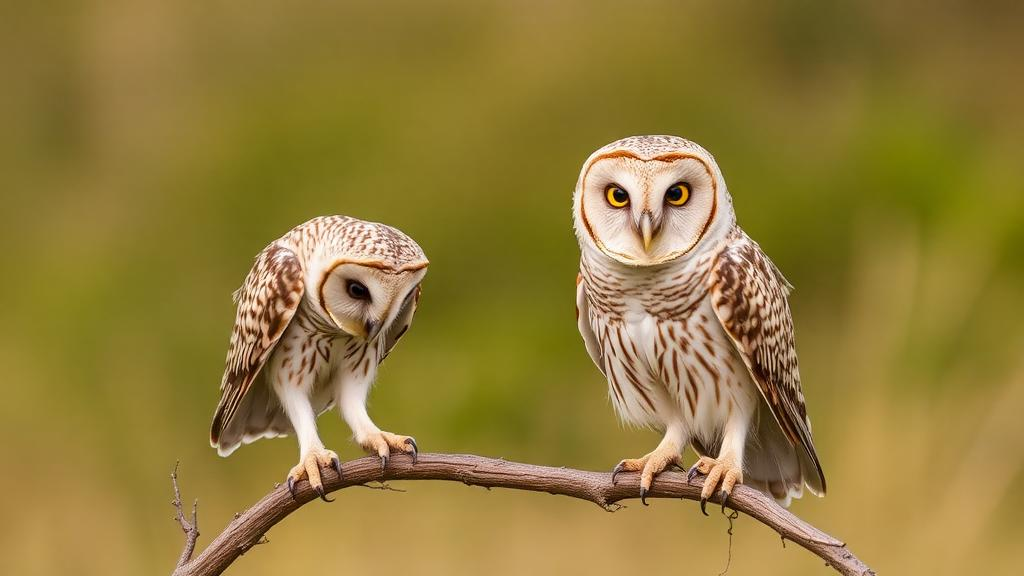
In the fertile lowlands of Georgia, a silent hunter has been quietly expanding its territory for roughly 25 years, and scientists have now taken the most detailed look yet at what it eats. The Barn Owl (Tyto alba), a specialized nocturnal predator that only recently colonized the South Caucasus nation, has rapidly spread across much of the country’s intensively farmed agricultural regions. Despite this remarkable success story, the species remained among the least studied birds in Georgia, with no prior comprehensive analysis of its diet ever conducted. That gap has now been filled by an ambitious new study published in the journal Caucasiana, which dissected thousands of owl pellets collected across the country between 2023 and 2025, revealing a diet overwhelmingly dominated by mammals and offering the first regional data on several poorly documented small mammal species.
The research team analyzed an extraordinary 6,627 prey items extracted from Barn Owl pellets gathered at 34 sites spanning five Georgian administrative regions: Adjara, Imereti, Kakheti, Kvemo Kartli, and Samegrelo-Zemo Svaneti. Pellets were collected from known roosting and breeding areas of dispersing owls, with fresh specimens characterized by a glossy, lacquered surface with a blackish tint due to salivary coating. To ensure biosafety and facilitate dissection, all pellets were sterilized by oven-baking at 160 degrees Celsius for 40 minutes following established protocols, then soaked in warm water before prey remains were extracted and identified to the lowest possible taxonomic level using standard taxonomic keys and monographs.
The results are striking in their clarity. Mammals account for 98.6 percent of all prey items by number, with rodents representing 53 percent of prey by number and a commanding 75 percent by total biomass. Shrews (Soricidae) comprise the second largest group, making up 45 percent by number but only 23 percent by biomass, reflecting their smaller body sizes. Together, these two groups constitute 98 percent of the total biomass consumed. Other prey groups, including birds at roughly 1 percent, bats, amphibians, reptiles, and invertebrates, were rare additions to the menu. The most frequent mammalian prey included the Macedonian mouse (Mus macedonicus), the social vole (Microtus socialis), and various Crocidura shrew species.
The sheer scale of the dataset allowed the researchers to document remarkable taxonomic breadth. Among the rodents identified were brown rats (Rattus norvegicus), black rats (Rattus rattus), house mice (Mus musculus), harvest mice (Micromys minutus), several vole species (Microtus majori, M. obscurus, M. socialis), the edible dormouse (Glis glis), the forest dormouse (Dryomys nitedula), and various Apodemus wood mice. The shrew assemblage included Crocidura leucodon, Crocidura gueldenstaedtii, Sorex volnuchini, Sorex satunini, the Transcaucasian water shrew (Neomys teres), and the Etruscan shrew (Suncus etruscus), one of the world’s smallest mammals by mass. Even a mole (Talpa levantis), a stoat (Mustela erminea), and Brandt’s hamster (Mesocricetus brandti) appeared in the pellets.
Identifying prey to species level from fragmented skeletal remains presented significant technical challenges. Due to local morphological variation in Caucasian rodents, standard identification methods were sometimes insufficient. Distinguishing Microtus socialis required intact skulls and specific ratios of rostrum height and interorbital constriction to condylobasal length, along with proportionally large auditory bullae. Separating the two Rattus species relied mainly on molar shape, while identification of pine voles (Microtus majori) depended on distinctive patterns of the first lower molar. Because Microtus rossiaemeridionalis is morphologically similar to M. obscurus and no DNA data were available, all such specimens were conservatively treated as M. obscurus. For house mice versus Macedonian mice, researchers used the zygomatic index, though damaged remains did not always allow conclusive separation.
The physical characteristics of the pellets themselves provided additional ecological insight. Among 1,099 unbroken pellets, length ranged from 21.6 to 81.0 millimeters with a mean of 39.8 millimeters, while width ranged from 14.6 to 45.9 millimeters with a mean of 26.0 millimeters. Each pellet contained between 1 and 13 individual prey items, with a mean of 3.53. Only six pellets contained more than 10 prey items, and those were dominated by small shrews. The record pellet, containing 13 prey individuals, came from Poti in Samegrelo-Zemo Svaneti and held 11 Volnuchin’s shrews, one Transcaucasian water shrew, and one Crocidura shrew. Another highly diverse pellet from Shiraki in Kakheti contained 11 Crocidura individuals.
Geographic variation in diet composition emerged as one of the study’s most intriguing findings. While rodents dominated the overall diet, at certain sites with more than 200 prey items, indicating long-term owl presence, shrews occasionally outnumbered rodents by number or biomass. At Chailuri in Kakheti, shrews made up 77 percent of prey by number and 62 percent by biomass, while at Nazarlo in Kvemo Kartli they accounted for 67 percent by number. At Poti, shrews comprised 69 percent by number. The researchers suggest this pattern may reflect temporary declines in rodent populations, potentially driven by natural population cycles or pesticide use in agricultural areas. Similar high consumption of shrews by Barn Owls has been reported from Germany, Italy, Greece, and Turkey, though the absence of comparable pellet studies in the Caucasus region makes it unclear whether these patterns are typical for the area or unique to Georgia.
Beyond dietary ecology, the pellet analysis yielded valuable faunistic records that significantly extend knowledge of small mammal distributions in Georgia. The Etruscan shrew, previously known only from eastern Georgia, was detected exclusively in Kvemo Kartli and Kakheti, with 41 individuals suggesting a more common and widespread status than previously assumed. The harvest mouse, historically reported from only seven western Georgian sites mainly from older records, was recorded from Adjara and, for the first time, from the eastern regions of Kvemo Kartli and Kakheti, with 89 individuals identified. The Transcaucasian water shrew and Volnuchin’s shrew were found only in pellets from the Poti region, a formerly marshland area now a canal system with rich vegetation and no agriculture, likely supporting suitable habitats for these semi-aquatic and moisture-loving species.
The overwhelming dominance of rodents in the Barn Owl’s Georgian diet supports the hypothesis that the species may play a significant ecological role in regulating rodent populations in the country’s agricultural landscapes. Globally, Barn Owls are increasingly recognized as effective agents of biological pest control, especially in agricultural ecosystems, and have already been integrated into pest management strategies in other regions. In Georgia’s fertile lowlands, where agricultural activity is intense, the owl may represent a promising natural solution for controlling rodent pests, offering a sustainable alternative to chemical interventions. At the same time, the significant presence of shrews in certain areas and years suggests sensitivity to local prey dynamics, possibly influenced by anthropogenic factors such as pesticide use.
The study also underscores the utility of owl pellet analysis as a complementary method for biodiversity assessments, especially in understudied or inaccessible habitats. Because pellet content is representative of the real proportions of small mammal species in their communities at open areas, the Barn Owl effectively functions as a biological sampling tool and bioindicator for small mammal communities in the region. The researchers acknowledge methodological challenges, including species-level identification difficulties due to cranial damage or cryptic morphology, and call for multi-seasonal and multi-year monitoring programs complemented by live-trapping and habitat assessments. Such efforts would help clarify temporal prey fluctuations, reveal effects of agricultural practices, and further test the feasibility of using Barn Owls as a nature-based solution for rodent control in Georgian agriculture.
Subject of Research: The diet of Barn Owl ( Tyto alba ) in Georgia
Article Title: The diet of Barn Owl ( Tyto alba ) in Georgia
Article References: Kitel, D., & Javakhishvili, Z. (2025). The diet of Barn Owl (Tyto alba) in Georgia. Caucasiana, 4, 105-118. https://doi.org/10.3897/caucasiana.4.e162505
Image Credits: AI Generated
DOI: 10.3897/caucasiana.4.e162505
Keywords: diet, Barn, Tyto, alba, Georgia, scientific research
Cite Scienmag News
Daisy Hatcher. (October 16, 2026). Barn Owls in Georgia Dine Almost Exclusively on Mammals, Landmark Pellet Study Reveals. Scienmag. https://scienmag.com/barn-owls-in-georgia-dine-almost-exclusively-on-mammals-landmark-pellet-study-reveals/
Daisy Hatcher. "Barn Owls in Georgia Dine Almost Exclusively on Mammals, Landmark Pellet Study Reveals." Scienmag, 16 October 2026, https://scienmag.com/barn-owls-in-georgia-dine-almost-exclusively-on-mammals-landmark-pellet-study-reveals/. Accessed 16 October 2026.
Daisy Hatcher. "Barn Owls in Georgia Dine Almost Exclusively on Mammals, Landmark Pellet Study Reveals." Scienmag. October 16, 2026. https://scienmag.com/barn-owls-in-georgia-dine-almost-exclusively-on-mammals-landmark-pellet-study-reveals/


