


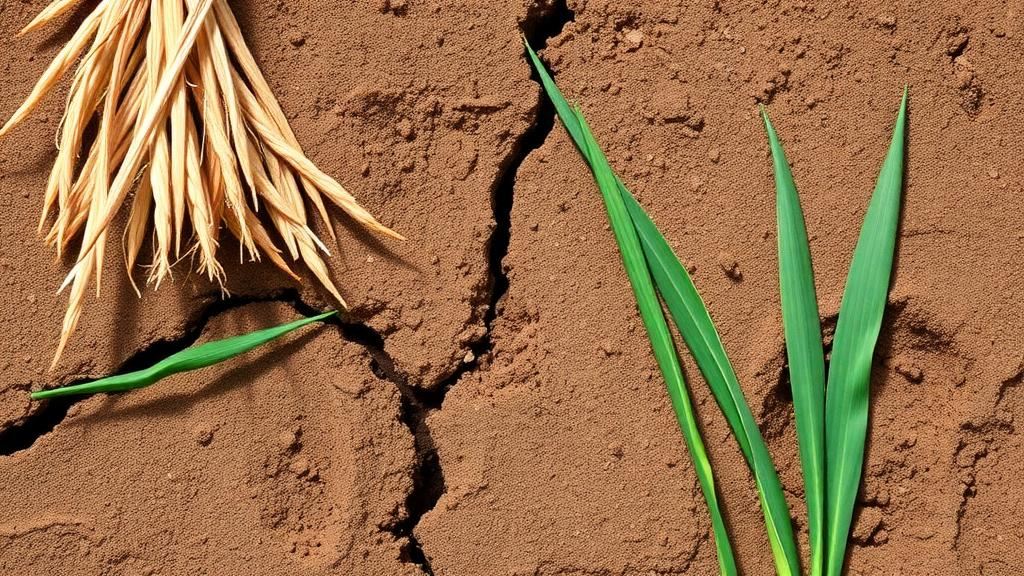
Expansive soils are among the most quietly destructive forces in civil engineering. Rich in clay minerals such as montmorillonite, they swell when they absorb water and shrink when they dry, and the resulting heave and cracking damage roadbeds, building foundations and slopes around the world. The economic toll is estimated at more than 15 billion U.S. dollars every year. For decades, engineers have fought back with lime and cement, but those chemical curing agents come with a heavy carbon footprint—roughly 0.8 tons of CO2 per ton of cement—and long-term use can compact soil and pollute groundwater. Now a research team from Hunan City University, Guangxi Transportation Science and Technology Group and Huaian Water Resources Survey and Design Institute has published a quantitative recipe that replaces brute-force chemistry with agricultural waste, and their numbers are striking enough to change how bio-based soil improvement is done.
The study, published on 27 November 2025 in the Spanish Journal of Soil Science, systematically analyzed how the ratio of organic fertilizer (OF), slow-release fertilizer (SRF) and rice straw (RS) controls two competing outcomes in improved expansive soil: the crack ratio, a measure of fissure suppression, and the root content of vetiver grass (Chrysopogon zizanioides), a deep-rooting plant whose fibers act as a living geotextile. Led by Yonggang Huang and Hongri Zhang, the team used a Box-Behnken experimental design (BBD), a response surface methodology (RSM) framework, and quadratic polynomial regression models to map the entire three-factor landscape rather than testing each ingredient in isolation. The result is not just a list of optimal dosages but a set of critical thresholds—points where adding more of a good ingredient suddenly makes things worse.
The single most powerful finding concerns rice straw. Of the three factors, RS made the greatest contribution to fissure suppression: for every 0.1% increase in its content, the crack ratio dropped by 0.204% (p < 0.001). The mechanism is mechanical. The fibrous network of straw, pretreated with sodium hydroxide and cut to 30 millimeter lengths, randomly distributes tensile stresses within the soil mass, disrupting the continuity of capillary pressures that build up during drying and preventing the propagation of large, interconnected cracks. This aligns with earlier single-factor studies showing that straw can raise shear strength by up to 25% and that optimal straw contents fall between 0.55% and 0.65%. What the new research adds is a quantified picture of how that optimum shifts when straw is used alongside fertilizers—a multi-factor scenario not previously explored.
Organic fertilizer, by contrast, revealed a classic nonlinear trap. Within moderate ranges, humic acid in OF promotes clay aggregation and improves fertility. But once application exceeded 10%, the crack ratio rebounded significantly (β = 0.132, p < 0.001) because excessive organic matter holds water unevenly, exacerbating the non-uniformity of drying shrinkage. The quadratic term coefficient for OF in the root content model reached −0.22 (p = 0.001), confirming that its inhibitory effect on roots grows exponentially with concentration: within the 10%–15% range, every additional 1% of OF cut the root growth rate by 12%. The underlying cause appears to be a carbon-to-nitrogen imbalance that interferes with root nitrogen uptake. In other words, the very ingredient meant to feed the vetiver grass can, past a threshold, starve it and crack the soil at the same time.
Slow-release fertilizer played a subtler dual role. Its resin-coated granules, releasing 64% of their payload over 28 days, showed a positive linear effect on root content (β = +0.12, p = 0.023) by sustaining nutrient supply for cell division. Yet the same salts that nourish plants also cement clay particles, and this salt cementation inhibited root growth at high dosages (β = −0.042, p = 0.003). The interaction terms proved even more consequential than the main effects. SRF and RS worked synergistically to suppress cracks (p < 0.001): the straw provides tensile reinforcement while the released salts flocculate and cement clay particles, creating a reinforced, cemented matrix. In the best case, group 12 of the experiment—10% OF, 0.9 kg/m³ SRF and 0.75% RS—achieved a crack ratio of just 1.7%. Meanwhile, OF and RS synergistically increased root content (β = 0.104, p = 0.002), but OF and SRF antagonistically raised fissure risk (β = 0.042, p = 0.082), a trade-off the authors attribute to localized osmotic stress and nutrient overload.
The relationship between root development and cracking itself proved nonlinear, with a critical threshold at 1.0 mg/cm³ of root content. Below that level, roots reinforce the soil and the crack ratio stays low—at 0.62 mg/cm³ the crack ratio was only 1.8%. Above the threshold, the crack ratio climbed steeply: piecewise regression showed the growth rate jumping from 0.8% per mg/cm³ to 2.2% per mg/cm³. Dense roots can hinder uniform shrinkage and create local stress concentrations, and the large pores left behind by decomposing roots become channels for fissure expansion. The engineering recommendation is therefore counterintuitive but precise: keep root content below 1.0 mg/cm³ and compensate ecologically by raising straw content to at least 0.5% and optimizing SRF between 0.6 and 0.9 kg/m³.
Using a desirability function approach with weights of 0.7 for crack ratio and 0.3 for root content, the multi-objective optimization yielded three ready-to-use formulations. The fissure priority scheme—8.2% OF, 0.83 kg/m³ SRF and 0.70% RS—achieves a crack ratio of 1.5%, ideal for roadbeds where mechanical stability dominates. The balanced scheme—9.0% OF, 0.75 kg/m³ SRF and 0.65% RS—holds the crack ratio at 1.8% while maintaining root content of 1.02 mg/cm³, suited to farmland improvement. The ecological priority scheme—11.5% OF, 0.60 kg/m³ SRF and 0.55% RS—pushes root content to 1.25 mg/cm³ at the cost of a 2.3% crack ratio, designed for slope restoration where vegetation establishment matters most. Weight sensitivity analysis showed that every 0.1 increase in the crack-ratio weight lowers the crack ratio by 0.3% but costs 0.15 mg/cm³ of root content, allowing engineers to tune the recipe seasonally.
The statistical rigor behind these numbers is substantial. The crack ratio model explained 91% of variation (R² = 0.91, RMSE = 0.12%) and the root content model 93% (R² = 0.93, RMSE = 0.11 mg/cm³), with triplicate center-point tests showing a coefficient of variation of only 2.1% and prediction errors at or below 5%. Crack quantification relied on the Particles and Cracks Analysis System (PCAS) software from Nanjing University, which converts high-definition images of dried specimens into binary maps and extracts geometric crack information. Samples were compacted to a dry density of 1.56 g/cm³, cured for 28 days at 25 °C, and subjected to up to nine wet-dry cycles alternating between 36% water content and 40 °C drying. Vetiver grass was cultivated for 120 days before root scanning with WinRHIZO and oven-dried weight quantification.
The practical implications extend beyond the recipe itself. Because the ingredients are livestock manure compost and rice straw—agricultural wastes generated at more than 3 billion tons annually and often burned or landfilled, releasing PM2.5 and squashing resources—the strategy converts a disposal problem into a stabilization solution. The authors also flag risk controls: in areas with high OF content above 12%, drainage measures such as underground pipes with spacing of 1.5 meters or less are needed to manage salinization; where SRF exceeds 0.9 kg/m³, pipe spacing of 2 meters or less is advised; and where straw content surpasses 0.7%, mixing in 3% vermiculite can compensate for porosity. For high-straw zones, the verification deviation of the model in project application was at most 3.2%.
Limitations remain, and the authors are candid about them. The experiments ran under controlled laboratory conditions over 120 days, so long-term biodegradation of fertilizer and straw, root decay, seasonal climate variation and durability under repeated wet-dry cycles are still open questions. The soil came from a single site in Changsha, Hunan—a weakly expansive, montmorillonite-dominated material with a free swelling ratio of 50%—so generalization to illite- or kaolinite-dominated soils in other climates requires field validation. The proposed micro-scale mechanisms, inferred from macro-scale responses, await direct visual confirmation through scanning electron microscopy and X-ray computed tomography. Even so, the study delivers what single-factor paradigms never could: a quantitative, threshold-aware design basis for improving expansive soil with agricultural waste, proving that the performance of a bio-composite is governed less by what you add than by how the ingredients interact.
Subject of Research: Critical Thresholds for Crack Ratio Suppression and Multi-Factor Ratio Optimization: A Synergistic Strategy of Organic-Slow Release Fertilizer-Rice Straw for Expansive Soil Improvement
Article Title: Critical Thresholds for Crack Ratio Suppression and Multi-Factor Ratio Optimization: A Synergistic Strategy of Organic-Slow Release Fertilizer-Rice Straw for Expansive Soil Improvement
Article References: Huang, Y., Zhang, H., Wang, X., Wu, Y., Tan, X., & Xiong, K. (2025). Critical Thresholds for Crack Ratio Suppression and Multi-Factor Ratio Optimization: A Synergistic Strategy of Organic-Slow Release Fertilizer-Rice Straw for Expansive Soil Improvement. Spanish Journal of Soil Science, 15, Article 14998. https://doi.org/10.3389/sjss.2025.14998
Image Credits: AI Generated
Keywords: Critical, Thresholds, Crack, Ratio, Suppression, Multi-Factor, Optimization, Synergistic, Strategy, Organic-Slow, Release, Fertilizer-Rice
Cite Scienmag News
Alan Morgan. (October 16, 2026). Rice Straw, Fertilizers and Vetiver Roots: A Recipe That Stops Expansive Soil From Cracking. Scienmag. https://scienmag.com/rice-straw-fertilizers-and-vetiver-roots-a-recipe-that-stops-expansive-soil-from-cracking/
Alan Morgan. "Rice Straw, Fertilizers and Vetiver Roots: A Recipe That Stops Expansive Soil From Cracking." Scienmag, 16 October 2026, https://scienmag.com/rice-straw-fertilizers-and-vetiver-roots-a-recipe-that-stops-expansive-soil-from-cracking/. Accessed 16 October 2026.
Alan Morgan. "Rice Straw, Fertilizers and Vetiver Roots: A Recipe That Stops Expansive Soil From Cracking." Scienmag. October 16, 2026. https://scienmag.com/rice-straw-fertilizers-and-vetiver-roots-a-recipe-that-stops-expansive-soil-from-cracking/


