


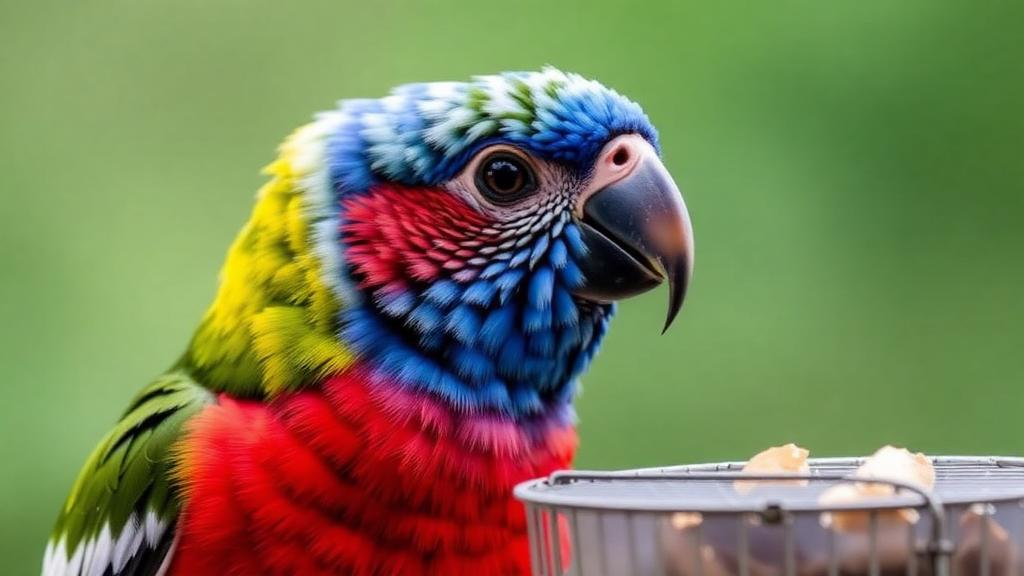
Zoos house an enormous diversity of birds, yet birds remain one of the least studied taxa when it comes to welfare science. A new review from researchers at Toronto Zoo, published in Frontiers in Ethology, argues that a technology already beloved by ornithologists studying wild birds—radio-frequency identification, or RFID—could fill this gap. By placing small tag readers at feeding stations, zookeepers could automatically log which birds eat, when, for how long, and alongside whom, generating continuous behavioral data that is nearly impossible to collect by eye in sprawling, multi-species aviaries.
The scale of the problem is striking. Birds account for one of the most speciose groups in zoological collections, but bird-focused studies represent less than ten percent of welfare research in zoos and aquaria in recent decades. This shortfall persists even as scientists document sophisticated cognition, emotions, and even consciousness in a variety of avian species. Modern welfare frameworks, such as the five domains model that considers nutrition, health, environment, behavior, and mental states, depend on behavioral indicators to estimate an animal’s subjective experience. Without systematic, low-cost ways to gather that data, evidence-based management of zoo birds stalls.
The challenge is compounded by a design trend. Zoos are increasingly moving toward large, environmentally complex, mixed-species aviaries, which can encourage natural foraging ecologies—from ground feeding to aerial pursuit—and allow varied types of flight. These spaces likely confer welfare benefits, but they make visual monitoring genuinely difficult. Keepers may lack clear sight lines, and many individuals of similar-looking species can be nearly impossible to distinguish. Assessing species-typical behavior, abnormal repetitive actions, or locomotion problems becomes a formidable task when dozens of birds share a single habitat.
RFID sidesteps many of these obstacles because it does not rely on visual identification at all. A typical system has four components: a passive integrated transponder, or PIT tag, attached to or implanted in the animal; a tag reader; an electromagnetic field generator; and a power source. PIT tags are tiny, carry no battery, and are detected only when they pass within a reader’s limited range. Each detection generates a log entry containing a unique bird identifier, the date and time, and the reader location. Over weeks or months, these data streams build into detailed records of presence, movement patterns, and social associations.
Feeding stations are particularly valuable monitoring points. Because feeding behavior is tightly linked to fitness outcomes such as survival and reproduction, and because animals reliably visit feeders, these locations produce dense, high-quality data. From repeated detections, researchers can estimate feeding bout duration, visit frequency, and total time spent feeding. Studies of domestic chickens and wild hummingbirds have already demonstrated how RFID can quantify individual feeding patterns automatically. In a zoo setting, the same approach could reveal which birds are thriving and which are being sidelined.
The social dimension is equally rich. When two birds are detected at the same station at the same time, the system records a co-occurrence that can be used to map feeding partnerships, sociability, and broader social networks. Conversely, detecting one bird entering a feeding area just as another leaves has been used to identify agonistic displacements and infer dominance hierarchies. This matters because social subordination can carry real costs: research in birds and other animals links chronic social stress to reduced social exploration, elevated stress biomarkers such as fecal glucocorticoid metabolites, and even anhedonia-like motivational deficits. Identifying consistently disadvantaged individuals allows keepers to intervene—adjusting group composition, adding feeding stations, or changing feeder placement to reduce crowding.
Once behavioral baselines are established, deviations from them become powerful welfare signals. Animals often modify foraging when unwell: house finches, for example, alter their foraging decisions during infection, and chronic pain has been shown to reverse dominance relationships in mice. House sparrows adjust their social position according to physiological costs, and jackdaws reshape social relationships as their value changes. In an aviary, an abrupt drop in feeder visits, unusually rapid sequences of detections suggesting intense competition, or the sudden disappearance of a previously stable feeding partner could each flag a health problem, a social conflict, or the effects of a husbandry change long before they would be visible to human observers.
The review’s authors are careful to emphasize that RFID is not a plug-and-play solution. Detection accuracy can suffer when birds move quickly or when hardware malfunctions, and reader designs can themselves alter behavior. Validation against visual observations is therefore essential, both to confirm accuracy and to define biologically meaningful event thresholds—deciding, for instance, how closely spaced detections must be to count as a single feeding bout. The authors also note that few published studies report their validation procedures at all, and they call for RFID-based research to be interpreted cautiously when validation is unclear. Tagging itself carries some risk: while long-term effects of PIT tags on survival are generally considered low, handling and implantation can cause short-term stress, and abrasions or infections from wearable tags remain a concern that warrants further study.
Where the technology becomes especially powerful is in combination with other tools. RFID-equipped scales can automatically log body mass alongside identity, offering insight into individual health trends without the stress of capture—something already demonstrated in dark-eyed juncos and Adélie penguins. Cameras paired with readers have been used to monitor plumage condition in king penguins and quantify diet composition in great tits. Smart, tag-triggered selection feeders could deliver individualized diets, a concept borrowed from precision feeding in agriculture, which would be particularly valuable in mixed-species aviaries where animals with different nutritional and medical needs share space. Emerging PIT tags with built-in temperature sensors can even record body temperature and foraging activity simultaneously, providing a physiological context for behavioral data; elevated body temperature during immune challenges in mallard ducks has shown promise as a health indicator.
The implications extend well beyond the aviary. RFID data on feeding competence and social behavior could inform which individuals are best prepared for release in reintroduction programs—pre-release foraging and walking behavior in whooping cranes, for example, has been linked to post-release survival. Readers placed away from feeders could reveal how birds use routes between enclosures, which substrates they prefer, and how they engage with cognitive enrichment devices. For a taxon that has long been underrepresented in zoo welfare research, the authors argue, this quiet, continuous stream of individual-level data may be the key to turning bird care from an art of observation into a science of evidence.
Subject of Research: Using RFID technology at feeding stations to monitor feeding and social behavior for bird welfare management in zoos
Article Title: Opportunities for monitoring feeding behavior using RFID technology to support bird welfare in zoos
Article References: Krahn, J., Petrou, J., Dick, M., Gourlie, S., & McGuire, M. (2026). Opportunities for monitoring feeding behavior using RFID technology to support bird welfare in zoos. Frontiers in Ethology, 5, Article 1894883. https://doi.org/10.3389/fetho.2026.1894883
Image Credits: AI Generated
DOI: 10.3389/fetho.2026.1894883
Keywords: RFID, bird welfare, zoos, feeding behavior, animal behavior monitoring, aviaries, PIT tags, social networks, animal welfare science, conservation, automated monitoring, avian cognition
Cite Scienmag News
Margaret Porter. (October 16, 2026). RFID Feeders Could Transform How Zoos Track Bird Welfare. Scienmag. https://scienmag.com/rfid-feeders-could-transform-how-zoos-track-bird-welfare/
Margaret Porter. "RFID Feeders Could Transform How Zoos Track Bird Welfare." Scienmag, 16 October 2026, https://scienmag.com/rfid-feeders-could-transform-how-zoos-track-bird-welfare/. Accessed 16 October 2026.
Margaret Porter. "RFID Feeders Could Transform How Zoos Track Bird Welfare." Scienmag. October 16, 2026. https://scienmag.com/rfid-feeders-could-transform-how-zoos-track-bird-welfare/


