


Scientists have uncovered the first evidence of gregarine parasites infecting yellow mealworms in Georgia, a discovery with significant implications for the rapidly growing insect farming industry. The research, published in the journal Caucasiana, examined mealworm populations from rearing facilities in Tbilisi, Georgia, and Antalya, Türkiye, revealing a striking geographic divide in parasite occurrence that could shape how the emerging edible insect sector manages disease risk.
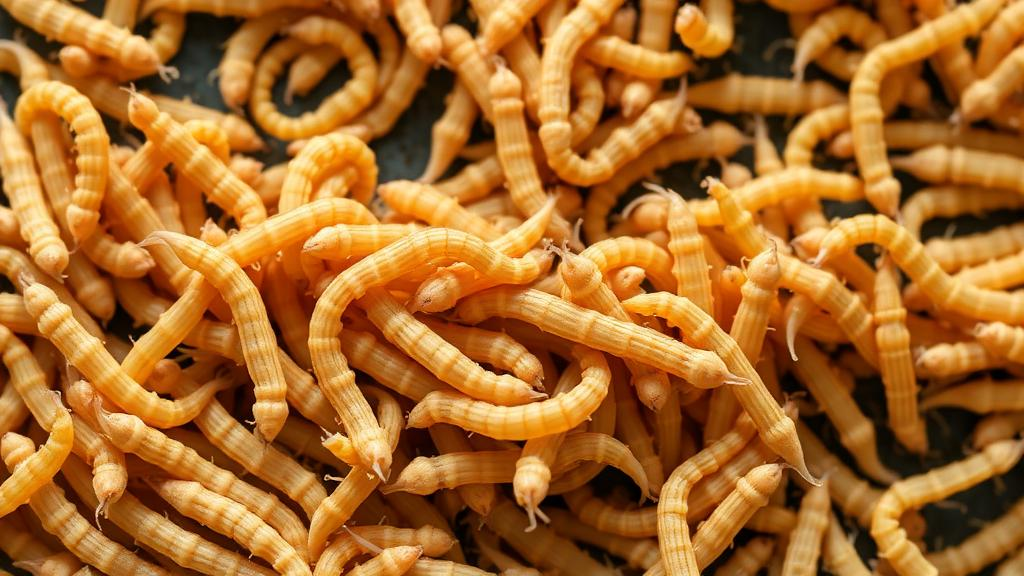
The yellow mealworm, Tenebrio molitor, occupies a peculiar dual role in human affairs. It is a notorious pest that infests stored cereal products, yet it is simultaneously one of the most valuable and nutritionally rich insects used in both animal and human food industries. Researchers describe it as a beneficial pest precisely because of this contradiction. Beyond its agricultural significance, the species can degrade polystyrene and plastic waste, making it an object of interest for waste management research, and it serves as a model organism in laboratories worldwide.
Gregarines are parasitic protozoans belonging to the phylum Apicomplexa, a group that includes some of the most notorious parasites of invertebrates. These single-celled organisms colonize the digestive tracts of many different insect species, and their effects on hosts have proven remarkably complex. Numerous experimental studies have documented both detrimental and beneficial outcomes. On the harmful side, gregarines can arrest host development, cause mortality, and inhibit reproduction. On the beneficial side, some studies have shown they can increase host growth, fitness, and longevity, complicating any simple assessment of their ecological role.
The research team dissected forty larval and forty adult mealworms from each location, examining their intestines under microscopes at magnifications ranging from 10x to 1000x. When parasitic infections were observed, the scientists prepared Giemsa-stained smears to visualize the parasites in greater detail. The slides were air-dried, fixed with methanol, and stained with a freshly prepared 5 percent Giemsa solution before re-examination. The team then measured key anatomical structures of the parasites, including the length of the epimerite, deutomerite, and protomerite, along with total body length and various width ratios that help distinguish between gregarine species.
The results revealed a dramatic contrast between the two populations. In the Tbilisi samples, gregarine infection was present in both life stages, with several life stages of the parasite found in the midgut lumens of larvae and adults alike. Each trophozoite was elongate with a bud-type epimerite measuring 5.5 micrometers, and the largest trophozoite observed reached 67.9 micrometers in length. The sporadins found in the midgut lumen were solitary, with a clearly distinct septum separating the protomerite from the deutomerite, and the deutomerite was ovoid to ellipsoid with a spherical nucleus averaging 10.3 micrometers in diameter.
Infection rates differed sharply between life stages. Twenty-nine of the forty examined larvae were infected, representing a 72.5 percent infection rate, while only seven of the forty examined adults carried the parasite, corresponding to just 17.5 percent. This substantial difference suggests that mealworm larvae are considerably more susceptible to gregarine infection than adults, a finding that carries practical weight for insect farmers who rear larvae as the primary product for food and feed applications.
In stark contrast, the Antalya population from Türkiye showed no gregarine infection whatsoever, neither in larvae nor in adults. This complete absence of the parasite in one geographic population while another shows high infection rates raises intriguing questions about how gregarines spread within and between insect colonies, and what environmental or management factors might explain such divergent outcomes between facilities located in different countries.
To identify the parasites, the researchers compared their morphological measurements and ratios against a well-documented comparative study by Clopton and colleagues from 1991, which described the morphology and general appearance of gregarine species infecting T. molitor. According to a recent review of harmful and beneficial symbionts of the mealworm, four eugregarine species are known to infect this insect: Gregarina cuneata, G. polymorpha, G. niphandrodes, and G. steini, with G. cuneata considered the most impressive and complex among them. The parasites found in the Georgian population resembled both G. cuneata and G. niphandrodes in body morphology and general appearance, yet they differed from published descriptions in their morphological measurements and ratios.
This discrepancy becomes particularly interesting when considering host stage specificity. Clopton and colleagues reported that G. polymorpha and G. steini are found only in mealworm larvae, whereas G. niphandrodes was reported only from adults. Gregarina cuneata, by contrast, infects both larvae and adults. Because the Georgian parasites were detected in both life stages, the researchers suggest that more than one gregarine species might be infecting the Georgian population, or that multiple species could coexist within the same individual host. The possibility even remains that a previously unknown gregarine species could be identified from Georgian mealworm populations.
The findings arrive at a critical moment for the edible insect industry. High-density rearing conditions associated with mass production may increase the risk of disease and infections by parasitic symbionts, promoting their spread within insect colonies. These pathogens could potentially be passed to humans and animals consuming mealworms as food, making parasite surveillance a food safety concern as well as a production issue. The researchers call for further characterization of the gregarines in Georgian mealworm populations, including molecular phylogeny studies, and recommend documenting the presence and distribution of these parasites across other Georgian populations. Such work will be essential for understanding whether the parasites represent a threat to commercial production or simply another facet of the complex biology of an insect that humanity increasingly relies upon for sustainable protein.
Subject of Research: Gregarine parasite infection in yellow mealworm populations in Georgia and Türkiye
Article Title: Occurrence of gregarine parasites of Tenebrio molitor ( Coleoptera : Tenebrionidae ) in Georgia and Türkiye
Article References: Yaman, M., Kereselidze, M., & Güvendik, T. S. (2025). Occurrence of gregarine parasites of Tenebrio molitor (Coleoptera: Tenebrionidae) in Georgia and Türkiye. Caucasiana, 4, 119-124. https://doi.org/10.3897/caucasiana.4.e164996
Image Credits: AI Generated
DOI: 10.3897/caucasiana.4.e164996
Keywords: gregarine parasites, Tenebrio molitor, yellow mealworm, Apicomplexa, insect farming, edible insects, Georgia, Türkiye, parasitology, food safety, entomology, sustainable protein
Cite Scienmag News
Daisy Hatcher. (October 16, 2026). Hidden Parasites Found in Mealworm Farms of Georgia Raise Food Safety Questions. Scienmag. https://scienmag.com/hidden-parasites-found-in-mealworm-farms-of-georgia-raise-food-safety-questions/
Daisy Hatcher. "Hidden Parasites Found in Mealworm Farms of Georgia Raise Food Safety Questions." Scienmag, 16 October 2026, https://scienmag.com/hidden-parasites-found-in-mealworm-farms-of-georgia-raise-food-safety-questions/. Accessed 16 October 2026.
Daisy Hatcher. "Hidden Parasites Found in Mealworm Farms of Georgia Raise Food Safety Questions." Scienmag. October 16, 2026. https://scienmag.com/hidden-parasites-found-in-mealworm-farms-of-georgia-raise-food-safety-questions/


