


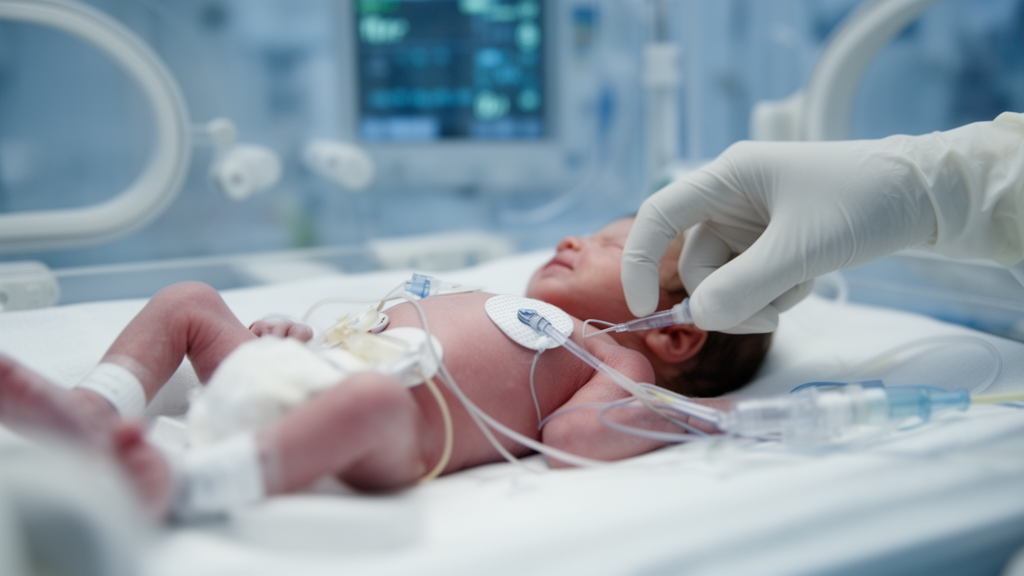
Every year, thousands of infants undergo open-heart surgery for congenital heart defects, and a troubling fraction of them leave the operating room with kidneys that have already begun to fail. Acute kidney injury, or AKI, affects roughly one third of children after cardiac surgery and is tied to longer ventilator support, longer intensive care stays, and greater need for dialysis. Now, a research team in China has uncovered an unexpected twist in the search for early warning signs: a blood measurement that many clinicians assume should be protective may instead flag danger, and the meaning of that measurement appears to shift dramatically depending on how old the baby is. The finding, published in Frontiers in Pediatrics, could reshape how perfusion teams interpret the physiologic state of an infant’s blood at the precise moment the heart-lung machine is switched off.
The measurement in question is colloid osmotic pressure, or COP, sometimes called oncotic pressure. It is the pulling force exerted by large plasma proteins, chiefly albumin, that are too big to cross the microvascular wall freely. Under the classic Starling framework, higher COP holds fluid inside blood vessels and was long assumed to be a good thing, guarding against tissue swelling. But the new study, led by Yuan Zhou and Runwei Ma of Fuwai Yunnan Hospital along with colleagues at Kunming Children’s Hospital, suggests that a high COP at the end of cardiopulmonary bypass, or CPB, tells a more complicated and more ominous story. Far from being a benign safeguard, it may be the fingerprint of a hemoconcentrated, stressed circulatory state that precedes kidney damage.
The investigators examined 230 infants aged twelve months or younger and weighing up to ten kilograms who had cardiac surgery with CPB at their center between May 2020 and September 2022. Rather than estimating COP indirectly from albumin levels, they measured it directly with a BMT923 membrane osmometer, which determines the equilibrium pressure generated across a semipermeable membrane. Readings were taken at four prespecified points: after preparation of the bypass prime, after heparinization just before bypass began, during bypass, and immediately after its completion. The primary outcome was creatinine-defined AKI, diagnosed under KDIGO serum creatinine thresholds within a strict 48-hour postoperative window. In this cohort, 57 infants, or 24.8 percent, developed AKI.
The headline result was stark. After adjusting for age, sex, body weight, surgical risk score, bypass duration, circulatory arrest, intraoperative fluid balance, and albumin dose, every 1 mmHg increase in post-CPB COP was associated with a 16 percent rise in the odds of AKI, with an adjusted odds ratio of 1.16 and a confidence interval of 1.04 to 1.28. Restricted cubic spline analysis showed the dose-response relationship was broadly linear, with no statistical evidence of a nonlinear bend. Infants who developed AKI also tended to be younger, had longer bypass times, and had higher RACHS-1 risk scores, consistent with known risk factors for postoperative renal injury.
Just as revealing was what the study did not find. COP measured before bypass or during bypass showed no clear association with subsequent kidney injury, and neither did the magnitude of COP’s change across the operation. The signal was concentrated almost entirely at the moment of weaning from the heart-lung machine. According to the authors, this suggests that the clinically relevant information lies not in how much COP rose or fell, but in the integrated physiologic state present at CPB separation, a state shaped by hemodilution from the pump prime, albumin administration, ultrafiltration, and hemoconcentration all converging in a single instantaneous measurement.
The most intriguing and, the authors stress, most tentative result concerns age. Because renal physiology matures explosively during the first year of life, glomerular filtration rate climbs steeply after birth, tubular sodium and water handling develops on its own timetable, and nephrogenesis may even be incomplete in preterm infants, the team fitted a generalized additive model with a tensor-product smooth of COP and age. That joint surface was statistically significant, hinting that the COP-AKI relationship changes shape across infancy. In an exploratory stratified analysis, the largest effect estimate appeared in infants aged ten to twelve months, where each 1 mmHg increase in COP was associated with 79 percent higher odds of AKI. The investigators are careful to label this hypothesis-generating: the subgroup contained few events, the confidence interval was wide, and one significant age band does not prove absence of association elsewhere.
What could connect a high protein-pulling pressure to failing kidneys? The authors argue against reading COP in isolation. A higher post-CPB COP often accompanies hemoconcentration, and plasma viscosity tracks closely with plasma protein concentration during cardiac surgery. Prior pediatric work by Dittrich and colleagues found that changes in blood viscosity during hypothermic bypass in infants were associated with markers of glomerular and tubular injury, suggesting that the rheologic properties of concentrated blood may strain renal microcirculation. Meanwhile, the renal medulla is exceptionally vulnerable to fluctuations in oxygen delivery, and experimental studies show that pericyte-mediated capillary constriction can produce persistent no-reflow after ischemia, meaning that systemically restored circulation can coexist with starving kidney tissue. Elevated COP may simply be the most visible marker of this entire hemoconcentration-perfusion phenotype.
The researchers also honestly assessed whether COP could serve as a practical prediction tool, and the answer was essentially no. On its own, COP discriminated poorly between infants who would and would not develop AKI. Adding it to a clinical model nudged the area under the curve from 0.701 to 0.723, an improvement that was not statistically significant, and neither net reclassification improvement nor decision curve analysis showed meaningful clinical benefit. Sensitivity analyses excluding neonates, deaths, infants with impaired preoperative renal function, and extreme COP values preserved the direction of the association, and when ultrafiltration volume was added the estimate attenuated slightly from 1.16 to 1.13, suggesting some overlap between the two measures. The E-value analysis further indicated that moderate unmeasured confounding, such as unrecorded perfusion pressures or oxygen delivery metrics, could account for the observed effect.
The clinical message, therefore, is one of reframing rather than intervention. The authors explicitly caution against adopting a numerical COP target or a COP-guided treatment protocol; no reproducible threshold emerged from their data, and a widely discussed 16 mmHg cutoff was explored only descriptively. Instead, they propose that post-CPB COP be treated as a time-specific physiologic risk marker, a prompt for clinicians to review the broader context of hemoconcentration, ultrafiltration exposure, hematocrit, albumin dosing, perfusion pressure, and oxygen delivery in any infant with an elevated reading. Future studies, they argue, should prospectively reconstruct the full causal chain from perfusion management through the COP-hemoconcentration phenotype to altered renal oxygenation, tubular injury, and clinical AKI, ideally pairing serial COP measurements with near-infrared renal oximetry and Doppler indices of renal vascular resistance.
Limitations temper the findings, and the authors enumerate them candidly. The retrospective single-center design invites selection bias and residual confounding. AKI was defined by creatinine alone because granular postoperative urine-output data were unavailable, meaning oliguric injury may have been missed; notably, baseline creatinine was actually lower in infants who later met AKI criteria, a mathematical quirk of relative-threshold definitions. Only 57 events occurred, age-stratified analyses were correspondingly imprecise, and key hemodynamic variables such as nadir hematocrit, indexed oxygen delivery, and intraoperative blood pressure could not be reconstructed. Still, in a field where roughly a quarter of these smallest and most vulnerable surgical patients leave bypass with injured kidneys, the study adds a genuinely new dimension: the end of the bypass run is a decisive physiologic moment, and the osmotic state of an infant’s blood at that instant, read together with the baby’s age, may carry risk information that conventional models have overlooked.
Subject of Research: Association between post-cardiopulmonary bypass colloid osmotic pressure and creatinine-defined acute kidney injury in infants undergoing cardiac surgery
Article Title: Post-cardiopulmonary bypass colloid osmotic pressure and creatinine-defined acute kidney injury in infants undergoing cardiac surgery: an age-modified association
Article References: Zhou, Y., Gui, W., Zhang, X., Chen, J., Xie, J., Liu, K., Yi, S., & Ma, R. (2026). Post-cardiopulmonary bypass colloid osmotic pressure and creatinine-defined acute kidney injury in infants undergoing cardiac surgery: an age-modified association. Frontiers in Pediatrics, 14, Article 1929104. https://doi.org/10.3389/fped.2026.1929104
Image Credits: AI Generated
DOI: 10.3389/fped.2026.1929104
Keywords: acute kidney injury, cardiopulmonary bypass, colloid osmotic pressure, infants, cardiac surgery, KDIGO, hemoconcentration, renal physiology, generalized additive model, pediatric cardiology, perfusion, oncotic pressure
Cite Scienmag News
Harold Sullivan. (October 16, 2026). Blood Protein Signal at End of Heart Bypass Linked to Kidney Injury in Infants. Scienmag. https://scienmag.com/blood-protein-signal-at-end-of-heart-bypass-linked-to-kidney-injury-in-infants/
Harold Sullivan. "Blood Protein Signal at End of Heart Bypass Linked to Kidney Injury in Infants." Scienmag, 16 October 2026, https://scienmag.com/blood-protein-signal-at-end-of-heart-bypass-linked-to-kidney-injury-in-infants/. Accessed 16 October 2026.
Harold Sullivan. "Blood Protein Signal at End of Heart Bypass Linked to Kidney Injury in Infants." Scienmag. October 16, 2026. https://scienmag.com/blood-protein-signal-at-end-of-heart-bypass-linked-to-kidney-injury-in-infants/


