


…
…
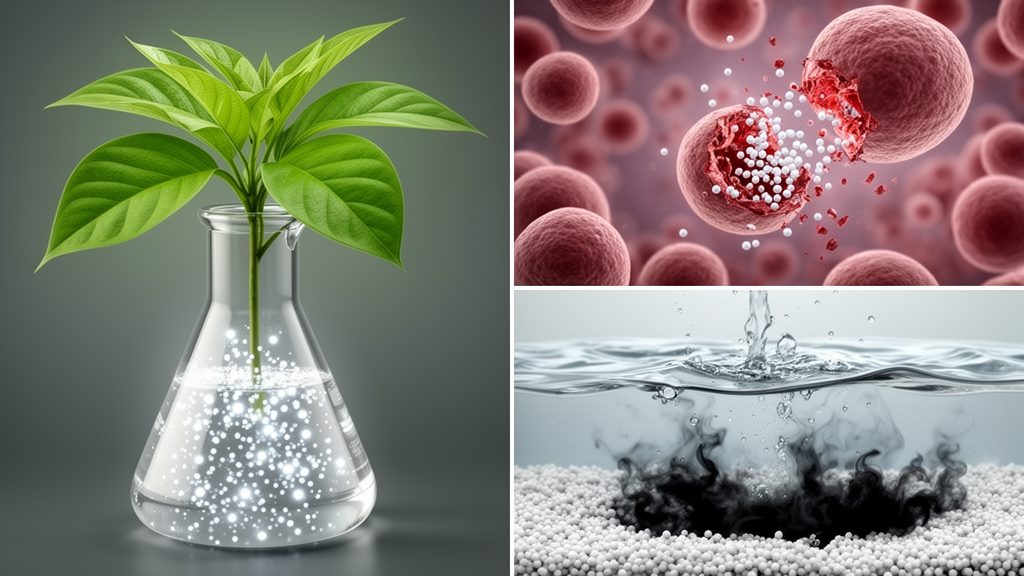
The choice of Celosia argentea as a reducing and capping medium reflects a broader trend in green nanomaterials research, in which plants rich in polyphenols, flavonoids, and other secondary metabolites serve dual functions: they reduce metal ions to their zero-valent or oxide forms and then adsorb onto the nascent particle surfaces, arresting growth and stabilizing the colloids. In the case of the methanolic flower extract used here, the phytochemical profile of the plant provides hydroxyl- and carbonyl-bearing molecules capable of coordinating zinc ions during nucleation. The resulting organic corona is not merely a synthetic artifact; it can influence particle size distribution, surface charge, and even biological interactions once the particles contact living cells. This is one reason why phytofabricated nanoparticles often display different behavior from chemically synthesized counterparts of nominally identical composition.
The discrepancy between the average apparent particle size measured by transmission electron microscopy, 18.76 nm, and the crystallite size of 28.83 nm estimated by Williamson–Hall analysis of the XRD data deserves careful interpretation. These two metrics do not measure the same thing. TEM counts individual particles as discrete objects, whereas Williamson–Hall analysis extracts crystallite dimensions from the broadening of diffraction peaks, after correcting for strain contributions. When the two numbers diverge, it can indicate that individual particles are polycrystalline aggregates, that strain broadening is significant, or that the particles seen in micrographs are composed of smaller crystalline domains. In practice, both values confirm that the material sits comfortably in the nanoscale regime where surface-area-to-volume ratios are high and quantum and surface effects become pronounced, which is precisely the range where catalytic and biological activities tend to be amplified.
The antioxidant assays used in the study form a complementary panel rather than redundant measurements. DPPH and ABTS both probe radical-scavenging capacity, but they differ in radical type, solvent compatibility, and kinetics, so agreement between them strengthens confidence in the result. FRAP measures ferric-reducing antioxidant power, which reflects electron-donating ability rather than radical quenching per se. Superoxide scavenging targets a biologically relevant reactive oxygen species, and metal chelation assesses the capacity to sequester transition metals that would otherwise catalyze Fenton-type radical generation. The observation that the ZnO nanoparticles outperformed the crude extract in every assay suggests that the phytochemical capping either concentrates active moieties at the particle surface or that the nanoparticle itself contributes redox activity. Either way, the finding is consistent with the subsequent cellular results, because a material that modulates redox chemistry in cell-free systems is a plausible candidate for perturbing redox balance inside cells.
The cytotoxicity data, expressed as GI50 values of 32.71 µg/mL for the extract and 8.735 µg/mL for the nanoparticles at 24 hours, indicate roughly a fourfold enhancement in potency upon nanoformulation. This kind of potentiation is commonly attributed to improved cellular uptake, since nanoparticles in the tens of nanometers range can be internalized by endocytic pathways far more efficiently than dissolved small molecules. Once inside, the particles can act as intracellular sources of zinc ions and of surface-generated reactive oxygen species. The MTT assay itself measures metabolic reduction capacity, so the dose-dependent decline in signal reflects loss of mitochondrial function or overall metabolic competence, an early hallmark of cellular distress that precedes overt death.
The morphological evidence from DAPI and confocal microscopy provides the classical visual vocabulary of apoptosis. Chromatin condensation arises as the nuclear lamina disassembles and heterochromatin collapses against the nuclear periphery. Nuclear fragmentation follows as the nucleus is partitioned into smaller bodies. Membrane blebbing results from actin-myosin contraction at the cortex while the cell detaches from its substrate, and apoptotic bodies are the final packaged fragments that neighboring cells or phagocytes can clear without provoking inflammation. The presence of all four features together, rather than any single one, argues that the cells are dying by an orderly programmed process rather than by necrotic disintegration.
Flow cytometry adds quantitative rigor to this picture. By measuring reactive oxygen species levels and apoptotic cell percentages across treated populations, it converts qualitative microscopy into population-level statistics. The concurrent rise in ROS and in apoptosis is mechanistically meaningful because elevated intracellular ROS is a well-established trigger for the intrinsic mitochondrial apoptotic pathway. Excessive ROS damages mitochondrial membranes, promotes release of pro-apoptotic factors, and activates the caspase cascade. The Western blot results map directly onto this pathway: p53 upregulation is consistent with a stress-response transcriptional program that can push cells toward apoptosis, caspase-9 activation marks initiation of the intrinsic cascade at the mitochondrion, caspase-3 activation represents the executioner step that dismantles the cell, and downregulation of Bcl-xL removes a key anti-apoptotic brake. The coherence of this protein signature with the morphological and flow cytometric findings is what elevates the study from correlation to a mechanistic account.
It is worth noting that the intrinsic pathway implicated here is the same route targeted by many clinical chemotherapeutics, which is why ROS-generating nanomaterials attract attention as potential anticancer platforms. However, the study’s authors appropriately frame their conclusions as preliminary in scope. The work was confined to a single cancer cell line, MCF-7, without parallel testing on non-malignant control cells, and without in vivo validation. Selectivity, the property that separates a useful therapeutic from a poison, cannot be inferred from cancer-cell-only data. Normal cells as controls would reveal whether the nanoparticles preferentially harm transformed cells or act indiscriminately, and animal models would address biodistribution, clearance, immune response, and long-term toxicity, none of which can be predicted from culture dishes.
The photocatalytic arm of the study addresses a different but equally consequential problem: the persistence of synthetic dyes in wastewater. Malachite Green is a triarylmethane dye with a long history of use in aquaculture and textile industries, and it is problematic both because it colors water at low concentrations and because its degradation products can be toxic. Conventional biological treatment struggles with such recalcitrant molecules, which is where semiconductor photocatalysis offers an alternative. When ZnO absorbs visible light, electrons are promoted from the valence band to the conduction band, leaving holes behind. These charge carriers migrate to the particle surface and react with adsorbed water, oxygen, and hydroxide to generate reactive species capable of oxidizing organic pollutants into smaller fragments and ultimately into carbon dioxide, water, and inorganic ions.
The optimization parameters reported follow well-understood photocatalytic principles. Degradation efficiency declined as initial dye concentration increased because at higher concentrations the dye molecules themselves compete for photons and screen the catalyst surface, while a fixed amount of catalyst can only generate a finite flux of reactive species. Higher catalyst loading improved performance up to a point by increasing the number of photoactive sites, although excessive loading would eventually cause light scattering and particle agglomeration. The alkaline optimum at pH 9 is consistent with the surface chemistry of ZnO, whose point of zero charge favors adsorption of the cationic malachite green molecule under basic conditions, and with the enhanced availability of hydroxide ions that feed hydroxyl radical formation.
The kinetic analysis, fitting pseudo-first-order behavior with an apparent rate constant of 0.061 per minute and a coefficient of determination of 0.99 at 10 ppm, is the standard Langmuir–Hinshelwood simplification used when pollutant concentration is low relative to the catalyst surface capacity. Under these conditions the reaction rate scales with the fraction of surface sites occupied, which reduces to first-order kinetics in the dye. The high R² value indicates that the model describes the data well across the measured time course, supporting the use of this framework for comparing catalysts and conditions.
The radical-scavenging experiments are among the most informative elements of the photocatalytic characterization because they dissect the contribution of individual reactive species. By adding selective quenchers, the researchers found that superoxide radicals played the predominant role, with hydroxyl radicals and photogenerated holes contributing to a lesser extent. This hierarchy matters for catalyst design: superoxide formation depends on conduction-band electrons reducing dissolved oxygen, so strategies that suppress electron-hole recombination, such as surface modification or heterojunction formation, would be expected to further enhance performance. The finding also connects the two halves of the study conceptually, since superoxide is the same species probed in the biological antioxidant assays.
Reusability over five consecutive cycles addresses the practical question of whether the catalyst survives real-world use. Photocatalysts can lose activity through photocorrosion, surface fouling by degradation intermediates, or loss of material during recovery. Retaining substantial degradation capacity after five cycles suggests reasonable structural robustness, though longer-term testing and recovery-efficiency accounting would be needed for full engineering assessment. Together, the biological and environmental results position phytofabricated ZnO nanoparticles as a versatile platform material, with the caveat that translating either application beyond the laboratory will require the selectivity, safety, and durability studies the authors themselves identify as necessary next steps.
Subject of Research: …
Article Title: Phytofabricated zinc oxide nanoparticles from Celosia argentea L.: mechanistic insights into ROS-mediated apoptosis in the MCF-7 cell line and photocatalytic degradation of malachite green
Article References: Kour, G., Katal, D., Kaur, S., Rana, G., Alotaibi, N. M., & Raja, V. (2026). Phytofabricated zinc oxide nanoparticles from Celosia argentea L.: mechanistic insights into ROS-mediated apoptosis in the MCF-7 cell line and photocatalytic degradation of malachite green. Frontiers in Materials, 13, Article 1922252. https://doi.org/10.3389/fmats.2026.1922252
Image Credits: AI Generated
DOI: 10.3389/fmats.2026.1922252
Keywords: Phytofabricated, zinc, oxide, nanoparticles, Celosia, argentea, mechanistic, insights, ROS-mediated, apoptosis, MCF-7, cell
Cite Scienmag News
Nathaniel Bowman. (October 16, 2026). Plant-Made Zinc Oxide Nanoparticles Trigger Cancer Cell Death and Scrub Toxic Dye From Water. Scienmag. https://scienmag.com/plant-made-zinc-oxide-nanoparticles-trigger-cancer-cell-death-and-scrub-toxic-dye-from-water/
Nathaniel Bowman. "Plant-Made Zinc Oxide Nanoparticles Trigger Cancer Cell Death and Scrub Toxic Dye From Water." Scienmag, 16 October 2026, https://scienmag.com/plant-made-zinc-oxide-nanoparticles-trigger-cancer-cell-death-and-scrub-toxic-dye-from-water/. Accessed 16 October 2026.
Nathaniel Bowman. "Plant-Made Zinc Oxide Nanoparticles Trigger Cancer Cell Death and Scrub Toxic Dye From Water." Scienmag. October 16, 2026. https://scienmag.com/plant-made-zinc-oxide-nanoparticles-trigger-cancer-cell-death-and-scrub-toxic-dye-from-water/


