


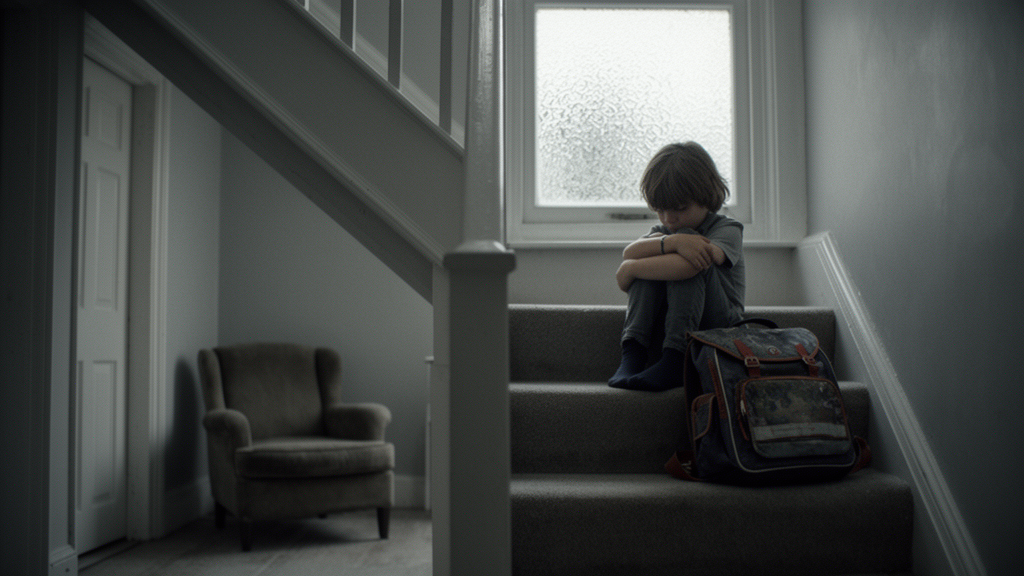
Some of England’s most vulnerable children and young people are failing to receive mental health support despite carrying a substantially higher burden of psychological distress, according to new research from the University of Cambridge. The study, published in the journal Child and Adolescent Mental Health, analysed NHS Digital records covering children and young people referred to or receiving support from mental health services across England between 2016 and 2021. Its central finding is stark: although children on child protection plans or living in care are known to face significantly elevated risks of serious mental health problems, fewer than one in five of these individuals had any contact with mental health services in a given year.
The scale of the population involved gives the finding national significance. Nearly 50,000 children and young people in England are currently on child protection plans, and around 84,000 are in care. Because their backgrounds and circumstances frequently involve abuse and neglect, these young people are at markedly increased risk of mental health difficulties, and previous studies have suggested that up to half will experience mental health problems at a clinically significant level. Against that baseline of need, contact rates of roughly 9 to 18 percent with specialist services represent a profound gap between risk and provision.
The researchers, based in the Department of Public Health and Primary Care, examined data for the whole of England over the five-year study window. During that period, almost two million children and young people came into contact with mental health services, with figures rising year on year. The most common recorded reasons for referral were anxiety, accounting for 13 percent of cases, followed by presentation in crisis at 10 percent, depression at 7 percent, neurodevelopmental conditions at 6 percent and self-harm at 6 percent. Notably, the primary reason for referral was not recorded in two-thirds of cases, a data gap that itself complicates efforts to plan and evaluate services.
For context, just under one in five children and young people in England, around 18 percent, are estimated to have a probable mental health disorder. Because a third of mental health problems begin before the age of 14, timely access to appropriate services is widely regarded as a key public health priority. Yet fewer than half of children and young people with a probable mental health disorder receive a referral at all. Children on child protection plans or in care were found to be two to three times more likely than their peers to have contact with mental health services, which the authors note is still far below what their elevated levels of need would predict.
One possible explanation lies in the behaviour of child and adolescent mental health services, commonly known as CAMHS, which the researchers suggest can be hesitant to accept referrals for children and young people involved with children’s social services. When referrals are declined, the consequences fall on social services departments and families, who are left to manage shortcomings in mental health provision without clinical support. Recent work by the same team found that individuals in this group were often rejected from services because their needs were viewed as too complex or as relating primarily to their social situation rather than to a treatable condition.
The case studies documented by the researchers illustrate how this reasoning plays out in practice. In one example, a 12-year-old girl living in residential care who had been referred to CAMHS following a suicide attempt was deemed too complex to receive intensive specialist support. In another, a 12-year-old boy was brought to an accident and emergency department after a suspected overdose and after running away from a new foster placement; his access to CAMHS was rejected on the grounds that his problems related to his social situation and were therefore a matter for child social services. Professor Robbie Duschinsky, Head of the Child Health and Development Research Group at the Primary Care Unit, said that through their work the team had encountered countless cases of children and young people with mental health difficulties not being offered treatment because their living situation was judged too complex or a matter for child social services.
The study also identified a troubling pattern at the transition to adulthood. Contact with mental health services appeared to plateau or decline at ages 17 and 18, even though late adolescence is a high-risk period for the onset of mental illness. The researchers propose several possible reasons for this drop-off, including a lack of advocacy for young people at this age, as well as the fact that older adolescents who do not wish to engage with services will have their wishes respected in a way that younger children’s refusals might not be. Either way, the result is that support thins out precisely when epidemiological evidence suggests it is most needed.
Evidence of health inequalities emerged along ethnic lines as well. Children and young people who identified as Asian or Black were less likely to be in contact with mental health services than would be expected based on population estimates, a disparity consistent with broader findings about unequal access to specialist care in England. Combined with the findings on children in the social care system, the data suggest that the groups facing the greatest psychosocial risk are often the least likely to reach, or be reached by, formal mental health provision.
Dr Barry Coughlan from the Department of Public Health and Primary Care at the University of Cambridge, the study’s first author, said that demand for mental health services in England is rising steadily, but many children and young people, particularly some of those who are most at risk, are not getting the referrals or the support they need. He emphasised that many mental health problems first arise during the teenage years, making early intervention crucial. If services are unable to help young people when they first need it, he warned, these difficulties risk becoming long-term problems that persist into adulthood, often growing increasingly severe and including self-harm and attempted suicide.
There was some evidence, though the researchers describe it as not fully conclusive, that children and young people on child protection plans or in care were more likely to be in contact with mental health services in 2020-21 compared with the previous year, suggesting that the impact of the COVID-19 pandemic and associated public health measures was felt more sharply by these vulnerable individuals. The team notes that this is the first time child mental health data from NHS Digital has been used for research in this way, demonstrating the power of routinely collected data to expose significant health inequalities that would otherwise remain invisible. The research was funded by Wellcome and the British Academy. In the UK and Ireland, anyone struggling can contact Samaritans on freephone 116 123, or PAPYRUS HOPELINE247 on 0800 068 4141.
Subject of Research: Mental health service contact and referral rates among vulnerable children and young people in England
Article Title: Thousands of most vulnerable children and young people missing out on mental health support
Article References: Thousands of most vulnerable children and young people missing out on mental health support. (n.d.). Original publication
Image Credits: AI Generated
DOI: Not provided
Keywords: child mental health, CAMHS, child protection plans, children in care, NHS Digital, health inequalities, referral rates, University of Cambridge, adolescent mental health, social care, England, COVID-19
Cite Scienmag News
Glenn Wilkins. (October 16, 2026). England’s Most Vulnerable Children Are Missing Out on Mental Health Care. Scienmag. https://scienmag.com/englands-most-vulnerable-children-are-missing-out-on-mental-health-care/
Glenn Wilkins. "England’s Most Vulnerable Children Are Missing Out on Mental Health Care." Scienmag, 16 October 2026, https://scienmag.com/englands-most-vulnerable-children-are-missing-out-on-mental-health-care/. Accessed 16 October 2026.
Glenn Wilkins. "England’s Most Vulnerable Children Are Missing Out on Mental Health Care." Scienmag. October 16, 2026. https://scienmag.com/englands-most-vulnerable-children-are-missing-out-on-mental-health-care/


