


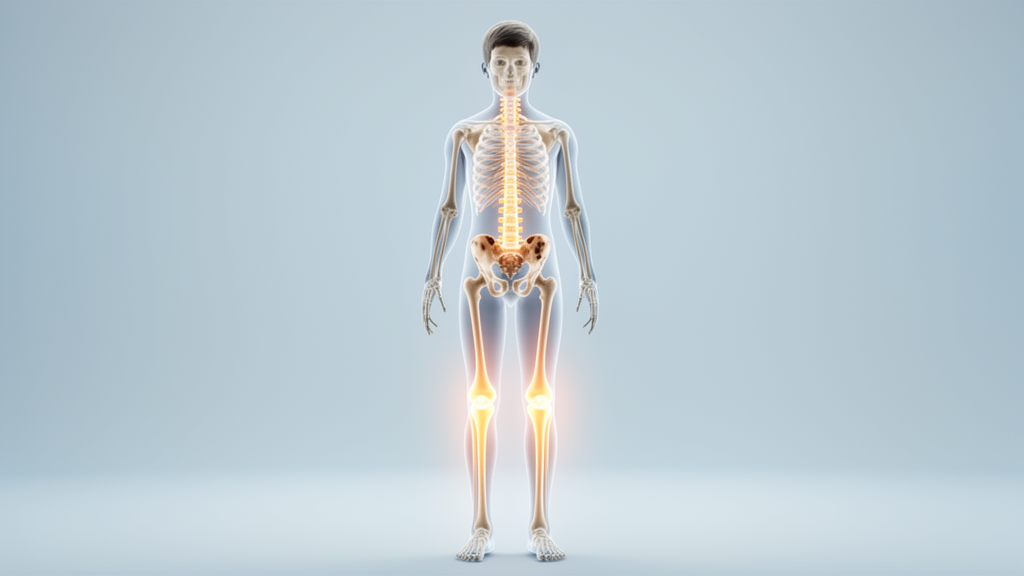
Adolescence is supposed to be the skeleton’s golden hour. Between the onset of puberty and the closure of the growth plates, roughly 40 to 60 percent of adult peak bone mass is deposited, driven by surging sex steroids, the growth hormone/insulin-like growth factor-1 axis and the mechanical loading that comes with a rapidly lengthening frame. Estrogens promote epiphyseal maturation and trabecular mineralization, while androgens stimulate periosteal apposition and cortical expansion, particularly in males. For teenagers with congenital adrenal hyperplasia, however, this critical window is under siege from three directions at once: lifelong glucocorticoid replacement, abnormal androgen levels and pubertal timing that can run either fast or slow. A new mini-review published in Frontiers in Adolescent Medicine by endocrinologists at the University of Padova argues that the resulting skeletal damage is far more subtle — and potentially more serious — than standard bone scans suggest.
Congenital adrenal hyperplasia is a group of autosomal recessive disorders of adrenal steroidogenesis in which impaired cortisol synthesis triggers chronic overdrive of the hypothalamic-pituitary-adrenal axis and variable excess or deficiency of adrenal androgens. The 21-hydroxylase deficiency form accounts for 90 to 95 percent of cases worldwide, with rarer enzymatic defects such as 11β-hydroxylase deficiency and 17α-hydroxylase/17,20-lyase deficiency making up the remainder, each with its own hormonal fingerprint and growth trajectory. Managing the disease means walking a pharmacological tightrope: enough glucocorticoid to replace cortisol and suppress adrenocorticotropic hormone-driven steroid excess, but not so much that the drug itself poisons growth, puberty, metabolism and bone. Neonatal screening and multidisciplinary care have transformed survival and quality of life, shifting clinical attention toward the long-term comorbidities that now define the adult lives of these patients.
Glucocorticoids are among the most bone-hostile drugs in medicine. They increase bone resorption and suppress bone formation, degrading microarchitecture and raising fracture risk. Their effects extend to calcium handling: by antagonizing vitamin D signaling in the gut they reduce intestinal calcium absorption, while increasing renal calcium excretion, producing a negative calcium balance that triggers compensatory parathyroid hormone elevation — secondary hyperparathyroidism. That mechanism is particularly damaging during adolescence, when optimal calcium retention is essential for peak bone mass acquisition. In congenital adrenal hyperplasia the skeletal impact depends on cumulative exposure, treatment duration and the supraphysiologic dosing often needed to rein in androgen excess. Androgens, meanwhile, have anabolic effects by stimulating osteoblast proliferation, so androgen excess may partially compensate for glucocorticoid-related bone loss — but chronic supraphysiologic androgen levels also accelerate bone maturation, advance bone age and shorten the bone accrual window, limiting the net benefit.
The review’s most striking technical point concerns how bone density is measured and interpreted. Most pediatric and adolescent studies have relied on dual-energy x-ray absorptiometry, which reports areal bone mineral density as Z-scores relative to chronological age. But in congenital adrenal hyperplasia, chronological age and bone age frequently diverge. Garcia Alves Junior and colleagues found that Z-scores appear normal or even elevated when interpreted by chronological age, yet are significantly reduced when normalized for bone age — revealing a true impairment in bone accrual masked by accelerated skeletal maturation. In other words, the fast-growing skeletons of these teenagers look deceptively dense simply because they are older, biologically, than their birthdays. Cross-sectional studies comparing adolescents with Tanner-matched controls add site-specific nuance: lumbar spine bone density was significantly reduced, whereas femoral density was less consistently affected, and daily glucocorticoid dose showed a negative association with bone parameters while higher androgen exposure correlated positively, hinting at partial anabolic compensation.
Longitudinal data sharpen the concern that puberty is not the rescue window clinicians might hope for. In a cohort followed from pubertal onset to adult height, treatment with gonadotropin-releasing hormone agonists — sometimes used to slow precocious puberty and prolong skeletal growth — did not adversely affect bone density outcomes. But Z-scores declined over time across multiple skeletal sites in both treated and untreated patients, indicating progressive divergence from reference populations during late adolescence and early adulthood. Similarly, a marked decline in whole-body and lumbar spine Z-scores from prepuberty to adulthood, particularly in males, has been observed, with deficits becoming more evident after puberty completed. Taken together, these studies suggest that puberty does not constitute a window for recovery of skeletal deficits in congenital adrenal hyperplasia; rather, sustained glucocorticoid exposure and an altered sex steroid milieu may progressively limit the acquisition of peak bone mass.
Beyond drug dose and hormones, body composition has emerged as a third determinant of skeletal fate. Ryabets-Lienhard and colleagues reported an inverse association between lumbar spine height-adjusted bone density Z-scores and total, visceral and subcutaneous fat mass, independent of glucocorticoid dose, suggesting that excess adiposity exerts a direct detrimental effect on bone accrual during puberty. Bone dynamics are also coming into view: higher glucocorticoid doses and the use of prednisolone were associated with reduced annual lumbar spine accrual compared with hydrocortisone therapy, and bone turnover markers adjusted for bone age — particularly C-terminal telopeptide, a resorption marker — independently predicted subsequent bone density accrual. That finding opens the possibility of dynamic biomarker monitoring during adolescence, moving beyond static scans. Vitamin D insufficiency, frequently reported in pediatric patients with the disease, may represent a further modifiable contributor to impaired skeletal mineralization during this critical window.
The rarer enzymatic defects offer a natural experiment in how the sex steroid milieu shapes the adolescent skeleton. In 11β-hydroxylase deficiency, cortisol deficiency combines with mineralocorticoid precursor excess — causing hypertension — and pronounced hyperandrogenism. The skeletal phenotype reflects chronic androgen excess during childhood: advanced bone age, accelerated growth, early or precocious puberty and premature epiphyseal closure. Yet the evidence is largely auxological and radiological; densitometric and microarchitectural data in adolescents are scarce, and fracture risk is essentially unknown. In stark contrast, 17α-hydroxylase/17,20-lyase deficiency produces profound hypoandrogenism and hypoestrogenism, resulting in delayed bone age, absent pubertal growth spurt and delayed epiphyseal closure. Limited high-resolution imaging studies suggest reduced cortical and trabecular volumetric density, cortical thinning and increased porosity — but adolescent-specific longitudinal data and fracture assessments are lacking. Other rare defects, including PORD mutations, STAR deficiency and HSD3B2 deficiency, combine variable degrees of cortisol and sex steroid deficiency, sometimes with congenital skeletal malformations, and evidence on their skeletal health is essentially absent.
Perhaps the most sobering message concerns bone quality rather than quantity. Direct data on microarchitecture and fracture risk in adolescents are lacking, but studies in adult populations using high-resolution peripheral quantitative computed tomography demonstrate cortical thinning and trabecular deterioration even in individuals with normal DXA-derived density. Epidemiological and registry-based cohorts, including the dsd-LIFE study, indicate increased fracture prevalence, often manifesting in early adulthood. These observations strongly suggest that qualitative skeletal deficits originate during childhood and adolescence, remaining subclinical until later life. The absence of fractures during adolescence, the review warns, should not be interpreted as evidence of preserved bone strength. Non-classic forms of 21-hydroxylase deficiency, with partial enzyme impairment and milder or intermittent glucocorticoid therapy, appear to fare better — older studies report fewer fractures than in severe forms, though recent adult data are conflicting and no bone turnover marker data exist for this subgroup.
The clinical implications are concrete. During adolescence, hydrocortisone is preferred for its shorter half-life and flexibility, allowing dose adjustments during growth and bone development — though puberty increases hydrocortisone clearance, complicating disease control and demanding careful monitoring. Excess dosing above 17 mg/m²/day should be avoided, since it is inversely associated with final height and bone mass, and long-acting glucocorticoids are generally reserved for post-growth phases due to higher skeletal risk. Modified-release hydrocortisone offers more physiological 24-hour cortisol profiles and may better suppress the morning androgen surge, but adolescent experience remains limited. Annual bone age assessment is essential to interpret density measurements in adolescents with advanced skeletal maturation, with DXA ideally interpreted using bone age- and height-adjusted references, and high-resolution imaging reserved for high-risk research cases. Adequate calcium intake, routine vitamin D monitoring and regular weight-bearing physical activity are modifiable levers that partially counteract glucocorticoid-related skeletal effects, while sedentary behavior and increased adiposity impair accrual.
The transition from pediatric to adult care coincides with the final stages of peak bone mass acquisition and represents a vulnerable phase: discontinuity of care, reduced adherence and shifts in treatment goals from growth optimization to metabolic and reproductive health can all undermine hormonal control. Glucocorticoid regimens are often modified during transition, sometimes introducing longer-acting compounds that increase cumulative exposure if not carefully titrated, while persistent hyperandrogenism or excessive androgen suppression from overtreatment can both impair bone accrual. Structured transition programs with coordinated pediatric and adult endocrine care and standardized assessment of bone density and pubertal status are therefore essential. The Padova team calls for longitudinal, phenotype-specific studies incorporating advanced imaging to better define fracture risk and guide evidence-based management across the lifespan. For now, the message for clinicians and families is clear: the skeletons of teenagers with congenital adrenal hyperplasia may look fine on a standard scan while quietly falling behind — and puberty alone will not close the gap.
Subject of Research: Bone health in adolescents with congenital adrenal hyperplasia: exploring the interplay between glucocorticoid therapy, hormonal imbalance and puberty
Article Title: Bone health in adolescents with congenital adrenal hyperplasia: exploring the interplay between glucocorticoid therapy, hormonal imbalance and puberty
Article References: Tizianel, I., Ceccato, F., & Barbot, M. (2026). Bone health in adolescents with congenital adrenal hyperplasia: exploring the interplay between glucocorticoid therapy, hormonal imbalance and puberty. Frontiers in Adolescent Medicine, 4, Article 1827315. https://doi.org/10.3389/fradm.2026.1827315
Image Credits: AI Generated
DOI: 10.3389/fradm.2026.1827315
Keywords: congenital adrenal hyperplasia, bone health, glucocorticoids, puberty, peak bone mass, adolescent endocrinology, bone mineral density, 21-hydroxylase deficiency, Bone, health, adolescents, congenital
Cite Scienmag News
Ophelia Keating. (October 16, 2026). Hidden bone deficits in teens with congenital adrenal hyperplasia masked by fast-growing skeletons. Scienmag. https://scienmag.com/hidden-bone-deficits-in-teens-with-congenital-adrenal-hyperplasia-masked-by-fast-growing-skeletons/
Ophelia Keating. "Hidden bone deficits in teens with congenital adrenal hyperplasia masked by fast-growing skeletons." Scienmag, 16 October 2026, https://scienmag.com/hidden-bone-deficits-in-teens-with-congenital-adrenal-hyperplasia-masked-by-fast-growing-skeletons/. Accessed 16 October 2026.
Ophelia Keating. "Hidden bone deficits in teens with congenital adrenal hyperplasia masked by fast-growing skeletons." Scienmag. October 16, 2026. https://scienmag.com/hidden-bone-deficits-in-teens-with-congenital-adrenal-hyperplasia-masked-by-fast-growing-skeletons/


