


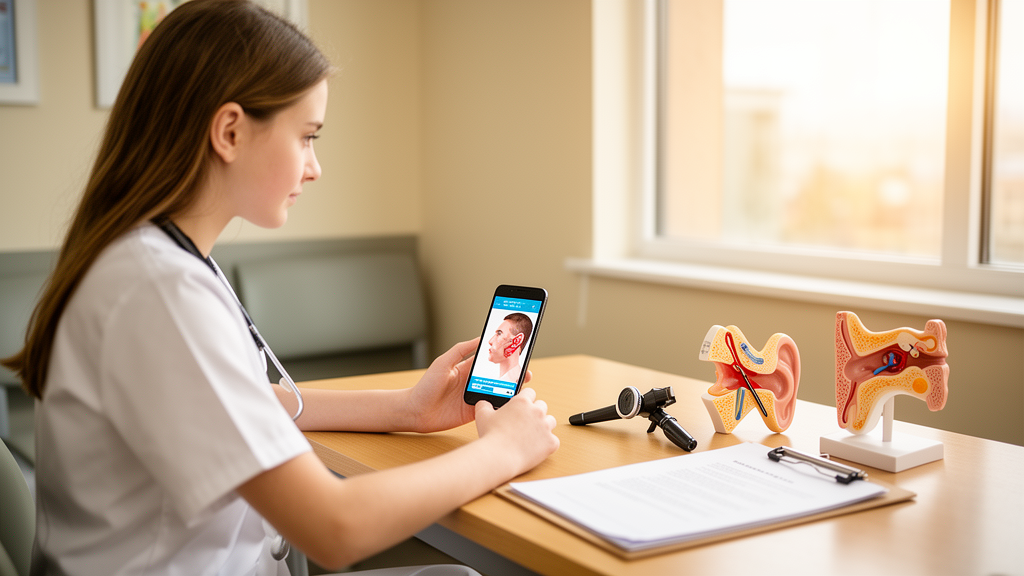
Medical interns in an otolaryngology rotation at Tehran University of Medical Sciences have given a strong vote of confidence to a training approach that sounds almost deceptively simple: short, task-focused microlearning videos delivered through WhatsApp at the start of their clinical placement. According to a mixed-methods study published in BMC Medical Education, 18 of 19 respondents, or 94.7 percent, reported overall satisfaction with the intervention, and the mean satisfaction score of 3.92 on a five-point scale stood well above the theoretical midpoint. The finding, while modest in scale, offers a vivid snapshot of how medical education is quietly being reshaped by the same forces that have transformed how the rest of us consume information.
The study, led by Aeen Mohammadi and Farzaneh Sedaghatkar along with colleagues from several Iranian medical education research centers, set out to explore how interns perceive task-based microlearning during one of the most demanding phases of their training. The intervention itself was carefully constructed. Faculty members developed five micro-videos covering essential otolaryngology procedures, including ear examination and the management of epistaxis, the medical term for a nosebleed. The videos were filmed at a clinical skills center and shared with interns via WhatsApp at the beginning of their rotation, placing the content directly into the devices the interns already carried throughout their working day.
Microlearning, as the researchers describe it, is a learner-centered approach that delivers content in small, digestible chunks rather than lengthy lectures or dense textbook chapters. Task-based learning, meanwhile, is another student-centered strategy that emphasizes practical skill development through problem-solving and task completion. By fusing the two, the team created a format in which each video is anchored to a concrete clinical task, giving interns a procedural template they can mentally rehearse before encountering the real thing in the ward. The rationale is rooted in the mounting pressures facing medical schools: the rapid expansion of medical knowledge, the need for lifelong learning, evolving learner expectations, and the challenge of integrating technological advancements into clinical education.
To evaluate the intervention, the researchers employed a mixed-methods design that combined semi-structured interviews with a validated satisfaction questionnaire. Qualitative data were analyzed using conventional content analysis, a technique in which researchers systematically code interview transcripts to identify recurring themes without imposing a predefined framework. Quantitative data were analyzed in SPSS using descriptive statistics and a one-sample t-test, which compares the sample mean against a fixed reference value, in this case the theoretical midpoint of the satisfaction scale. The study protocol was approved by the Ethics Committee of Tehran University of Medical Sciences and conducted in accordance with the Declaration of Helsinki, with informed consent obtained from all participants.
The content analysis revealed two main themes that structured the interns’ perceptions: design considerations and consequences. Within these themes, the researchers identified perceptions related to accessibility, timing, learning processes, and psychological impact. Accessibility emerged as a central strength, with the WhatsApp delivery model ensuring that the videos were available on demand, whether an intern had a spare moment between patient encounters or wanted to review a procedure the night before performing it. Timing proved equally important, as the videos were shared at the beginning of the rotation, meaning the content arrived precisely when interns were forming their mental models of otolaryngology practice.
The learning process theme captured how the micro-videos functioned as cognitive scaffolds. By breaking complex procedures into focused, task-oriented segments, the videos allowed interns to absorb one discrete skill at a time, a structure that aligns with well-established principles of cognitive load theory, which holds that working memory can only process a limited amount of new information at once. The psychological impact theme added a human dimension to the findings, suggesting that having a reliable, faculty-produced reference reduced the anxiety and uncertainty that often accompany early clinical exposure. Interns described feeling better prepared and more confident when they could revisit a procedure on their own terms before being asked to participate in it.
On the quantitative side, the mean satisfaction score of 3.92, with a standard deviation of 0.66, was descriptively higher than the theoretical midpoint of the scale. The researchers report an illustrative one-sample comparison, t(18) = 6.00, p < .001, indicating that the difference from the midpoint is unlikely to be due to chance, though they frame this as a descriptive benchmark rather than a definitive inferential claim. The researchers are careful to note that the quantitative findings were generally consistent with the qualitative themes regarding accessibility, learning support, and learner satisfaction, a convergence that strengthens the overall interpretation of the results. The study also builds on an overlapping cohort and the same educational intervention used in the team’s previous quantitative work from 2023, but the researchers emphasize that the present manuscript addresses distinct research questions focused on subjective perceptions and satisfaction, using qualitative interviews with eight participants and a satisfaction survey with 19, and that no knowledge or performance outcome scores from the earlier paper are reused here.
The authors conclude that thoughtfully designed task-based microlearning may facilitate learning and contribute to intern satisfaction, and that the educational features identified in the study suggest the approach may support a range of educational objectives. Crucially, they position microlearning not as a replacement for traditional clinical teaching but as a complement to it, especially when used in conjunction with other instructional strategies such as observation of expert work in real-world clinical settings. This framing reflects a growing consensus in medical education research that digital tools are most effective when they reinforce, rather than substitute for, the apprenticeship model that remains at the heart of clinical training.
The implications extend well beyond otolaryngology. The researchers recommend future studies to explore the long-term effects of this approach in diverse clinical departments and hospitals, a call that acknowledges both the promise and the limitations of the current evidence. With a small sample size and a single institution, the findings should be read as an encouraging signal rather than a prescription. Yet the convergence of high satisfaction scores, coherent qualitative themes, and a practical, low-cost delivery mechanism makes a compelling case that the future of clinical skills training may arrive not in lecture halls, but in the brief, focused videos that fit into the pockets and pauses of medical interns’ busiest days.
Subject of Research: Exploring medical interns’ perceptions and satisfaction with task-based microlearning in an otolaryngology rotation: a mixed-methods study
Article Title: Exploring medical interns’ perceptions and satisfaction with task-based microlearning in an otolaryngology rotation: a mixed-methods study
Article References: Mohammadi, A., Sedaghatkar, F., Mojtahedzadeh, R., Zarei, A., Gandomkar, R., Anari, M. R., Dabiri, S., Tajdini, A., & Tashakkori, G. (2026). Exploring medical interns’ perceptions and satisfaction with task-based microlearning in an otolaryngology rotation: a mixed-methods study. BMC Medical Education. https://doi.org/10.1186/s12909-026-10477-3
Image Credits: AI Generated
DOI: 10.1186/s12909-026-10477-3
Keywords: microlearning, medical education, otolaryngology, task-based learning, clinical skills, internship, WhatsApp, mixed-methods study, learner satisfaction, video-based learning, Tehran University of Medical Sciences, nursing education
Cite Scienmag News
Caroline Murphy. (October 16, 2026). Medical Interns Embrace Microlearning Videos in Otolaryngology Training. Scienmag. https://scienmag.com/medical-interns-embrace-microlearning-videos-in-otolaryngology-training/
Caroline Murphy. "Medical Interns Embrace Microlearning Videos in Otolaryngology Training." Scienmag, 16 October 2026, https://scienmag.com/medical-interns-embrace-microlearning-videos-in-otolaryngology-training/. Accessed 16 October 2026.
Caroline Murphy. "Medical Interns Embrace Microlearning Videos in Otolaryngology Training." Scienmag. October 16, 2026. https://scienmag.com/medical-interns-embrace-microlearning-videos-in-otolaryngology-training/


