


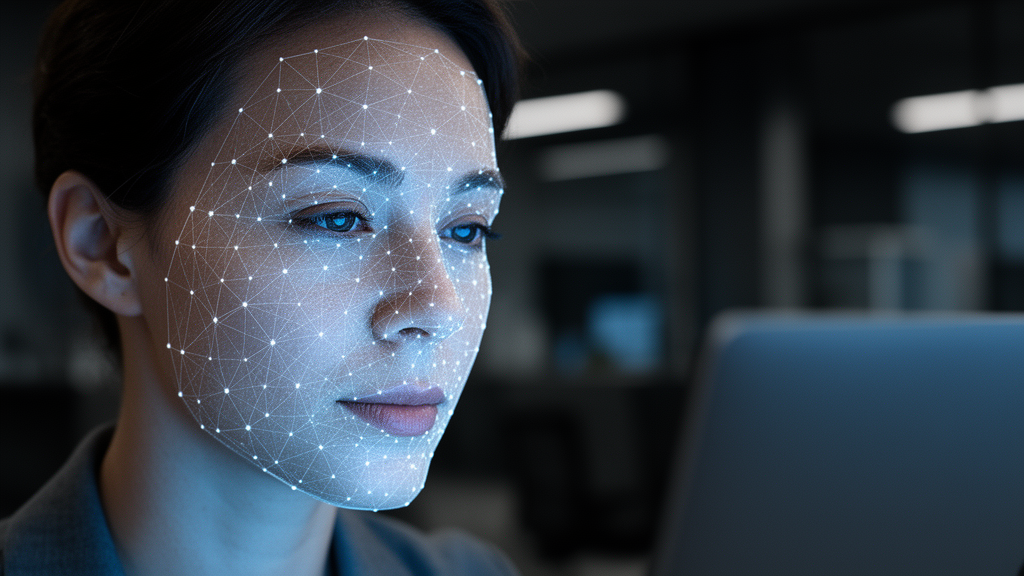
Every photograph a person takes is more than a picture. A single image can simultaneously encode a face, a gait pattern, a medical condition, a location, and even the floor plan of a building. That layered density of personal information is precisely why imaging has become the most privacy-sensitive data modality in modern computing, and why a new systematic review of privacy-preserving visual computing arrives at a moment of mounting regulatory and technical urgency. The review, published in Frontiers in Imaging, screened more than 5,000 research records and distilled them into 50 rigorously validated studies spanning healthcare, agriculture, consumer vision, and the internet of things, offering the most integrated picture yet of how machine learning systems can be trained on images without betraying the people in them.
The stakes are framed by law as much as by technology. Under the European Union’s General Data Protection Regulation, processing images for biometric identification or health inference elevates them to Special Category Data, triggering requirements for explicit consent, strict data minimization, and mandatory Data Protection Impact Assessments before deployment. India’s Digital Personal Data Protection Act imposes similarly stringent purpose and storage limitations, demanding granular consent for biometric capture and prompt deletion of raw images once processed. Both regimes treat unencrypted collection and retention of raw imagery as a persistent breach vector, because unlike a password, compromised visual features cannot be reset. A stolen face or a leaked radiograph is compromised for life.
Against this backdrop, researchers have developed three principal families of privacy technique, each with a distinct mathematical character. Federated learning enables model training across decentralized image repositories without transferring raw pixels to a central server; hospitals, for example, can jointly improve diagnostic models while their patient scans never leave institutional storage. Differential privacy provides a formal, quantifiable guarantee that the participation of any single record cannot be inferred from a model’s outputs, typically by injecting carefully calibrated noise into gradients or queries. Secure multi-party computation allows multiple parties to jointly compute a function over encrypted or secret-shared image data, so that no participant ever learns another’s inputs. The review also draws a crucial conceptual line between these privacy-preserving mechanisms, which alter the computation or data pipeline itself, and privacy-aware mechanisms, which shape model behavior, including the explanations a model gives, to avoid inadvertent disclosure.
That distinction matters because of a sobering empirical finding that recurs throughout the literature: keeping raw pixels local is not sufficient on its own. Gradient-inversion and membership-inference studies have demonstrated that near-original images can be recovered from model updates or explanation artifacts once believed to be privacy-neutral. In federated learning, an honest-but-curious server can execute gradient-inversion attacks that reconstruct near-photorealistic radiological scans from shared parameter updates. The review’s authors call this the data locality fallacy: federated learning enforces physical data locality, but it is an organizational paradigm rather than a complete mathematical defense, leaving models vulnerable to gradient leakage, membership inference, model inversion, and malicious-client poisoning.
The review’s methodology is itself a technical contribution. Following PRISMA 2020 guidelines, the team searched five scholarly repositories, IEEE Xplore, ACM Digital Library, Scopus, Web of Science, and PubMed, on June 15, 2026, retrieving 5,214 records. After automated deduplication removed 528 duplicates, two independent reviewers screened titles and abstracts, eliminating 3,644 records that lacked computational privacy frameworks or investigated non-visual modalities. Full-text evaluation of the remaining 1,042 articles excluded 828 more for reasons ranging from purely theoretical treatment to missing methodological detail. The surviving 214 candidates were scored on a structured 10-point rubric covering mathematical rigor, dataset validation, privacy-utility calibration, adversarial evaluation, and reproducibility, with inter-rater reliability measured by Cohen’s kappa of 0.84. Only the top quartile, 50 studies scoring at least 8.5, entered the final synthesis.
The sectoral breakdown reveals where privacy engineering has matured and where it lags. Healthcare imaging dominates the corpus, accounting for 21 of the 50 studies, with federated learning deployed in 14 of them, often layered with differential privacy to bound patient-level leakage during gradient aggregation. Agricultural imaging contributes 10 studies, in which federated learning trains crop-disease detection models across geographically distributed farms without transferring proprietary field imagery between cooperatives. General-purpose vision benchmarks account for another 10 studies, many probing gradient-inversion attacks directly, while 9 studies address IoT and edge imaging, where battery-powered cameras rely on model quantization to transmit only compressed updates over constrained networks. Publication activity accelerated sharply over the review window: just 2 studies appeared in 2016 to 2017, but 18, or 36 percent of the corpus, appeared in 2022 to 2023.
Each sector confronts a mathematically distinct bottleneck. In healthcare, the central challenge is privacy-utility calibration: under the Gaussian mechanism for differential privacy, the noise standard deviation scales with the sensitivity of the gradient function divided by the privacy budget, so a tighter guarantee directly mandates larger noise, degrading optimization and elevating clinical false-negative rates. Unlike natural imagery, where minor Gaussian perturbations are benign, medical scans demand pixel-level diagnostic sensitivity, and calibrating noise for stringent bounds can obscure high-frequency radiological details such as microcalcifications. In agriculture, the problem is statistical heterogeneity: federated averaging weights each client’s contribution by its sample count, so extreme disparities in farm size and localized crop pathology bias the global model toward large commercial holdings and degrade convergence on non-independent data.
Secure multi-party computation faces a different wall. In threshold secret sharing, a visual token is partitioned into shares such that any subset below the threshold leaks zero information, but raising the threshold multiplicatively scales the interactive communication required for every non-linear activation and convolutional layer. The result is provable zero-leakage computation with zero accuracy loss, yet computational costs so extreme that deployment remains limited to small hospital consortiums and pilot prototypes. On the edge, the bottleneck is bandwidth: cumulative network consumption per communication round scales with the number of active devices multiplied by the parameter count and numerical precision of the model backbone, making naive federated updates infeasible for bandwidth-constrained field cameras. And in explainable AI, a subtler threat emerges: saliency maps generated to build clinician trust can themselves leak training-set membership, and under the moments-accountant composition framework, even modest per-query privacy loss rapidly aggregates into significant identification leakage across repeated visual queries.
Perhaps the review’s most consequential observation concerns the architectural future. Visual computing is shifting from task-specific convolutional networks toward large-scale medical foundation models, including vision transformers, multi-modal vision-language architectures, and promptable segmentation models. This transition escalates every identified risk. A conventional ResNet-50 carries roughly 25 million parameters, tractable under federated averaging, but foundation models frequently exceed 300 million to a billion parameters, rendering multi-party secret-sharing computationally intractable and forcing a shift toward parameter-efficient fine-tuning methods such as low-rank adaptation, where privacy mechanisms are restricted to adapter layers. Worse, the memorization capacity of these architectures scales with parameter count: broad attention mechanisms retain richer biometric and spatial priors than compact convolutional filters, markedly facilitating high-fidelity patient image recovery from single update batches. Cross-modal binding of pixel data with radiological text and electronic health records compounds membership-inference vulnerabilities further.
The review’s authors are careful to distinguish direct empirical observations from conceptual research trajectories, and they acknowledge structural limitations, including restriction to peer-reviewed English-language publications, publication bias favoring successful defenses, and heterogeneous threat models that preclude formal meta-analysis. Yet the synthesized evidence points clearly toward hybrid architectures that combine federated learning, differential privacy, and secure computation rather than relying on any single mechanism, with differential privacy offering bounded protection only under defined trust assumptions and secure computation safeguarding data strictly in flight. As imaging systems proliferate through hospitals, farms, homes, and factories, the message of this synthesis is unambiguous: privacy in visual computing cannot be an afterthought bolted onto a trained model. It must be engineered into the pipeline from the first pixel, because the images machines learn from are, in the end, images of us.
Subject of Research: Privacy-preserving techniques for imaging data in machine learning, including federated learning, differential privacy, and secure multi-party computation
Article Title: Privacy-preserving techniques in visual computing: applications, challenges, and future directions
Article References: Haripriya, R., Tripti, K., Kaur Bhatia, G., & Pandey, M. (2026). Privacy-preserving techniques in visual computing: applications, challenges, and future directions. Frontiers in Imaging, 5, Article 1981816. https://doi.org/10.3389/fimag.2026.1981816
Image Credits: AI Generated
DOI: 10.3389/fimag.2026.1981816
Keywords: federated learning, differential privacy, secure multi-party computation, medical imaging, gradient inversion, explainable AI, GDPR, IoT edge computing, systematic review, data privacy, computer vision, foundation models
Cite Scienmag News
Blake Davidson. (October 16, 2026). Your Face Is the Password Hackers Want: New Review Maps the Privacy Crisis in Visual Computing. Scienmag. https://scienmag.com/your-face-is-the-password-hackers-want-new-review-maps-the-privacy-crisis-in-visual-computing/
Blake Davidson. "Your Face Is the Password Hackers Want: New Review Maps the Privacy Crisis in Visual Computing." Scienmag, 16 October 2026, https://scienmag.com/your-face-is-the-password-hackers-want-new-review-maps-the-privacy-crisis-in-visual-computing/. Accessed 16 October 2026.
Blake Davidson. "Your Face Is the Password Hackers Want: New Review Maps the Privacy Crisis in Visual Computing." Scienmag. October 16, 2026. https://scienmag.com/your-face-is-the-password-hackers-want-new-review-maps-the-privacy-crisis-in-visual-computing/


