


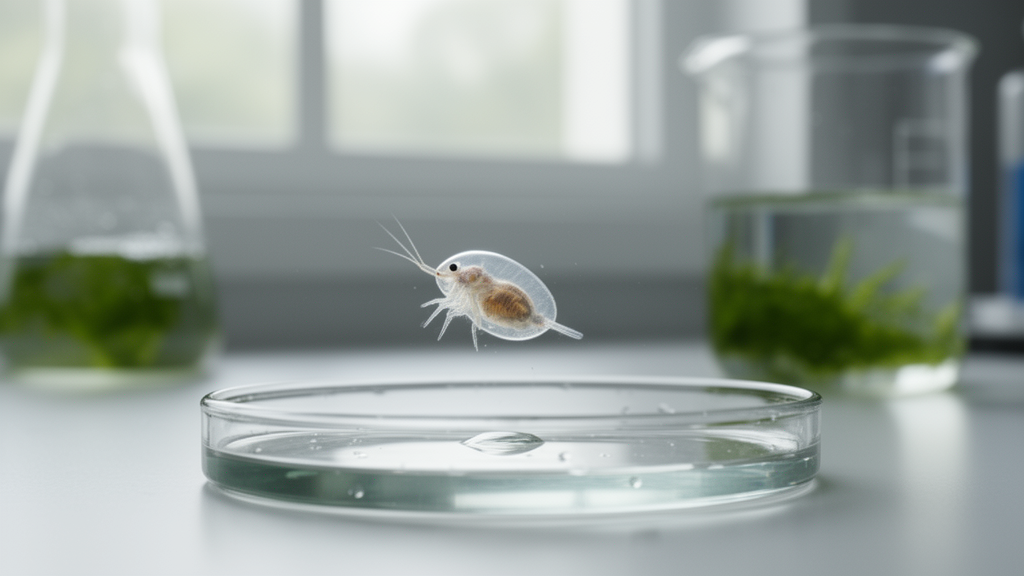
Over-the-counter painkillers that millions of people swallow every day are quietly reshaping the chemistry of the world’s freshwaters, and new research suggests the consequences for aquatic life may be far more severe than regulators have assumed. In a controlled laboratory study published in the journal BioRisk, scientists exposed two closely related freshwater crustaceans to paracetamol, ibuprofen, ketoprofen and a mixture of the latter two drugs, and found that even modest concentrations could kill nearly every animal tested within days. The findings add weight to a growing body of evidence that pharmaceutical pollution, long treated as a low-priority environmental risk, deserves far closer scrutiny.
The study focused on two amphipod species from the family Gammaridae: the native Gammarus pulex, a widespread European freshwater shrimp long used as a sentinel of water quality, and Gammarus tigrinus, an invasive North American species that has colonized many degraded European waterways. Specimens of the native species were collected from a calcium-rich spring complex in southern Poland, while the invasive animals came from the Kłodnica River, a heavily industrialized tributary of the Oder that has been altered by more than a century of coal mining and receives substantial domestic and industrial wastewater. Water chemistry at the two sites differed dramatically: conductivity in the river was nearly ten times higher than at the spring, and salinity, ammonium and phosphate levels were all markedly elevated, reflecting the intense anthropogenic pressure on that catchment.
In the laboratory, animals were acclimated in water from their own collection sites and then exposed to five concentrations of each drug, ranging from 0.5 to 5,000 milligrams per liter, alongside drug-free controls. Survival and mobility were assessed at 24, 48, 72 and 96 hours, with animals failing to respond to a gentle touch of a laboratory needle counted as dead. The researchers also calculated standard acute toxicity benchmarks, the LC50, the concentration lethal to half the test population, and the EC50, the concentration that immobilizes half the animals, using probit analysis.
The results defied simple expectations. Paracetamol emerged as the most dangerous of the compounds tested: at the highest concentration, every animal of both species died within 24 hours, and by the end of the 96-hour experiment, the drug had killed 100 percent of individuals at all tested concentrations, while control animals survived. Mortality followed a striking temporal pattern across all treatments, with two distinct peaks, one after 24 hours, likely reflecting acute shock from sudden pollutant exposure, and another after 96 hours, suggesting cumulative or delayed toxic effects. Ibuprofen and ketoprofen also killed all animals rapidly at the highest doses, but at intermediate concentrations their effects were more variable and clearly species-dependent, with the native G. pulex generally succumbing earlier than its invasive relative.
Perhaps the most surprising result concerns the invasive species itself. The researchers had hypothesized that G. tigrinus, which thrives in the polluted Kłodnica River and is known for broad ecological tolerance, would consistently outperform the native species under pharmaceutical stress. That prediction was only partially borne out. The invasive amphipod did show delayed mortality and greater survival at some intermediate concentrations, particularly under ibuprofen exposure and in the drug mixture, but this advantage eroded with time. Prolonged exposure and higher concentrations erased most differences between the species, indicating that invasive status alone does not confer general resistance to pharmaceutical contaminants.
The drug mixture produced equally instructive results. Rather than showing a simple additive toxicity, the 1:1 combination of ibuprofen and ketoprofen generated complex, species-specific and time-dependent responses, with the invasive species surviving better than the native one at a few intermediate concentrations. This nonlinearity echoes earlier findings on other drug cocktails: mixtures of nonsteroidal anti-inflammatory drugs have been shown to be far more toxic to the water flea Daphnia magna than any single component, and combinations of antidepressants and anti-inflammatories have increased mortality in fish. Because pharmaceuticals almost never occur alone in natural waters, the authors argue that single-compound risk assessments may substantially underestimate real-world hazards.
Immobilization data added another layer of complexity. Paralysis appeared mainly after 48 hours of exposure and did not reliably precede death; many immobilized animals either recovered temporarily or were later classified as dead. This suggests that immobilization is a transient stress response rather than a stable predictor of lethality, complicating the interpretation of standard ecotoxicological endpoints. The calculated LC50 and EC50 values themselves showed wide confidence intervals and inconsistent trends, and in several cases toxicity thresholds could not be reliably determined at all, underscoring the difficulty of characterizing pharmaceutical toxicity with conventional acute-testing frameworks.
The study also highlights a regulatory gap. Under the European Union’s Water Framework Directive, only a limited number of pharmaceuticals are routinely monitored in surface waters, and the European Commission has acknowledged that monitoring focuses narrowly on hot spots such as hospital discharges. Yet the environmental ubiquity of these compounds is well documented: surveys across 20 countries detected ibuprofen in more than 90 percent of analyzed samples, and concentrations of ibuprofen and ketoprofen in rivers near Madrid have reached several micrograms per liter, levels at which sublethal effects on gammarids have previously been recorded. Because many drugs are chemically stable, a large fraction of the active ingredient can be excreted unchanged, and their polarity and lipophilicity allow them to travel widely in water, accumulate in tissues and biomagnify through food chains, potentially reaching human consumers of fish and other aquatic organisms.
The authors caution that their experimental design, which used water from each species’ natural habitat, may have introduced site-specific differences in water chemistry as a confounding factor, and they recommend that future work employ fully standardized conditions to disentangle species-specific sensitivity from environmental effects. Still, they note that G. tigrinus is well adapted to the conditions of the Kłodnica River, where it occurs at high densities, so the observed habitat differences are unlikely to have imposed significant additional stress on that species.
The broader message is stark. Even at low doses, pharmaceuticals can cause serious ecological disturbances and ripple through aquatic trophic chains, and the ready availability of over-the-counter analgesics, combined with the absence of systematic monitoring, leaves freshwater ecosystems exposed to a threat that is heterogeneous, cumulative and poorly captured by current risk assessment. The researchers call for multi-species toxicity testing and realistic exposure scenarios that reflect the mixtures actually found in the environment, arguing that only such approaches can adequately gauge the environmental risks posed by the drugs society consumes so freely.
Subject of Research: Acute toxicity of non-opioid analgesics to native and invasive Gammarus crustaceans
Article Title: Evaluation of non-opioid analgesic toxicity and their effects on native and invasive species of crustaceans ( Gammaridae , Gammarus )
Article References: Cieplok, A., Orpych, B., Chrobak, K., Rusinek, K., Czerniawski, R., & Spyra, A. (2026). Evaluation of non-opioid analgesic toxicity and their effects on native and invasive species of crustaceans (Gammaridae, Gammarus). BioRisk, 24, 85-102. https://doi.org/10.3897/biorisk.24.176556
Image Credits: AI Generated
DOI: 10.3897/biorisk.24.176556
Keywords: pharmaceutical pollution, ecotoxicology, Gammarus, freshwater ecosystems, invasive species, paracetamol, ibuprofen, ketoprofen, water quality, Evaluation, non-opioid, analgesic
Cite Scienmag News
Patricia Pace. (October 16, 2026). Common Painkillers Prove Lethal to Freshwater Crustaceans, Study Finds. Scienmag. https://scienmag.com/common-painkillers-prove-lethal-to-freshwater-crustaceans-study-finds/
Patricia Pace. "Common Painkillers Prove Lethal to Freshwater Crustaceans, Study Finds." Scienmag, 16 October 2026, https://scienmag.com/common-painkillers-prove-lethal-to-freshwater-crustaceans-study-finds/. Accessed 16 October 2026.
Patricia Pace. "Common Painkillers Prove Lethal to Freshwater Crustaceans, Study Finds." Scienmag. October 16, 2026. https://scienmag.com/common-painkillers-prove-lethal-to-freshwater-crustaceans-study-finds/


