


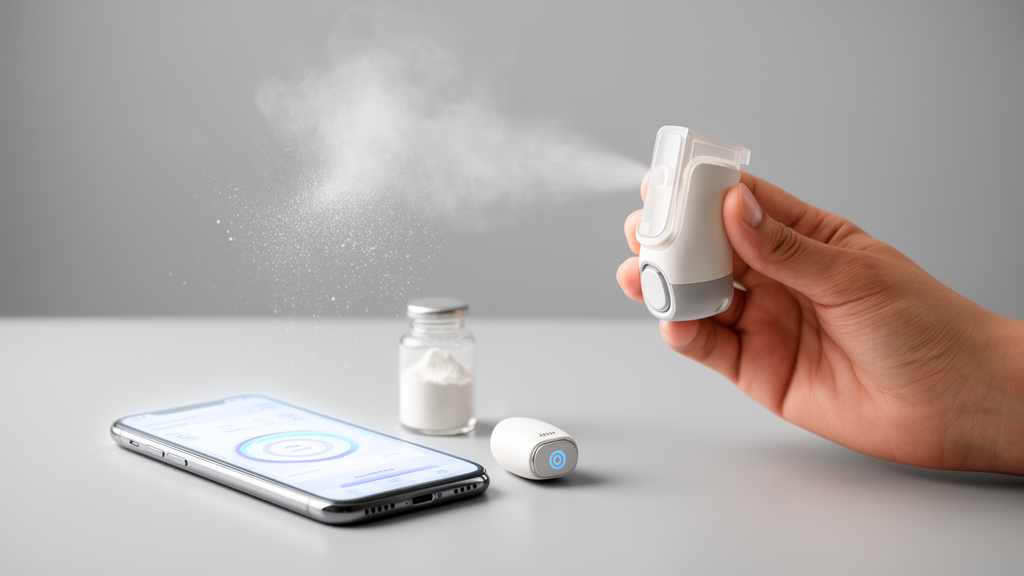
For hundreds of millions of people living with asthma and chronic obstructive pulmonary disease (COPD), the inhaler is the front line of therapy. Yet a striking disconnect persists between the dose loaded into the device and the dose that actually reaches diseased airway tissue. A new review published in Frontiers in Bioengineering and Biotechnology argues that this gap is not a minor formulation problem but a multiscale engineering failure, and it proposes an ambitious fix: an intelligence-enabled framework in which smart inhalable biomaterials, machine-learning-driven formulation design, lung-on-chip validation, and patient-specific pulmonary modeling are woven into a single closed-loop development pathway.
The review, led by Qi Fan and colleagues from Changchun University of Chinese Medicine and affiliated hospitals in China, begins from a sobering observation. Between device actuation and therapeutic action, an inhaled formulation must be emitted reproducibly, form an appropriate aerosol, traverse the oral cavity and pharynx, enter airways with heterogeneous airflow and obstruction, deposit in the desired region, avoid rapid clearance, cross or interact with mucus, remain chemically intact, and reach the relevant epithelial, immune, stromal, or airway smooth-muscle cells. Failure at any step can substantially diminish the value of an otherwise sophisticated drug or carrier. In asthma, variable bronchoconstriction, mucus plugging, epithelial barrier dysfunction, and airway remodeling coexist in different proportions; in COPD, emphysema, small-airway fibrosis, mucus hypersecretion, oxidative injury, and macrophage dysfunction create similarly heterogeneous delivery conditions. A formulation optimized for an average airway geometry may therefore perform well in one compartment but fail in another.
Central to the review is a deliberately restrictive definition of what makes an inhalable biomaterial smart. The authors argue that a polymeric nanoparticle, lipid nanoparticle, inorganic carrier, biomimetic particle, or extracellular vesicle is not smart merely because of its composition or nanoscale structure. Instead, the term is reserved for carriers that incorporate at least one engineered function that is condition-dependent or context-selective and mechanistically linked to a measurable delivery or therapeutic advantage. Qualifying functions include stimulus-responsive activation or release, programmed transformation of size, charge, or surface exposure, disease-microenvironment-dependent behavior, and demonstrable cell- or compartment-selective interactions. Fixed surface modification alone, such as constitutive PEGylation or the simple addition of a targeting ligand, is not considered sufficient unless it produces a demonstrated context-selective function.
The material platforms surveyed span a remarkable range of engineering strategies. Dense coatings of low-molecular-weight polyethylene glycol can reduce adhesive interactions with mucins, allowing 100 to 200 nanometer particles to diffuse more rapidly through human respiratory mucus, while selected zwitterionic chemistries may provide similarly mucus-inert surfaces. Responsive materials exploit the distinct chemical environments of the inflamed airway: oxidation-sensitive motifs such as thioketals, boronic esters, and thioethers can release cargo under oxidative stress, whereas disulfide bonds undergo thiol-disulfide exchange in the glutathione-rich cytosol of target cells. A recent inhalable nanotherapeutic for COPD, for example, used glutathione-responsive disassembly to support macrophage reprogramming, illustrating the value of distinguishing extracellular and intracellular redox compartments rather than treating reactive oxygen species responsiveness as a single phenomenon.
Perhaps the most technically intricate platforms are nano-in-micro systems, which couple nanoparticle-level biological function with micron-scale aerosol engineering. Nanoparticles are embedded in respirable microparticle matrices produced by spray drying or related particle-engineering processes, then released after deposition. The excipients play distinct, non-interchangeable roles: leucine functions primarily as a surface-active dispersibility enhancer that crystallizes at the particle surface during drying, reducing interparticle cohesion; mannitol acts as a water-soluble crystalline bulking agent providing structural support; and alginate serves as a hydrophilic polymeric matrix former whose gel-forming and mucoadhesive properties can improve payload entrapment and sustain release. The architecture creates at least three interdependent optimization levels: dry-powder particle properties, aerosol behavior, and post-deposition nanoparticle function. A powder may show excellent aerosol performance but release aggregated nanoparticles with poor mucus transport, or a nanoparticle with favorable biological properties may be difficult to formulate at therapeutically useful payload while retaining acceptable aerosol performance.
The review is equally candid about the fragmentation that has hampered the field. Material scientists commonly optimize hydrodynamic size, zeta potential, and release in bulk solution; aerosol scientists focus on emitted dose, mass median aerodynamic diameter, and fine particle fraction; cell biologists evaluate inflammatory and barrier responses; computational groups estimate regional flow and deposition. These measurements are valuable but are not consistently connected within an iterative decision framework. As a result, a carrier that appears optimal at the nanoscale may aerosolize poorly, and a favorable animal response observed after intratracheal instillation may not translate to clinically relevant inhalation. The proposed intelligence-enabled framework differs from the conventional workflow primarily in how decisions are organized: development begins with a defined disease-specific delivery bottleneck translated into quantitative engineering specifications, and material, formulation, device, biological, and deposition variables are evaluated as coupled design dimensions.
The authors also draw a careful line between conventional computational tools and genuinely intelligence-enabled workflows. A development process is not considered intelligence-enabled merely because it incorporates statistical design, molecular simulation, or machine learning. The term is reserved for iterative decision-making workflows in which structured data are used to construct or update a decision model, the model prospectively prioritizes candidate formulations or experiments, the selected candidates are evaluated experimentally, and the resulting observations are returned to update the model. Many currently reported studies in inhalable biomaterials represent enabling components or intermediate stages of this continuum rather than fully realized closed-loop systems. Methods such as design of experiments, mechanistic modeling, and uncertainty quantification can support the loop but are not, by themselves, sufficient to qualify a workflow as intelligence-enabled.
Lung-on-chip systems occupy a central position in the proposed validation strategy. Submerged epithelial monocultures are useful for screening but do not reproduce, in an integrated manner, the air-exposed epithelial surface, mucus, mucociliary differentiation, ciliary activity, vascular interface, immune-cell trafficking, and mechanical strain present in the human lung. Directly adding a nanoparticle suspension to culture medium bypasses aerosol generation and alters the biomolecular corona, delivered concentration, sedimentation, and cellular uptake pathway relative to aerosol exposure. Lung-on-chip platforms can incorporate microfluidic flow, tissue-tissue interfaces, cyclic stretch mimicking breathing, and real-time imaging. Recent work has coupled aerosol generation directly to breathing lung-on-chip systems, enabling visualization and quantification of aerosol deposition, nanodrug penetration, and mucociliary clearance under conditions far more representative of clinical inhalation than static cultures can provide.
Patient-specific computational fluid dynamics completes the framework by predicting regional deposition in reconstructed airway geometries derived from computed tomography. Recent studies have validated CFD deposition estimates against single-photon emission computed tomography in the same population, and recent patient-specific analyses in severe asthma showed that airway morphology and mucus burden were associated with regional inhaled corticosteroid deposition. Extrafine particles achieved greater central and peripheral deposition than fine particles but did not completely overcome morphology-associated underdelivery, underscoring that reduced particle size alone cannot compensate for severe or spatially heterogeneous obstruction. The authors are also careful with terminology: a static CT-based deposition map is more accurately described as a personalized in silico model, and the term digital twin should be reserved for longitudinally updated, uncertainty-aware models linked to actionable clinical decisions.
The review concludes with a worked example illustrating how the closed-loop framework could operate in practice for severe type 2-high asthma with persistent mucus plugging. Development would begin by defining mucus plugging as the dominant clinical-engineering bottleneck rather than selecting a carrier a priori. Imaging would characterize plug burden and airway narrowing, while patient-derived sputum would be characterized for solids content, rheology, and particle transport. A mucus-penetrating or sequentially transformable carrier would then be developed with particle size, surface shielding, and transformation kinetics treated as design variables, evaluated after device passage in mucociliary airway-chip systems, and iteratively refined using patient-specific deposition modeling. The central principle is that material composition, aerosol behavior, biological performance, and patient-specific regional exposure are not optimized as independent endpoints but connected through sequential decisions in which the results of one stage directly inform what is tested next. The practical goal, the authors emphasize, is not to maximize complexity but to identify the simplest design that reliably overcomes the dominant delivery barrier and retains its function after aerosolization.
Subject of Research: Intelligence-enabled smart inhalable biomaterials for asthma and COPD integrating responsive carriers, lung-on-chip validation, and patient-specific pulmonary modeling
Article Title: Intelligence-enabled smart inhalable biomaterials for chronic inflammatory airway diseases: integrating responsive carrier engineering, lung-on-chip validation, and patient-specific pulmonary modeling
Article References: Intelligence-enabled smart inhalable biomaterials for chronic inflammatory airway diseases: integrating responsive carrier engineering, lung-on-chip validation, and patient-specific pulmonary modeling. (n.d.). https://doi.org/10.3389/fbioe.2026.1964825
Image Credits: AI Generated
DOI: 10.3389/fbioe.2026.1964825
Keywords: asthma, COPD, inhalable biomaterials, nanoparticles, mucus penetration, lung-on-chip, machine learning, computational fluid dynamics, digital twin, pulmonary drug delivery, responsive carriers, nano-in-micro systems
Cite Scienmag News
Matthew Wilson. (October 16, 2026). Smart Inhalable Biomaterials and AI Could Finally Fix Inhaled Drug Delivery for Asthma and COPD. Scienmag. https://scienmag.com/smart-inhalable-biomaterials-and-ai-could-finally-fix-inhaled-drug-delivery-for-asthma-and-copd/
Matthew Wilson. "Smart Inhalable Biomaterials and AI Could Finally Fix Inhaled Drug Delivery for Asthma and COPD." Scienmag, 16 October 2026, https://scienmag.com/smart-inhalable-biomaterials-and-ai-could-finally-fix-inhaled-drug-delivery-for-asthma-and-copd/. Accessed 16 October 2026.
Matthew Wilson. "Smart Inhalable Biomaterials and AI Could Finally Fix Inhaled Drug Delivery for Asthma and COPD." Scienmag. October 16, 2026. https://scienmag.com/smart-inhalable-biomaterials-and-ai-could-finally-fix-inhaled-drug-delivery-for-asthma-and-copd/


