


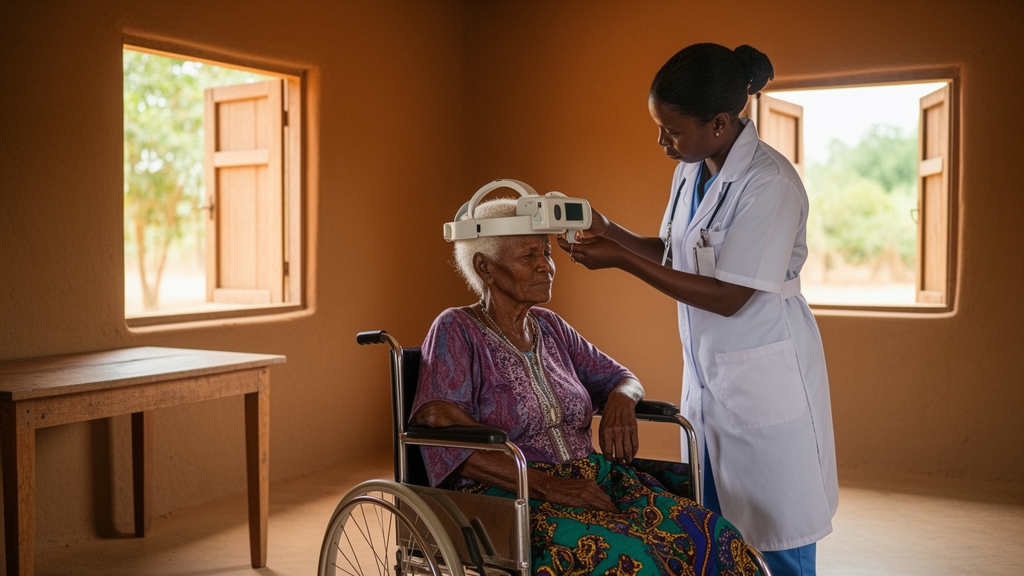
There is a quiet paradox at the heart of modern aging neuroscience. The people who carry the heaviest burden of cognitive decline and dementia are, in many cases, the very people about whom science knows the least. Most of the world’s older adults, including a growing share of those living with dementia, reside in low- and middle-income countries, yet the evidence base for cognitive aging remains overwhelmingly built on data from high-income settings. By 2050, nearly 80 percent of the world’s older adults are projected to live in low- and middle-income countries, a demographic shift that will make this imbalance increasingly consequential. A new editorial published in Frontiers in Human Neuroscience confronts this paradox head-on, arguing that older adults living under conditions of social vulnerability, whether shaped by poverty, racial discrimination, geographic isolation, migration, political violence, or limited access to education and healthcare, bear a disproportionate share of neurocognitive disorders while remaining peripheral figures in most research agendas.
The editorial introduces a Research Topic titled “Bringing visibility to marginalized populations: neuroscience of aging in older adults facing social vulnerability,” which gathered eleven contributions from researchers working across multiple countries and disciplinary traditions. The unifying ambition is deceptively simple: study aging where it is most urgent, not only where it is most convenient. Taken together, the collected studies sketch a map of how social disadvantage becomes biologically embedded in the aging brain, and they expose uncomfortable gaps in the tools scientists use to measure cognitive health in populations that were never part of the original validation samples.
Perhaps the clearest thread running through the volume is the weight of structural and socioeconomic inequality on cognitive aging. Across studies of Black and Brown Brazilians and older Latin American migrants, socioeconomic disadvantage and limited educational opportunity were associated with poorer cognitive outcomes and greater dementia risk. One Brazilian cohort produced a finding with striking implications: cognitive decline began almost a decade earlier among Black and Brown adults than among their White peers, and socioeconomic disadvantage, rather than genetic ancestry, better accounted for these disparities in dementia risk. That distinction matters scientifically. It shifts the explanatory burden away from biology-as-destiny narratives and toward the measurable, modifiable conditions in which brains age, from schooling and nutrition to occupational exposures and access to healthcare.
The same body of work points toward practical opportunities in resource-limited settings. In one study, literacy and other routinely available health and socioeconomic factors predicted dementia risk, suggesting that low-cost identification of individuals at elevated risk may be feasible even where advanced neuropsychological infrastructure is scarce. This is a crucial direction for global brain health, because the diagnostic instruments and imaging pipelines that dominate high-income research are often unavailable where the dementia burden is rising fastest. If routinely collected variables can flag risk earlier, the gap between where evidence is generated and where it is needed could begin to narrow.
Beyond structural inequality, several contributions examine the lived experience of social adversity and its cognitive consequences. Among conflict-affected adults in Colombia, exposure to violence was associated with poorer executive function, the set of mental processes governing planning, inhibition, and cognitive flexibility, while educational attainment emerged as an important protective factor. Other studies turned to social disconnection in later life. Among older adults in China, social alienation was associated with poorer psychological and cognitive outcomes, while meaningful intergenerational communication appeared as a potential source of protection. The finding resonates with a broader shift in the field, which increasingly treats social connection not as a soft correlate of well-being but as a variable with measurable neural and cognitive consequences.
One of the more intriguing signals in the volume concerns language. Loneliness and social isolation were associated with changes in language functioning, suggesting that linguistic markers, from vocabulary richness to discourse patterns, may offer a promising but understudied window into social disconnection. Because language production draws on distributed cognitive networks and is sensitive to early neurodegenerative change, the possibility that conversational patterns could track the cognitive toll of isolation opens a potential avenue for passive, scalable monitoring in populations where clinic-based assessment is rare.
Running through several contributions is an uncomfortable methodological question: are standard cognitive assessments actually measuring what researchers think they measure in socially vulnerable populations? Tools developed and validated in highly educated samples may perform poorly, or become unusable, in different social and educational contexts. In Brazil, a widely used cognitive screening tool showed poor accuracy among individuals with low educational attainment. In conflict-affected communities in Colombia, the Stroop Test, a classic measure of inhibitory control that requires rapid reading of color words, had to be abandoned because more than half of participants could not complete it due to reading difficulties. When an instrument fails in this way, the resulting data do not simply add noise; they can systematically misclassify impairment, conflating limited schooling with cognitive decline.
The editorial frames this as a problem of data inequity, in which barriers in recruitment, measurement, and analysis can systematically exclude disadvantaged populations and limit the generalizability of research findings. Greater representation alone, the authors argue, is insufficient. Research methods must also be appropriate for the populations they investigate, which means developing and validating assessment tools within diverse social, cultural, and educational contexts rather than exporting instruments designed elsewhere. This reframing has consequences for the entire evidence chain, from who is recruited into cohorts to how scores are interpreted and how algorithms trained on skewed data perform when deployed in new settings.
Vulnerability in later life is not exclusively social; clinical complexity can also compound cognitive risk. Among older surgical patients, cerebral oxygen desaturation was associated with adverse neurocognitive outcomes, although evidence that near-infrared spectroscopy-guided interventions can prevent these complications remains inconclusive. In a Chinese sample of older adults living with HIV and multimorbidity, nearly half screened positive for mild cognitive impairment, with greater comorbidity burden emerging as an important predictor, while education, social support, and self-management were associated with lower risk. These findings underscore that physiological stressors and accumulated health burdens interact with social conditions, layering acute vulnerabilities on top of lifelong disadvantage.
Read together, the eleven contributions reveal multiple, interacting pathways to cognitive vulnerability. Education appears repeatedly, not merely as a demographic variable but as a marker of cognitive reserve and of access to resources that may buffer against adversity. Socioeconomic disadvantage, racial and ethnic inequalities, migration, violence, social disconnection, and clinical complexity can accumulate and interact across the life course, challenging single-risk explanations of cognitive aging and reinforcing the case for multidimensional approaches to risk assessment, prevention, and care. The editorial closes with a forward-looking agenda: a planned second volume aims to expand the representation of populations still peripheral to aging research, strengthen culturally and educationally appropriate measurement, and pursue deeper mechanistic and psychosocial questions about aging under conditions of vulnerability. Longitudinal and methodologically inclusive designs, the authors argue, will be essential to inform interventions and policies that match the scale of the evidence now emerging. For a field whose findings increasingly shape public health planning, the message is clear: the neuroscience of aging will only be as complete as the populations it dares to study.
Subject of Research: Neuroscience of cognitive aging in socially vulnerable and marginalized older adult populations
Article Title: Editorial: Bringing visibility to marginalized populations: neuroscience of aging in older adults facing social vulnerability
Article References: Teixeira-Santos, A. C., Pereira, D. R., Marques, L. M., Leist, A. K., Lu, S., Gonçalves Ferreira, H., & Carvalheiro, J. (2026). Editorial: Bringing visibility to marginalized populations: neuroscience of aging in older adults facing social vulnerability. Frontiers in Human Neuroscience, 20, Article 2007329. https://doi.org/10.3389/fnhum.2026.2007329
Image Credits: AI Generated
DOI: 10.3389/fnhum.2026.2007329
Keywords: cognitive aging, dementia, health inequalities, social vulnerability, marginalized populations, cognitive assessment, global aging, cognitive reserve, social isolation, health equity, brain health, low- and middle-income countries
Cite Scienmag News
Cassandra Pierce. (October 16, 2026). The Invisible Brain: Why Aging Neuroscience Must Reach the World’s Most Vulnerable Older Adults. Scienmag. https://scienmag.com/the-invisible-brain-why-aging-neuroscience-must-reach-the-worlds-most-vulnerable-older-adults/
Cassandra Pierce. "The Invisible Brain: Why Aging Neuroscience Must Reach the World’s Most Vulnerable Older Adults." Scienmag, 16 October 2026, https://scienmag.com/the-invisible-brain-why-aging-neuroscience-must-reach-the-worlds-most-vulnerable-older-adults/. Accessed 16 October 2026.
Cassandra Pierce. "The Invisible Brain: Why Aging Neuroscience Must Reach the World’s Most Vulnerable Older Adults." Scienmag. October 16, 2026. https://scienmag.com/the-invisible-brain-why-aging-neuroscience-must-reach-the-worlds-most-vulnerable-older-adults/


