


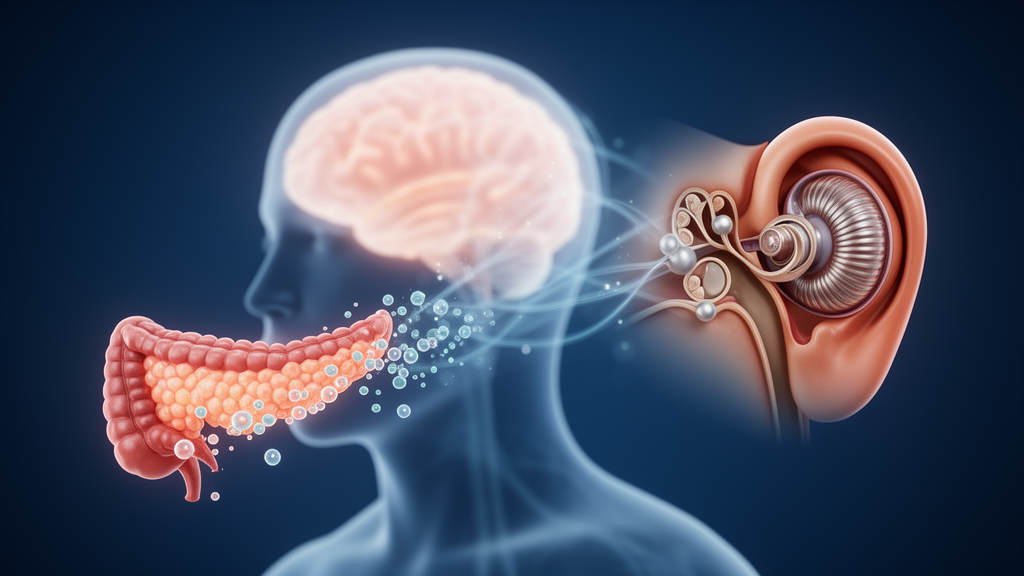
When clinicians tally up an older patient’s health problems, they usually count them: two chronic diseases, three, four. But a new community-based study from Nantong, China, suggests that the specific identity of those diseases may matter more than the tally itself. In a cross-sectional analysis of 2,458 adults aged 60 and older, researchers found that suspected dementia was associated not only with individual chronic conditions such as diabetes mellitus and ear disease, but also with particular combinations of coexisting diseases — most notably the pairing of hypertension with ear disease, which carried a notably higher association than either condition alone.
The study, published in BMC Geriatrics by a team from Nantong University’s School of Nursing and Rehabilitation and the Affiliated Hospital of Nantong University, set out to answer a question that has grown increasingly urgent as populations age: does multimorbidity — the coexistence of multiple chronic diseases — add information about dementia risk beyond what any single diagnosis provides? The researchers screened participants using the Revised Hasegawa Dementia Scale, a widely used cognitive assessment tool, and classified suspected dementia based on those scores. Eight chronic diseases were evaluated from participants’ medical histories, and the team then modeled both individual diseases and selected two- and three-disease combinations using logistic regression.
The headline numbers are striking. Among the 2,458 participants, 559 — or 22.7 percent — had suspected dementia. Multimorbidity was more common in that group: 38.8 percent of participants with suspected dementia had two or more chronic diseases, compared with 31.6 percent of those without suspected dementia. The gap widened further at higher disease counts, with three or more diseases present in 15.6 percent of the suspected-dementia group versus 9.7 percent of the rest. While such cross-sectional figures cannot establish that the diseases cause cognitive decline, they paint a consistent picture in which the burden of coexisting conditions tracks closely with cognitive impairment in older adults.
After full statistical adjustment for confounding factors, two individual diseases stood out. Diabetes mellitus was associated with higher odds of suspected dementia, with an odds ratio of 1.33 and a 95 percent confidence interval of 1.03 to 1.70 — a modest but statistically reliable elevation. Ear disease showed an even stronger association, with an odds ratio of 1.57 (95 percent confidence interval 1.06 to 2.33). The diabetes finding aligns with a substantial body of research linking impaired glucose metabolism, insulin resistance, and microvascular damage to cognitive decline. The ear disease association is more intriguing and fits into a growing literature connecting hearing loss and auditory disorders with dementia risk, possibly through social isolation, cognitive load from sensory deprivation, or shared underlying vascular and neurodegenerative processes.
The study’s most distinctive contribution, however, lies in its treatment of disease combinations rather than isolated diagnoses. Among pairwise combinations, the coexistence of hypertension and ear disease was associated with higher odds of suspected dementia, with an odds ratio of 1.83 (95 percent confidence interval 1.09 to 3.10). This suggests that the joint presence of a vascular condition and a sensory disorder may mark a risk profile that neither condition fully captures on its own. The researchers went further, applying Firth penalized logistic regression when sparse data or statistical separation occurred — a technique that stabilizes estimates when certain disease combinations are rare in the sample — and secondary analyses extended the approach to three-disease combinations as well.
Beyond simple co-occurrence, the team formally explored disease interactions on two statistical scales. Additive interaction was assessed using the relative excess risk due to interaction, the attributable proportion due to interaction, and the synergy index, while multiplicative interaction was tested within the regression models themselves. These are complementary questions: additive interaction asks whether the combined effect of two diseases exceeds the sum of their individual effects in absolute terms, which matters for public health burden, whereas multiplicative interaction asks whether their joint effect exceeds what would be predicted by multiplying their separate effects, which matters for biological mechanism. The secondary analyses characterized associations involving these interactions, adding a layer of nuance that most multimorbidity studies omit.
The study also broke new ground by examining how neuropsychiatric symptoms vary among people with suspected dementia. Using the Neuropsychiatric Inventory Questionnaire, the researchers performed a latent class analysis — a statistical method that identifies unobserved subgroups within a population based on patterns of observed characteristics. This analysis identified distinct symptom profiles among participants with suspected dementia, and notably, broader somatic disease associations were observed in two of these classes: one characterized by sleep and appetite disturbance, and another marked by agitation and irritability. In other words, the relationship between physical disease burden and dementia may not be uniform across symptom presentations; people whose dementia manifests as disrupted sleep, poor appetite, or agitated behavior showed wider links to coexisting chronic conditions than other symptom groups.
Methodologically, the team took several steps to strengthen a cross-sectional design that is inherently vulnerable to bias. Missing covariate data were handled using multiple imputation, a standard approach that fills in gaps by drawing from the observed data distribution while preserving uncertainty. The study was registered with the Chinese Clinical Trial Registry under identifier ChiCTR1900020923, and the protocol was reviewed and approved by the Ethics Committee of the Affiliated Hospital of Nantong University, with all participants providing signed informed consent in accordance with the Declaration of Helsinki.
For clinicians and researchers, the implications point toward a shift in how dementia risk is conceptualized in aging populations. Rather than treating chronic diseases as independent, additive risk factors, the findings suggest that the composition of a patient’s disease portfolio — which conditions coexist, and in what pairings — may carry information that disease counts alone do not. A patient with hypertension and ear disease may warrant closer cognitive monitoring than disease counts would suggest, and neuropsychiatric symptom profiles may help identify subgroups in which somatic disease burden plays a larger role. This resonates with a broader movement in geriatric medicine toward treating multimorbidity as a system-level phenomenon rather than a simple accumulation of diagnoses.
The authors are careful about the limits of their evidence. As a cross-sectional study, it captures a single moment in time and cannot determine whether the chronic diseases preceded the cognitive decline, followed it, or share common upstream causes. The analysis covered eight chronic diseases drawn from medical history, and the researchers themselves note that larger prospective studies incorporating a broader range of chronic conditions are needed to confirm the findings. Still, in a field where most risk models treat conditions one at a time, the demonstration that specific disease combinations — and even symptom-specific subgroups of dementia — carry distinct statistical signals offers a concrete, testable direction for future research into how the body’s accumulating conditions shape the aging brain.
Subject of Research: Associations between chronic disease combinations and suspected dementia in older adults
Article Title: Association between selected disease combinations and suspected dementia: a community-based cross-sectional study
Article References: Association between selected disease combinations and suspected dementia: a community-based cross-sectional study. (n.d.). https://doi.org/10.1186/s12877-026-08437-z
Image Credits: AI Generated
DOI: 10.1186/s12877-026-08437-z
Keywords: dementia, multimorbidity, chronic disease, diabetes mellitus, hypertension, ear disease, older adults, cross-sectional study, latent class analysis, neuropsychiatric symptoms, BMC Geriatrics, Nantong
Cite Scienmag News
Cassandra Pierce. (October 16, 2026). Which Chronic Disease Combinations Raise Dementia Risk? New Study Points to Diabetes and Ear Disease. Scienmag. https://scienmag.com/which-chronic-disease-combinations-raise-dementia-risk-new-study-points-to-diabetes-and-ear-disease/
Cassandra Pierce. "Which Chronic Disease Combinations Raise Dementia Risk? New Study Points to Diabetes and Ear Disease." Scienmag, 16 October 2026, https://scienmag.com/which-chronic-disease-combinations-raise-dementia-risk-new-study-points-to-diabetes-and-ear-disease/. Accessed 16 October 2026.
Cassandra Pierce. "Which Chronic Disease Combinations Raise Dementia Risk? New Study Points to Diabetes and Ear Disease." Scienmag. October 16, 2026. https://scienmag.com/which-chronic-disease-combinations-raise-dementia-risk-new-study-points-to-diabetes-and-ear-disease/


