


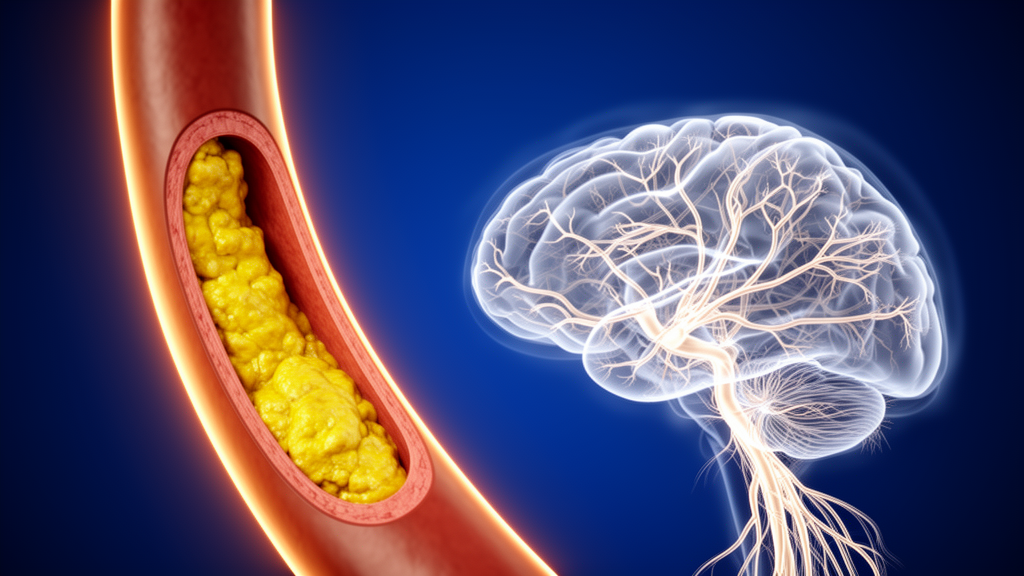
Carotid arteries carry blood to the brain, and when fatty plaques build up along their walls, the danger is not always obvious. Many people live with these deposits without ever experiencing a stroke or a transient attack, and standard clinical practice often treats all such silent plaques as roughly equivalent. A new study published in BMC Medical Imaging challenges that assumption. Using advanced brain imaging and blood tests, researchers report that the microscopic wiring of the brain’s white matter shows measurable damage in people whose carotid plaques have certain vulnerable features, while people with stable plaques appear largely spared. The work, led by Dongcui Wang and Yueshuang Leng of Xiangya Hospital at Central South University in Changsha, China, together with colleagues, suggests that plaque character, not merely plaque presence, may determine whether the brain quietly suffers before any symptom appears.
The research team enrolled 82 participants in a cross-sectional design: 44 people carrying carotid vulnerable plaques, 15 people with carotid stable plaques, and 23 healthy controls. Vulnerable plaques are those with features such as lipid-rich cores, thin or ruptured fibrous caps, or intraplaque hemorrhage, characteristics that mark them as more likely to rupture and trigger embolic events. Stable plaques, by contrast, tend to be fibrotic and calcified, and are considered less likely to shed debris into the bloodstream. All participants underwent brain magnetic resonance imaging with a multi-shell diffusion protocol, a technique that sensitizes the MRI signal to the random motion of water molecules within tissue. Because water diffuses more freely along the length of nerve fibers than across them, the pattern of diffusion reveals the integrity of the brain’s underlying cabling.
The study employed two complementary diffusion modeling approaches. Diffusion tensor imaging, or DTI, the older and more widely used method, characterizes diffusion with a simple ellipsoid model and yields metrics such as fractional anisotropy, mean diffusivity, axial diffusivity, and radial diffusivity. Diffusion kurtosis imaging, or DKI, extends this framework by measuring the degree to which water diffusion deviates from the ideal Gaussian behavior assumed by DTI. This non-Gaussian component, quantified as kurtosis, is thought to be sensitive to tissue complexity at the cellular level, including restrictions imposed by cell membranes, myelin sheaths, and organelles. By combining both modalities in a single multi-shell acquisition, the researchers aimed to strengthen confidence that the abnormalities they detected reflected genuine microstructural injury rather than artifacts of a single model.
To analyze the imaging data, the team applied tract-based spatial statistics, a widely used whole-brain approach that aligns all participants’ images to a common template and projects diffusion metrics onto the centerlines of major white matter tracts. This voxel-wise method allows researchers to detect subtle, spatially extended changes that might escape notice in conventional region-of-interest measurements. The investigators complemented the whole-brain analysis with targeted region-of-interest comparisons across a battery of named tracts, including the corona radiata, the corpus callosum, the internal capsule, the superior longitudinal fasciculus, and the cingulum, among others. Blood samples were collected to measure two systemic inflammatory markers: high-sensitivity C-reactive protein, an acute-phase protein produced by the liver, and interleukin-6, a signaling molecule secreted by immune cells that drives much of the acute-phase response.
The results were striking in their asymmetry. Compared with healthy controls, participants with vulnerable plaques showed widespread white matter microstructural damage, concentrated in the posterior corona radiata and the superior longitudinal fasciculus. The damage pattern was internally consistent: mean diffusivity, axial diffusivity, and radial diffusivity were all elevated, indicating increased freedom of water movement and therefore disruption of the barriers that normally constrain it, while mean kurtosis and axial kurtosis were reduced, consistent with a loss of cellular complexity and architectural order. Radial diffusivity, in particular, is often interpreted as a marker of myelin injury, whereas axial diffusivity changes have been linked to axonal damage. The co-occurrence of these signatures suggests that the vulnerable plaque group carried genuine structural injury in the long fiber pathways that connect distant brain regions.
Participants with stable plaques told a very different story. When the researchers compared the stable plaque group with healthy controls, only a handful of regions showed statistically significant differences in diffusion metrics, and the overall burden of abnormality was far lower than in the vulnerable plaque group. This dissociation is the central finding of the study: two groups of people, both carrying carotid plaques that had never caused symptoms, showed profoundly different brain microstructure depending on the biological character of the plaque itself. The finding implies that the vulnerable plaque is not merely a stroke risk waiting to happen but may be an active source of ongoing, subclinical brain injury.
The inflammatory connection sharpened the picture further. In the vulnerable plaque group, the degree of white matter damage correlated significantly with blood levels of both high-sensitivity C-reactive protein and interleukin-6. Participants with higher systemic inflammatory burden tended to show more severe microstructural abnormalities in the affected tracts. No such correlation emerged in the stable plaque group or in healthy controls, suggesting that the link between inflammation and brain injury is specific to the vulnerable plaque state rather than a general feature of atherosclerosis. The researchers propose a model in which biologically active plaques sustain a state of systemic inflammation, and that inflammation, through mechanisms that may include endothelial dysfunction, microvascular injury, and direct inflammatory signaling across the blood-brain barrier, contributes to the degradation of white matter integrity.
The technical strength of the study lies in its dual-modality design. DTI metrics alone can be confounded by factors such as crossing fibers, partial volume effects, and free water contamination, which can mimic or mask true microstructural change. Kurtosis metrics, being sensitive to non-Gaussian diffusion, provide an independent check on the tensor findings. The fact that both approaches converged on the same tracts, with diffusivity measures rising and kurtosis measures falling in the posterior corona radiata and superior longitudinal fasciculus, strengthens the argument that the observed changes reflect real tissue injury. The posterior corona radiata carries fibers connecting the thalamus and brainstem to the parietal and occipital cortices, while the superior longitudinal fasciculus is one of the brain’s major long association pathways, linking frontal, parietal, and temporal regions. Damage to these tracts has been associated with cognitive slowing, executive dysfunction, and processing speed deficits in other cerebrovascular populations.
The study has limitations inherent to its cross-sectional design. With 44 vulnerable plaque participants, 15 stable plaque participants, and 23 controls, the sample is modest, and the imbalance between plaque subgroups may limit statistical power for detecting subtler differences in the stable group. Cross-sectional data cannot establish whether the white matter changes precede, accompany, or follow the development of plaque vulnerability, nor can they confirm that inflammation is a cause rather than a correlate of the injury. Longitudinal follow-up will be needed to determine whether people with vulnerable plaques and elevated inflammatory markers progress to overt cognitive decline or stroke at higher rates, and whether reducing inflammation, through statins, anti-inflammatory agents, or lifestyle interventions, can halt or reverse the microstructural damage.
Nevertheless, the findings carry practical implications. Carotid ultrasound is already a routine part of stroke risk assessment, and plaque morphology can be characterized noninvasively. If the results are replicated in larger and more diverse cohorts, the combination of plaque vulnerability assessment with diffusion kurtosis imaging and inflammatory biomarker measurement could offer clinicians a way to identify, among the many people with silent carotid disease, the subset whose brains are already being affected. That would represent a shift from treating asymptomatic carotid atherosclerosis as a single condition toward recognizing it as a spectrum in which plaque biology, systemic inflammation, and brain integrity are intertwined. For now, the study stands as an early but compelling piece of evidence that the brain keeps score of what the carotid artery is doing, even when the patient feels nothing at all.
Subject of Research: White matter microstructural changes associated with vulnerable versus stable asymptomatic carotid plaques and their relationship to inflammatory biomarkers
Article Title: Plaque vulnerability-specific white matter microstructural integrity loss in asymptomatic carotid atherosclerosis and its link to inflammatory biomarkers: a dual-modality DTI/DKI study
Article References: Wang, D., Leng, Y., Liu, W. V., Zhang, Y., Liao, W., & Yang, S. (2026). Plaque vulnerability-specific white matter microstructural integrity loss in asymptomatic carotid atherosclerosis and its link to inflammatory biomarkers: a dual-modality DTI/DKI study. BMC Medical Imaging. https://doi.org/10.1186/s12880-026-02939-3
Image Credits: AI Generated
DOI: 10.1186/s12880-026-02939-3
Keywords: carotid atherosclerosis, vulnerable plaque, white matter, diffusion tensor imaging, diffusion kurtosis imaging, inflammation, C-reactive protein, interleukin-6, stroke risk, brain imaging, microstructural integrity, cerebrovascular disease
Cite Scienmag News
Cassandra Pierce. (October 16, 2026). Vulnerable Carotid Plaques Quietly Damage the Brain’s White Matter, Study Finds. Scienmag. https://scienmag.com/vulnerable-carotid-plaques-quietly-damage-the-brains-white-matter-study-finds/
Cassandra Pierce. "Vulnerable Carotid Plaques Quietly Damage the Brain’s White Matter, Study Finds." Scienmag, 16 October 2026, https://scienmag.com/vulnerable-carotid-plaques-quietly-damage-the-brains-white-matter-study-finds/. Accessed 16 October 2026.
Cassandra Pierce. "Vulnerable Carotid Plaques Quietly Damage the Brain’s White Matter, Study Finds." Scienmag. October 16, 2026. https://scienmag.com/vulnerable-carotid-plaques-quietly-damage-the-brains-white-matter-study-finds/


