


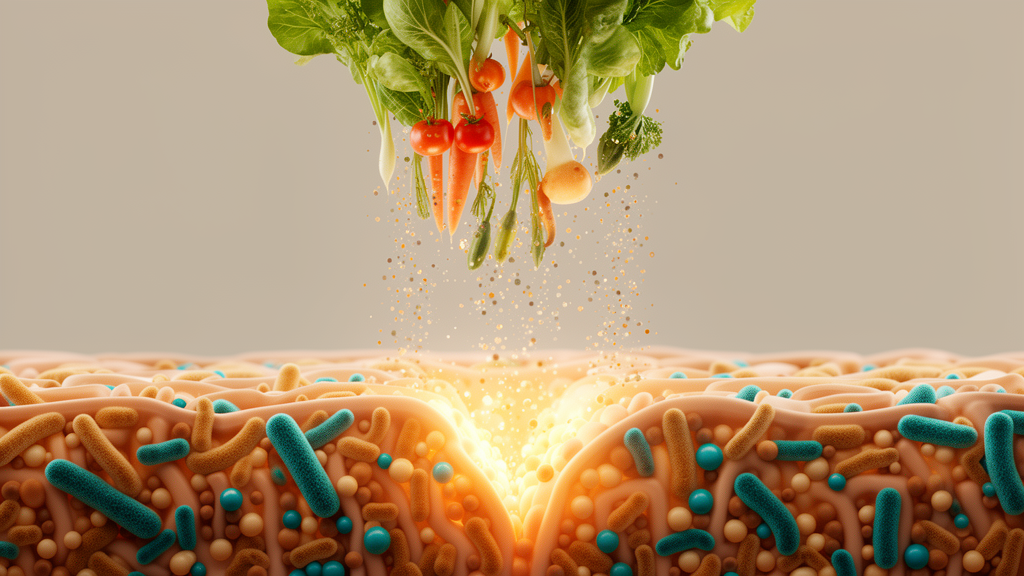
Colorectal cancer remains one of the most frequently diagnosed malignancies worldwide, and a growing body of evidence points to the trillions of microbes lining the human gut as active participants in how the disease takes hold and progresses. Now, a systematic review published in Frontiers in Nutrition has taken a close look at a question that has long been underexplored: what actually happens to the gut microbiome when people at elevated risk for colorectal cancer change their diet? The answer, drawn from a painstaking screen of more than 5,500 research records, is both encouraging and sobering. Dietary interventions do appear capable of nudging the microbial ecosystem in directions that could theoretically lower cancer risk, but the evidence base is startlingly thin, with only seven randomized controlled trials qualifying for the final analysis.
The review, conducted by researchers at the University of Missouri and registered prospectively with PROSPERO, set out to fill a specific gap. Previous syntheses had examined links between diet and colorectal cancer risk in general populations, or associations between microbial profiles and cancer, but few had asked how deliberate dietary changes reshape the gut microbiota in people who already carry elevated risk, whether through a history of adenomatous polyps, prior colorectal cancer, or family history. This distinction matters because individuals at high risk may already harbor microbial dysbiosis, mucosal alterations, and inflammatory changes associated with early carcinogenesis, meaning their microbiomes could respond to food very differently than those of healthy volunteers.
The search strategy was rigorous. Drawing on PubMed, Scopus, and Web of Science, supplemented by manual searches of systematic reviews, meta-analyses, and reference lists, the team identified 5,558 records. After a four-stage screening process that excluded everything from animal and in vitro studies to trials where diet could not be isolated from exercise, drugs, probiotics, or surgery, just seven studies survived. These trials spanned a remarkable range of dietary exposures: ginger extract capsules, barley-derived beta-glucan enriched bread, rice bran, whole navy beans and navy bean powder, a healthy eating pattern, a Mediterranean-style diet, and a high-fiber, high-fruit, high-vegetable, low-fat regimen. Durations ranged from four weeks to a striking 208 weeks, and participants included adenoma patients, polypectomized individuals, cancer survivors more than four months past treatment, and people flagged as high risk by clinical screening tools.
One of the most striking findings concerns microbial diversity, often touted as a hallmark of a healthy gut. Effects on diversity metrics were minimal across the board. Increases in diversity indices such as the inverse Simpson index and the Chao index appeared only with navy bean interventions and one rice bran trial, while a general healthy eating pattern produced a modest shift in community dissimilarity without changes in specific taxa. Ginger extract, the Mediterranean diet, and the long-running high-fiber intervention showed no significant diversity changes at all. No consistent pattern emerged by intervention type, duration, or the particular diversity metric used, leading the authors to suggest that diversity may simply be less responsive to dietary manipulation in this high-risk population than in healthy ones.
Where diet did leave clearer fingerprints was at the genus level. Navy bean consumption over eight weeks enriched Faecalibacterium, Bifidobacterium, and Odoribacter while reducing Collinsella and Ruminococcus torques, and a 24-week rice bran trial boosted Lactobacillus. These genera are frequently discussed in relation to butyrate production, anti-inflammatory activity, and the maintenance of epithelial homeostasis, all processes relevant to keeping the colonic lining healthy. Conversely, ginger extract was associated with reductions in Akkermansia and Ruminococcus, genera that include species involved in mucin degradation, and the high-fiber, high-fruit, high-vegetable diet lowered Porphyromonas and Prevotella over its four-year span. Intriguingly, whole navy beans and navy bean powder produced different microbial outcomes, hinting that food processing and the physical matrix of a food may alter how microbes access its substrates.
The metabolite data add a functional layer to the story. Among the four trials that assessed microbial-derived metabolites, some reported increases in short-chain fatty acids and plant-derived compounds associated with gut barrier support and antioxidant activity, while others documented decreases in secondary bile acids, p-cresol sulfate, and branched-chain bacterial fatty acids, all of which have been linked to tumor-promoting pathways. Rice bran, for example, raised stool acetic and propionic acids while lowering glycodeoxycholate and p-cresol sulfate. Although most trials did not measure direct clinical endpoints such as adenoma recurrence, the direction of these metabolite shifts is consistent with suppression of epithelial proliferation, inflammatory signaling, and tumor-favorable metabolic environments, lending biological plausibility to the idea that diet can modify CRC risk through the microbiome.
The mechanistic backdrop is well established. Dysbiosis contributes to chronic inflammation, genotoxic metabolite production, and immune dysregulation, and high-fat diets can stimulate microbes to produce carcinogenic secondary bile acids. In contrast, short-chain fatty acids generated from fiber fermentation exert protective effects, partly by inhibiting histone deacetylase activity and supporting tumor-suppression pathways. Metagenomic studies have identified globally consistent CRC-associated microbes, including Fusobacterium nucleatum and Peptostreptococcus stomatis, along with CRC-enriched metabolites such as cadaverine and secondary bile acids. The driver-passenger model proposes that certain bacteria initiate cancer by causing DNA damage and are later replaced by others that thrive in the altered tumor microenvironment, fueling inflammation through pathways such as NF-kB and Wnt/beta-catenin.
Yet the review is candid about its limitations. Only three of the included studies achieved the highest evidence grade, and several suffered from high attrition or small sample sizes, with one beta-glucan pilot rated negatively on quality criteria. Statistical practices varied widely, with many studies relying on within-group changes rather than proper group-by-time interactions, and inconsistent application of false discovery rate corrections. Heterogeneity in sampling, sequencing platforms, and bioinformatic pipelines further complicated comparisons, and because some trials sampled stool while others sampled mucosal tissue, luminal versus mucosal effects could not be disentangled. The scarcity of trials also precluded any quantitative meta-analysis.
Perhaps the most consequential gap involves age. Early-onset colorectal cancer is rising sharply among adults under fifty, with projections suggesting increases of up to 124 percent for those aged 20 to 34 by 2030, yet no age-stratified randomized trials of diet and the microbiome in high-risk individuals exist. The authors argue that future research should employ advanced tools such as shotgun metagenomics, meta-transcriptomics, and metabolomics, examine whole dietary patterns rather than isolated components, and extend into populations whose traditional diets, such as those in Southern Asia or Sub-Saharan Africa, are associated with low CRC risk. Only then, they contend, can microbiome-targeted dietary strategies be tailored to individual risk profiles and truly transform colorectal cancer prevention.
Subject of Research: Effects of dietary interventions on the gut microbiota in individuals at elevated risk for colorectal cancer
Article Title: A systematic review of the effects of diet on the gut microbiota in individuals at elevated risk for colorectal cancer
Article References: Pandey, S., Skidmore, J., & Dhillon, J. (2026). A systematic review of the effects of diet on the gut microbiota in individuals at elevated risk for colorectal cancer. Frontiers in Nutrition, 13, Article 1818522. https://doi.org/10.3389/fnut.2026.1818522
Image Credits: AI Generated
DOI: 10.3389/fnut.2026.1818522
Keywords: colorectal cancer, gut microbiome, dietary intervention, systematic review, microbial diversity, short-chain fatty acids, navy beans, rice bran, Mediterranean diet, metabolomics, dysbiosis, cancer prevention
Cite Scienmag News
Morgan Morrow. (October 16, 2026). Diet Reshapes the Gut Microbiome in People at High Risk of Colorectal Cancer, Review Finds. Scienmag. https://scienmag.com/diet-reshapes-the-gut-microbiome-in-people-at-high-risk-of-colorectal-cancer-review-finds/
Morgan Morrow. "Diet Reshapes the Gut Microbiome in People at High Risk of Colorectal Cancer, Review Finds." Scienmag, 16 October 2026, https://scienmag.com/diet-reshapes-the-gut-microbiome-in-people-at-high-risk-of-colorectal-cancer-review-finds/. Accessed 16 October 2026.
Morgan Morrow. "Diet Reshapes the Gut Microbiome in People at High Risk of Colorectal Cancer, Review Finds." Scienmag. October 16, 2026. https://scienmag.com/diet-reshapes-the-gut-microbiome-in-people-at-high-risk-of-colorectal-cancer-review-finds/


