


…
…
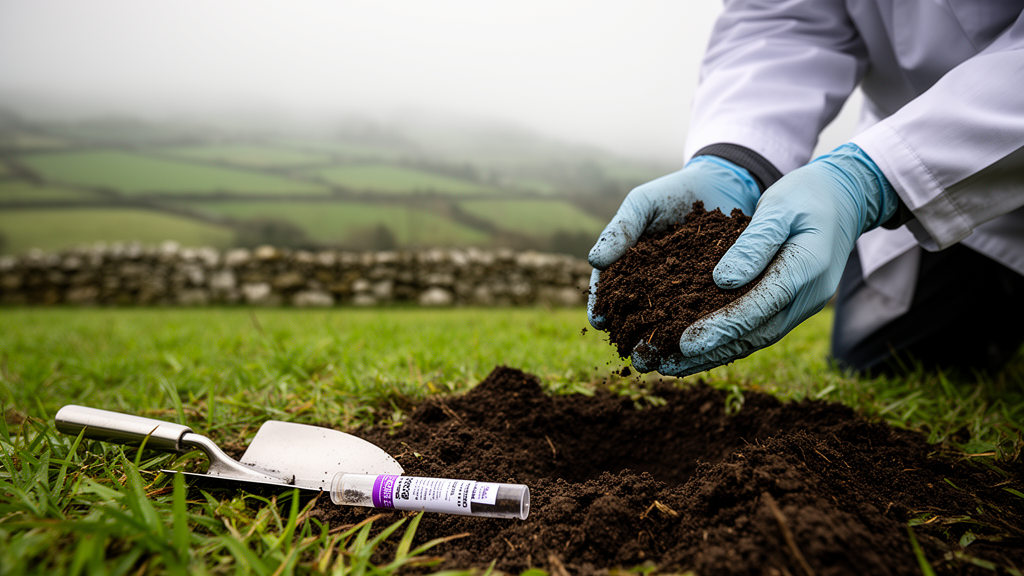
The discovery that agricultural soils in northwestern Spain harbor such a diverse array of Fusarium species carries implications that extend well beyond the boundaries of the sampled fields. Soil has long been recognized as the primary ecological niche for many Fusarium lineages, functioning simultaneously as a survival reservoir during intercropping periods and as the source of inoculum that eventually colonizes flowering spikes, roots, and other susceptible plant tissues. When soil populations contain strains capable of synthesizing multiple mycotoxins, the entire production chain becomes vulnerable from the very beginning of the growing season, long before any visible disease symptoms appear on crops.
The analytical approach adopted in this study deserves particular attention. By isolating individual strains rather than analyzing bulk soil samples, the researchers were able to attribute toxin production to specific organisms and to link chemical profiles directly to genetically identified species. This distinction matters because bulk-soil analyses, which detect mycotoxins mixed together in a single extract, cannot disentangle whether several toxins originate from one versatile organism or from several specialist strains coexisting in the same soil volume. The strain-by-strain strategy, combined with liquid chromatography coupled to high-resolution mass spectrometry, provides a resolution that allows toxicological risk assessment at the level of the individual genotype, which is ultimately the unit of inheritance and adaptation in fungal populations.
The prevalence of beauvericin and enniatins among the isolates is a finding with considerable food safety relevance. These compounds belong to the class of emerging mycotoxins, so named because they are not routinely monitored and remain largely unregulated despite accumulating evidence of their biological activity. Both are cyclic peptides, and both have been shown in laboratory studies to exert cytotoxic effects through mechanisms that include disruption of cellular ion homeostasis and induction of oxidative stress. Because they frequently co-occur with regulated toxins such as deoxynivalenol and zearalenone in contaminated grain, questions about possible additive or synergistic effects on consumers are increasingly raised in the toxicological literature. The observation that numerous species produced these compounds at very high concentrations in vitro, and in some cases in combinations not previously documented for those species, suggests that the true occurrence of emerging mycotoxins in food and feed may be underestimated when monitoring programs focus exclusively on the traditional, regulated targets.
Equally noteworthy is the lower-than-expected frequency of trichothecene and fumonisin detection. Both toxin families are among the most intensively studied fungal metabolites worldwide, and fumonisins in particular are strongly associated with species within the Fusarium fujikuroi species complex, which includes important ear rot pathogens of maize. Their relative scarcity in the Spanish soil isolates may reflect genuine biogeographical patterns, differences in the crop history of the sampled fields, or the influence of in vitro culturing conditions on the expression of toxin biosynthetic gene clusters. It also serves as a reminder that the presence of a species is not synonymous with the presence of its signature toxin: toxin production depends on the integrity and expression of biosynthetic gene clusters, which can vary substantially between strains even within the same species. Some strains are silent producers under the tested conditions, while others express their full toxicological repertoire.
The identification of species such as Fusarium algeriense, Fusarium brachygibbosum, Fusarium clavum, and Fusarium flagelliforme in Spanish agricultural soils expands the known geographic distribution of these fungi. Species complex taxonomy, which groups morphologically similar species into phylogenetically coherent clusters, has transformed Fusarium systematics over the past two decades. DNA sequence-based identification, typically targeting conserved genomic regions, is now essential because morphological characters alone are frequently insufficient to separate closely related species that may differ markedly in pathogenicity and toxigenic capacity. The detection of species not extensively described in the region may indicate recent introductions through seed movement, soil transport, or plant material trade, although it may equally reflect that previous surveys simply lacked the molecular tools to distinguish them from look-alike taxa.
The finding that species identity, rather than soil environmental characteristics, was the only significant factor shaping multi-mycotoxin profiles aligns with a fundamental principle of fungal secondary metabolism: the genetic capacity to produce a given toxin is inherited, while environmental conditions modulate its expression. Soil pH, organic matter content, nitrogen availability, and texture certainly influence the abundance and community composition of soil fungi, as decades of microbial ecology research have demonstrated. However, once a strain is present, the specific set of secondary metabolites it can synthesize is dictated by its genome. This has practical consequences for risk prediction: knowing which species dominate a soil community allows a first-order prediction of the mycotoxins likely to be produced, whereas soil physicochemical measurements, while valuable for understanding pathogen ecology, do not override that genetic determinism.
The sampling design, spanning vineyards, cereal fields, legume plots, horticultural land, fallow ground, and hop yards across multiple provinces, provides a broad cross-section of the agricultural landscape of the region. Vineyards featured prominently in the collection, which is consistent with the intensive cultivation of wine grapes in northwestern Spain and with previous reports associating grapevines with soilborne Fusarium communities. The inclusion of fallow and diverse crop types strengthens the conclusion that mycotoxigenic Fusarium populations are a general feature of the agricultural soils of the area rather than a phenomenon restricted to a single cropping system. This breadth is important for any future attempts to design regional monitoring strategies, since it suggests that the reservoir function of soil cannot be managed through crop-specific interventions alone.
From a management perspective, the study underscores the difficulty of preventing mycotoxin contamination by targeting soil alone. Because the toxin-producing capacity resides in genetically diverse resident populations, approaches such as crop rotation, soil amendments, and biological suppression may reduce inoculum pressure but are unlikely to eliminate it. Integrated strategies therefore need to consider the entire chain from soil to harvest, combining measures that reduce fungal populations in soil with those that limit infection of crops and post-harvest toxin accumulation. The suppressive properties of soils rich in organic matter and harboring diverse microbial communities offer one possible avenue, since such soils can naturally constrain Fusarium activity through competition and antagonism.
Finally, the study contributes to a growing appreciation of soil as a dynamic component of food safety systems rather than merely a growth medium. The mycotoxin potential documented in these 119 strains demonstrates that toxigenic fungi persist in soils even in the absence of symptomatic crops, quietly maintaining a gene pool from which future epidemics may draw. Continued surveillance of soil-borne Fusarium diversity, coupled with multi-mycotoxin analytical methods capable of capturing both regulated and emerging compounds, will be essential for anticipating shifts in contamination risk as agricultural practices and climatic conditions evolve across the Iberian Peninsula and other Mediterranean production regions.
Subject of Research: …
Article Title: Agricultural soils as a potential reservoir of mycotoxigenic Fusarium spp. in northwest Spain
Article References: Agricultural soils as a potential reservoir of mycotoxigenic Fusarium spp. in northwest Spain. (n.d.). https://doi.org/10.3389/ffunb.2026.1946828
Image Credits: AI Generated
DOI: 10.3389/ffunb.2026.1946828
Keywords: Fusarium, mycotoxins, beauvericin, enniatins, soil microbiology, plant pathology, emerging mycotoxins, Spain, LC-HRMS, species complexes, food safety, agricultural soils
Cite Scienmag News
Roger Howard. (October 16, 2026). Soil Hidden as a Reservoir of Toxin-Producing Fusarium Fungi in Northwest Spain. Scienmag. https://scienmag.com/soil-hidden-as-a-reservoir-of-toxin-producing-fusarium-fungi-in-northwest-spain/
Roger Howard. "Soil Hidden as a Reservoir of Toxin-Producing Fusarium Fungi in Northwest Spain." Scienmag, 16 October 2026, https://scienmag.com/soil-hidden-as-a-reservoir-of-toxin-producing-fusarium-fungi-in-northwest-spain/. Accessed 16 October 2026.
Roger Howard. "Soil Hidden as a Reservoir of Toxin-Producing Fusarium Fungi in Northwest Spain." Scienmag. October 16, 2026. https://scienmag.com/soil-hidden-as-a-reservoir-of-toxin-producing-fusarium-fungi-in-northwest-spain/


