

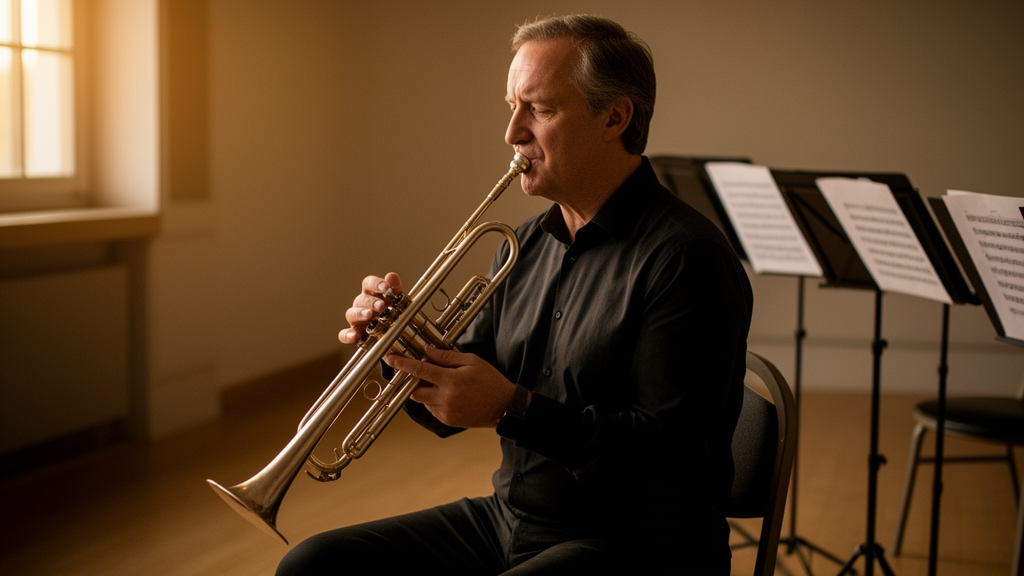
For a professional horn player, the embouchure—the finely tuned coordination of lips, jaw, tongue, and facial muscles that turns breath into music—is not merely a technique. It is the foundation of a career and, often, of identity itself. When that system begins to fail, the consequences can be devastating. A new qualitative study published in the journal Dystonia offers one of the most detailed portraits yet of how brass and woodwind players experience embouchure dystonia and the broader spectrum of embouchure-related dysfunction, revealing a profound disconnect between how musicians understand their symptoms and how the medical system explains them.
The research, led by a team from the University of California Los Angeles, the Glenn Gould School in Toronto, the University of Southern California, and the University of Sydney, used a constructivist grounded theory approach to conduct in-depth, semi-structured interviews with 14 brass and woodwind musicians experiencing embouchure-related dysfunction. The researchers deliberately used the umbrella term Embouchure Syndrome (ES) to capture experiences across a continuum of motor dysfunction, from transient performance breakdown to frank, diagnosed embouchure dystonia (ED), a neurological subtype of task-specific focal dystonia that disrupts the highly trained orofacial motor programs of wind players. The study was guided by Leventhal’s Common-Sense Model, a well-established framework describing how cognitive representations of illness—beliefs about causes, consequences, timelines, and controllability—interact with emotional responses to shape coping strategies and treatment decisions.
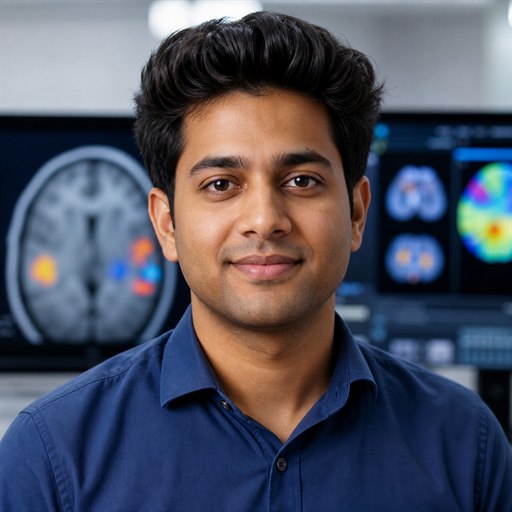
The neurological backdrop is significant. Musician’s task-specific focal dystonia causes excessive and inappropriate muscle activation during specific, extensively trained movements. In embouchure dystonia, this manifests as lip tremor, lip pulling, and forced jaw closure or opening, and sustained benefit from medical treatment remains rare. Yet neuroimaging studies have revealed measurable differences in somatosensory, motor, and premotor cortical structure and function in affected players, and contemporary models of pathogenesis emphasize maladaptive motor cortex plasticity. This suggests the condition should, in principle, be amenable to treatment and recovery, making the question of why musicians struggle to engage with care all the more urgent.
The interviews revealed a striking pattern: musicians rarely settled on a single explanation for their symptoms. Instead, participants oscillated between competing causal models, blending narratives of physical overuse, psychological stress, instrument mechanics, and life circumstances. One trumpet player described a polycausal theory that included isolated practice without ensemble playing, technical problems with the instrument, unknowing compensations, and one of the most stressful periods of his life, without ever pinpointing whether one factor or the sum of all factors was responsible. This dissonance—holding multiple, sometimes contradictory beliefs simultaneously—was especially pronounced during encounters with the healthcare system, where musicians often perceived a fundamental misalignment between their lived experience and the frameworks clinicians used to interpret their symptoms.
Perhaps the most philosophically resonant finding was what the researchers call the mind-body continuum. Participants consistently refused to separate the mental from the physical in understanding their symptoms. As one trumpet player put it, the brain is in the body and is itself a physical thing, so he did not give into a purely physical or purely mental framing. This continuum was not abstract philosophy; it directly determined which providers musicians sought and which treatments felt credible. Some pursued physical therapies first and found that concrete exercises soothed their mental state; others began with psychological exploration, convinced that their traumas and life history underlay the physical symptoms. The direction of relief varied from person to person, but the refusal of a strict dichotomy was constant.
Woven through nearly every account was the theme of tension and relaxation. Musicians described physical tension as the enemy of healing, with desperation itself begetting further tension. Many attributed symptom onset or worsening to identifiable external stressors—marriage, childbirth, the COVID-19 pandemic, house renovations—and developed coping strategies centered on releasing rather than fighting their symptoms. One horn player described learning to appease rather than control her lip tremor, interpreting control as rooted in fear and finding that abandoning the fear of failure restored psychological strength. Others found benefit in adopting a relaxed pace of work, modifying expectations, or taking deliberate time away from the instrument.
Beneath these cognitive and emotional struggles lay a deeper wound: the destabilization of identity. Musical identity had become fused with personal identity over a lifetime of training, and its disruption produced suffering that participants described in terms of mourning. Several recalled their earliest musical development as intuitive and effortless—a natural player self-concept that made the onset of symptoms feel like a fracture of the self rather than a mere technical setback. This loss of identity often prompted desperate, scattershot pursuit of multiple therapies, as musicians clung to the possibility of returning to the only life they wanted. The researchers note that this aligns with established sociological literature on identity disruption in chronic illness, and they highlight traits such as perfectionism and sensitivity, previously reported in musicians with dystonia, as part of the self-system that shapes how ES is experienced.
The study also documented systemic and social barriers that compounded the clinical problem. Participants reported a lack of education about embouchure problems throughout their musical training, with no teacher ever discussing the condition. Workplace stigma persisted into professional life, where musicians were rarely informed of available resources and often needed a formal diagnosis to obtain support. Healthcare access was fragmented: providers were scarce, wait times for neurologists stretched to years, insurance coverage was limited, and some musicians received alarming or dismissive advice—such as being told to accept Botox in the jaw even if it meant never playing the flute again. Within orchestras, a fend-for-yourself culture prevailed, though section-mates of the same instrument often provided crucial informal support, counselling, and coverage of difficult passages. Relationships with conductors, meanwhile, could exacerbate anxiety and stigmatization when performance faltered without explanation.
The translational implications are concrete. The researchers argue that clinicians should elicit each patient’s own theory of causation, compare it with the neurological assessment, and establish a shared explanatory framework before initiating treatment. They recommend explaining how neural dysfunction interacts with stress, attention, and learned motor behavior rather than imposing strict organic-psychological dichotomies, defining success through incremental functional gains rather than cure, explicitly recognizing threats to professional identity, and guiding patients through decisions about disclosure. Drawing parallels with chronic fatigue syndrome and chronic HIV care, they suggest that restoring a sense of control and fostering internal motivational alignment—rather than prescriptive instruction—may be the most critical factors for sustained engagement and recovery.
The authors acknowledge limitations: the small sample, the snowball sampling method that yielded a disproportionate number of brass players, and the constructivist framework’s potential blind spots regarding cultural and interpersonal dimensions of meaning. Yet the study fills a genuine gap, as no prior qualitative research had focused specifically on embouchure syndrome. For a condition that can end careers and that musicians have long suffered in silence, the message is clear: how patients understand their illness is not a footnote to treatment—it may be the very foundation upon which recovery is built.
Subject of Research: Illness representation and coping among musicians with embouchure dystonia syndrome
Article Title: A grounded theory of illness representation among musicians with embouchure dystonia/syndrome
Article References: Zywica, M., Radford, G., Ceasar, R. C., Ackermann, B. J., & Mason, X. L. (2026). A grounded theory of illness representation among musicians with embouchure dystonia/syndrome. Dystonia, 5, Article 15771. https://doi.org/10.3389/dyst.2026.15771
Image Credits: AI Generated
Keywords: embouchure dystonia, musician's dystonia, task-specific focal dystonia, illness representation, grounded theory, common-sense model, qualitative research, brass players, woodwind players, motor cortex plasticity, identity disruption, clinical communication
Cite Scienmag News
Colin Clarke. (October 16, 2026). When the Lips Betray: Musicians With Embouchure Dystonia Reveal How They Make Sense of a Career-Threatening Disorder. Scienmag. https://scienmag.com/when-the-lips-betray-musicians-with-embouchure-dystonia-reveal-how-they-make-sense-of-a-career-threatening-disorder/
Colin Clarke. "When the Lips Betray: Musicians With Embouchure Dystonia Reveal How They Make Sense of a Career-Threatening Disorder." Scienmag, 16 October 2026, https://scienmag.com/when-the-lips-betray-musicians-with-embouchure-dystonia-reveal-how-they-make-sense-of-a-career-threatening-disorder/. Accessed 16 October 2026.
Colin Clarke. "When the Lips Betray: Musicians With Embouchure Dystonia Reveal How They Make Sense of a Career-Threatening Disorder." Scienmag. October 16, 2026. https://scienmag.com/when-the-lips-betray-musicians-with-embouchure-dystonia-reveal-how-they-make-sense-of-a-career-threatening-disorder/


